
David Fincher is one of Hollywood’s most highly regarded contemporary filmmakers. From his beginnings in Industrial Light & Magic to directing commercials and music videos for Madonna and Paula Abdul, he consistently challenges himself with every film he makes. Over the last thirty years, his body of work has significantly impacted the film industry. People eagerly await whatever he comes up with next. When you have someone skilled in crafting dramas and psychological thrillers, focusing sharply on unexpected twists in human behavior and developing memorable characters, you can’t help but become engrossed in their storytelling.
Whether it’s about the founder of Facebook, missing wives, or the hunt for sociopaths, they can create a disturbing mood using music and cinematography, and their painstaking technique is clear in everything he does. Following Christopher Nolan, this latest installment of Director’s Canvas discusses the Oscar-nominated director’s entire filmography, including his latest, The Killer. And here’s the thing: Fincher only has one bad movie, while everything else ranges from pretty decent to all-time classics.
Let me take you down memory lane by ranking all 12 movies from Mr. Fincher.
12) Alien³
Release Date: May 22, 1992
Budget: $50 Million
Domestic Box Office: $55.5 Million/ Worldwide: $159.8 Million
RT Score: 48%
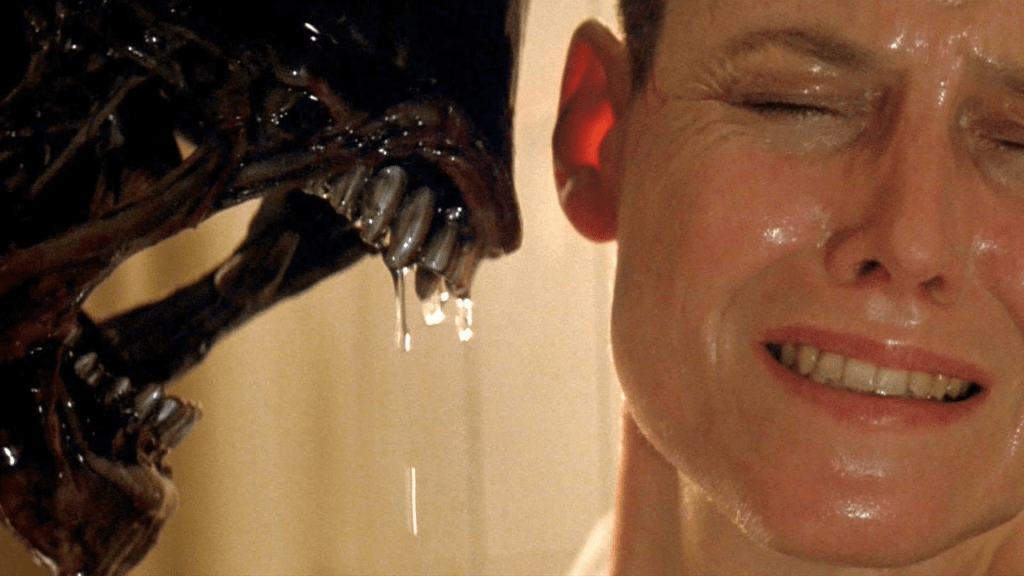
When your first feature film is directing a sequel in one of the best sci-fi franchises set in space at 29 years old, a lot is on the table to make it as great as possible. Yes, Alien 3 marks David Fincher’s directorial debut. He faced the challenge of emulating the success of Ridley Scott’s Alien and James Cameron’s Aliens, two sci-fi masterpieces. Following the second installment, we see Sigourney Weaver reprising her role as Ellen Ripley, where she’s the only survivor of the Marine spaceship and lands on the maximum security prison planet, Fiorina 101. And if that’s not enough, she and the inmates must face another deadly Xenomorph. After 31 years, it’s clear it has been no one’s favorite, especially Fincher, who disowned the third installment, stating, “No one hated it more than me; to this day, no one hates it more than me.”
In some ways, it closely resembles the first movie, where it’s many against one alien. However, the end product was a dull science fiction thriller devoid of tension and compelling secondary characters. Where’s the thrill in closing doors behind you with your biggest action set piece? Not even the visual effects looked great back then, which is shocking how it got an Oscar nomination. You can’t even tell he’s behind it, but who knows if any previous directors attached initially to direct would’ve made it suitable. Most of the problems Fincher had were due to heavy studio interference from Twentieth Century Fox and multiple script rewrites during shooting. There is an “Assembly Cut” that is supposedly better, but there’s doubt it’ll be worth the watch.
Fincher had little control over Alien 3 during production; therefore, he can’t be held entirely responsible. However, except for Weaver’s return and her dedication, the sequel is uninteresting and lacks tension; in fact, it will be the only one of his movies to be deemed unwatchable. There are worse movies in the franchise (Aliens vs. Predator Requiem, so I heard), but this is one of those third installments that’s just disappointing.
11) The Game
Release Date: September 12, 1997
Budget: $70 Million
Domestic Box Office: $48.3 Million/ Worldwide: $109.4 Million
RT Score: 77%
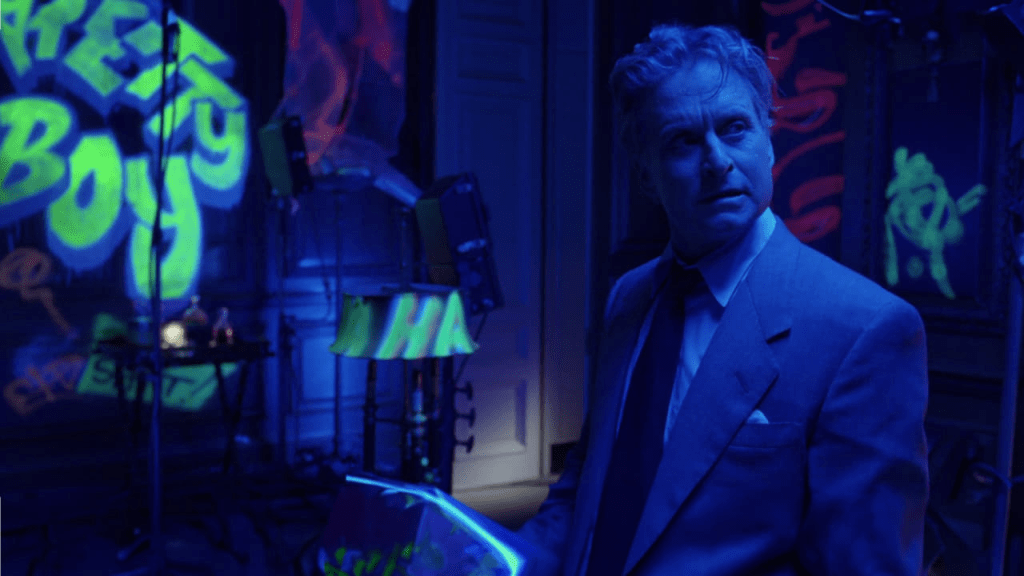
The Game demonstrated Fincher’s talent for thrillers, but it’s one of his least-watched films, as this 1997 film is never as strong as his other efforts. Still, it’s one where you love to complement his work of suspense throughout. Michael Douglas plays Nicholas Van Orton, a selfish investment banker who received a birthday gift from his younger brother Conrad (Sean Penn)- A voucher from a Consumer Recreation Services company. Unaware of what he signed up for, Nicholas’ life takes a turn once his participation in this game begins. Just two years following Se7en, Fincher might’ve been in the right mind to put us in the position of Nicholas, as we, too, are unsure what everything is building towards, leaving our paranoid consensus unable to distinguish what’s reality.
Douglas gives one of his best performances, and Fincher’s direction and Harris Savides’s cinematography never disappoint. But that intriguing flow makes it hard to find it captivating when figuring out what this game represents, though it does work when fitting in that classic Fincher dread. Besides the story being a mixed bag, I’ve never cared for the ending, which is a way of feeling too converted after what Nicholas went through. Even Fincher said he wasn’t proud of the movie and somebody else should’ve done it. Though The Game has seen the director play with our minds better down the road, his third feature film will have us playing along with a mildly unpredictable ride.
10) Mank
Release Date: November 13, 2020 (theatrical release)/ December 4, 2020 (Netflix)
Budget: $25 Million
Domestic Box Office: N/A /Worldwide: N/A
RT Score: 83%
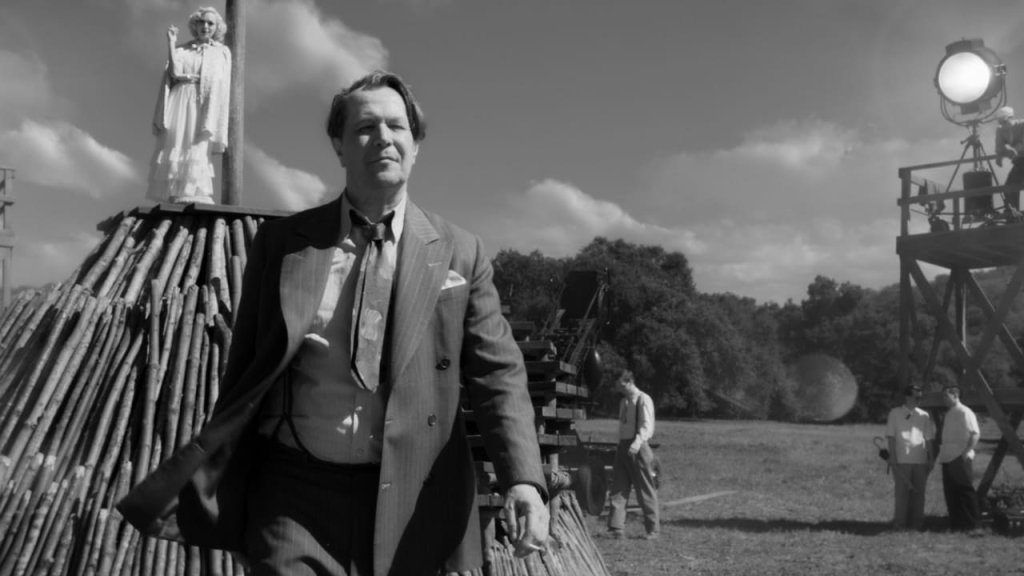
The idea of Fincher directing another biopic amid one of his most extended stretches between non-thriller films was intriguing enough, mainly because it would be based on a screenplay written by his late father, Jack. After working with Netflix on the series Manhunter, Mank was in development for decades and went into production near the end of the 2010s, following Herman J. Mankiewicz’s task to write the screenplay for the cinematic greatness of Citizen Kane.
Sometimes, you don’t associate this as one of his works, and it’s almost a detriment in how it doesn’t always compare fondly to his work in the past. Mank is the one film of his that carries on this cold detachment for its audience as you’re watching where it doesn’t always offer the kind of flair you come to expect from him. The drama didn’t impact me much since examining Mankiewitz’s life and the politics of the time left me wanting more. Instead of feeling like a meandering story, I felt the plot should have been more about Orson Wells’s creative process.
However, it will appeal more to people who persistently fix on vintage Hollywood. You must give Fincher credit for pulling off an authentic-looking technological trip back to the ’30s and ’40s. Even though this isn’t a performance worthy of a Best Actor nomination, Oldman’s portrayal of Mankiewicz shows why he’s still one of the greatest, with Amanda Seyfried giving her best on-screen performance as actress Marion Davies. Mank is brilliantly gorgeous while providing a glimpse inside a man people might not know by name, but it’s never a go-to drama to sit down with friends on a Friday evening. Still, that didn’t stop it from gaining ten Academy Award nominations, winning two for Production Design and Cinematography for Erik Messerschidmidt.
Full Review—> RIGHT HERE
9) Panic Room
Release Date: March 29, 2002
Budget: $48 Million
Domestic Box Office: $96.3 Million/ Worldwide: $197.1 Million
RT Score: 76%
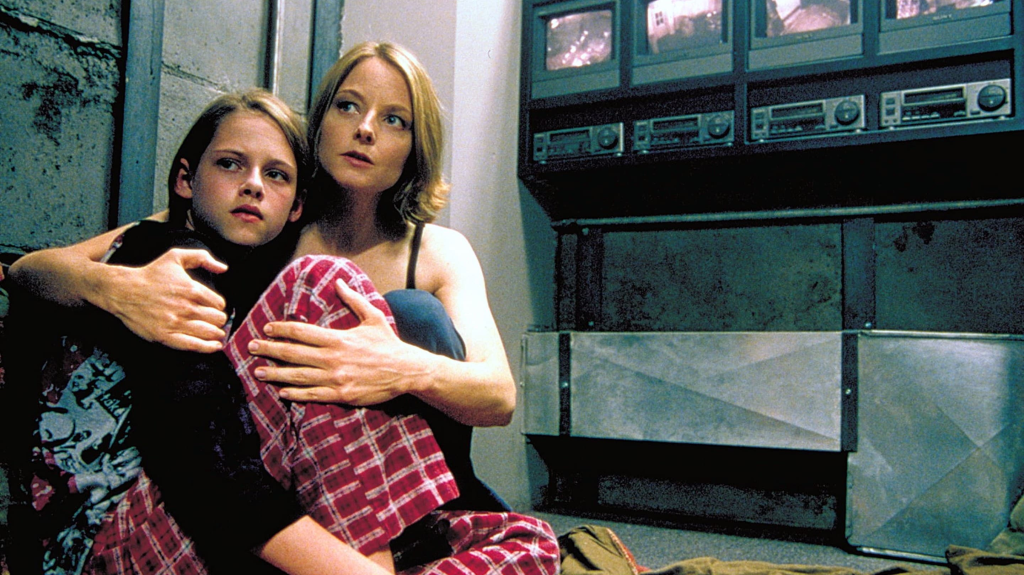
People forget Fincher did Panic Room, and it’s probably the one that’s underappreciated over two decades later. Jodie Foster plays Meg Altman, a divorced mother who recently purchased a home in Manhattan with her daughter Sarah (Kirsten Stewart). The biggest eye-catcher is it has a panic room in the main bedroom. Their new start goes differently when three criminals (Forest Whitaker, Jared Leto, Dwight Yoakam) break inside, leading Meg to take Sarah to hide in the panic room. Here’s the thing: what they want inside is $3 million or more.
Even though I wouldn’t call it fantastic, this is a solid house invasion thriller. It’s one of Fincher’s more straightforward pictures, nothing more, nothing less, and the nearly two-hour runtime provided just the right amount of claustrophobic suspense, taking advantage of the rainy evening backdrop. When I saw this again, I wondered what would happen next, and I wished Foster (who replaced Nicole Kidman) was in more movies since her performance as this strong-willed mother was excellent. Even Kirsten Stewart, in one of her early performances, held her own against an acting powerhouse like Foster. And you wouldn’t think of finding some sympathy for Forest Whitaker, but there’s a reason why he wants to get into that room. This also showcased Fincher’s earliest work with CGI when moving through the house.
There’s even a lot of tension, from Meg attempting to retrieve her phone to Sarah having her diabetic shock. Its straightforward narrative will only please a little since it can be predictable, and Jared Leto needs to tone down his performance by four notches. But Panic Room grabs your attention with ease. I’m still waiting for the day when Sony will finally release this on Blu-Ray instead of just a DVD with no special features.
8) The Killer
Release Date: October 27, 2023 (theatrical release)/ November 10, 2023 (Netflix)
Budget: N/A
Domestic Box Office: N/A /Worldwide: $421.3
RT Score: 86%
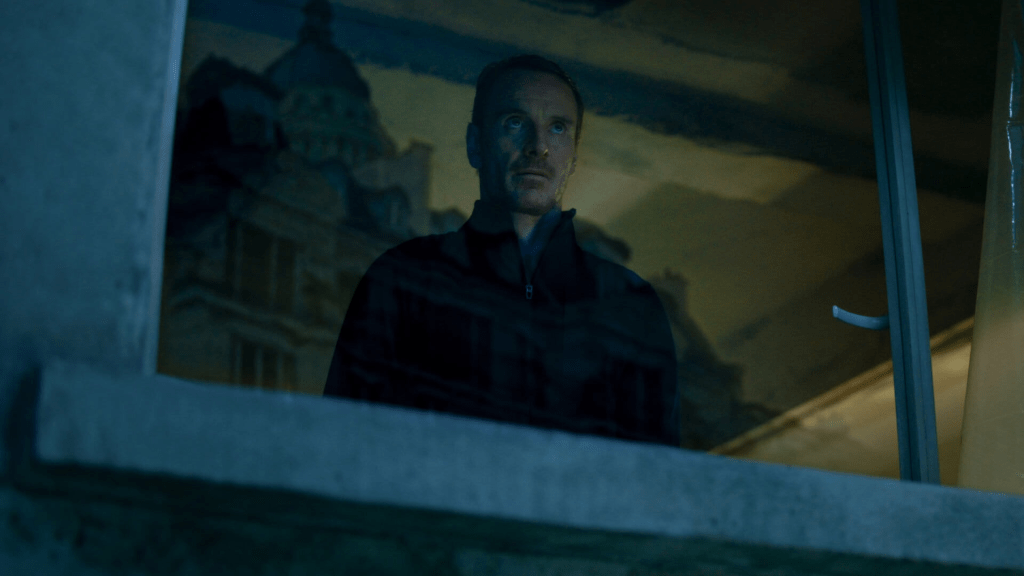
The Killer is the closest we’ll see Fincher do an action movie. But even seeing it as his first comic book adaptation, it settles on a solid thriller with Michael Fassbender in the lead and his most accessible Netflix film. Based on the French graphic novel by Alexis “Matz” Nolent and Luc Jacamon, we follow a meticulous, unidentified assassin whose last mission goes awry. After his girlfriend is attacked, he sets out to exact revenge on those responsible.
The thing fans can appreciate about The Killer is how its main character does not want to miss a beat with his planning, which is picked up immediately when looking back at Fincher’s process of attention to detail in his work. And even without giving a ton of dialogue outside the inner monologues, Fassbender, in one of his better performances in years, effortlessly channels this man who we come to learn doesn’t have much remorse for who he’s taking out. It’s also been a long time since Panic Room, where he’s probably working off a straightforward story. Though it’s presenting itself as another typical thriller about somebody taking vengeance personally, staying on a simple track is okay, even coming from Fincher himself. There’s something about following this violet journey of somebody who’s an enigma who could kill you, especially during a house fight that is one of the most astonishing fight sequences in recent memory based on the sound design. From my perspective, The Killer isn’t one of Fincher’s sharpest efforts, so I didn’t love it like everybody else last year. But delving inside this character’s mind proves he has an eye for doing another slow burn, a subtle action we could see more of in the future.
Full Review—> RIGHT HERE
7) The Curious Case of Benjamin Button

Release Date: December 25, 2008
Budget: $167 Million
Domestic Box Office: $127. 5 Million/ Worldwide: $335.8 Million
RT Score: 72%
During the 2008 holiday season, Fincher took an unexpected break from the darker material to bring us a film some wouldn’t expect to be in his wheelhouse, The Curious Case of Benjamin Button. Based on the short story by F. Scott Fitzgerald, it is a tale of the eponymous man who was not only born when the Great War ended but also appears to be an older man. Benjamin, played by Brad Pitt, has an unexplained condition where he’s aging backward. It’s one man’s extraordinary life that experiences all facets one could take on, from love to time itself. Truthfully, The Curious Case is one I wouldn’t call one of Fincher’s best, and I thought that for a while. But while this isn’t perfect, it’s still fascinating how he pulled a fantastical and romantic film, showing a side of him we rarely see. In development since the ’90s, this is certainly different from what we’re used to Fincher directing. Still, he takes us through this unique tale of one man who’s unlike anyone else and interacts with people he crosses paths with, including the love of his life, Daisy.
In their third collaboration together, Brad Pitt as Benjamin gives an outstanding performance, making us believe he’s aging in reverse thanks to the makeup and visual effects work to hold this on his shoulders. He’s a character who doesn’t take shame in how he looks but accepts who he is on the outside. Are the comparisons to Forrest Gump inventible? At times, especially since screenwriter Eric Roth wrote both. And though connecting with Daisy in the middle can be a love-hate relationship, you can’t help but love Cate Blanchett’s performance. This will have us thinking long about our time on Earth and what makes us feel alive with what we have. From the times I watched it, it starts great, slows things down in the middle, then picks things up again as Benjamin gets older. Sometimes, it gets a bad rap, but I’ve grown to appreciate The Curious Case of Benjamin Button more with its unique premise to make it work with his ambition, Pitt’s performance, and its technical elements (Alexandre Desplat’s score, cinematography, etc.). The film earned 13 Oscar nominations, including Best Picture and Fincher’s first nom for Best Director, and won three: Art Direction, Makeup, and Visual Effects.
6) Zodiac

Release Date: March 2, 2007
Budget: $65 Million
Domestic Box Office: $33 Million/ Worldwide: $84.8 Million
RT Score: 90%
After taking a five-year hiatus, Fincher’s subsequent feature would be right up his alley in the neo-noir mystery Zodiac. If you were to ask me about this about three years ago, I would call it good. Now, I can see why it’s considered this one of his most fantastic and underrated flicks. This is all based on the real-life investigation of the Zodiac Killer, grabbing the attention of the San Francisco Chronicle and the police department once encrypted letters were sent to them. The hunt for who’s responsible catches the attention of cartoonist Robert Graysmith (Jake Gyllenhaal), inspector Dave Toschi (Mark Ruffalo), and crime reporter Paul Avery (Robert Downey Jr.) to solve this case.
Zodiac would make for a perfect double feature with Se7en. However, the main difference is this 2007 thriller happened in real life, and it’s still being talked about today, surprisingly with the killer’s identification. You can see Fincher wanted to make every detail about this story as historically accurate as possible, even when there must be a couple of facts that might not be true. The research he and writer James Vanderbilt did to make the decade-spanning case is displayed in how it replicates the locations and costume design of the incidents, investing in the film even better. Gyllenhaal, Downey Jr. (Pre-Iron Man), and Ruffalo’s performances are shown at the top of their game. Gyllenhaal especially has more to do in the latter half, showing how one’s obsession can lead down an unwanted path in a city overstruck with fear.
Much of the 157-minute runtime didn’t make the slow burn feel that noticeable except near the third act. The length of time and how things felt unsolved might’ve been detrimental to others, and I thought that initially. That said, Zodiac is Fincher’s most disturbing film. It has us answering questions in an informative and suspenseful drama that can be described as the 21st-century’s All the President’s Men.
5) The Girl with the Dragon Tattoo

Release Date: December 21, 2011
Budget: $90 Million
Domestic Box Office: $102.5 Million/ Worldwide: $232.6 Million
RT Score: 86%
The Girl With the Dragon Tattoo marked the brief return of Fincher stepping back into a darker tone with his films, and what better way to do so than adapting the first installment in Stieg Larsson’s trilogy of novels. Despite being an American remake of the 2009 Swedish film starring Noomi Rapace and the late Michael Angquist, you must credit Fincher for making this own in an unsettling yet intriguing fashion. Even if you aren’t familiar with the original or haven’t read the book prior, it’s easy to find yourself completely captivated going along with this mystery of Millennium journalist Mikael Blomkvist (Daniel Craig) finding redemption for himself as he investigates the disappearance/ murder of an industrialist’s niece. Eventually, he teams with computer hacker Lisbeth Salander (Rooney Mara) to solve the secrets behind this family.
The fact I missed this in theaters and had to wait until the start of summer break to finally watch this was the most unfortunate because it looked great from the trailers. There are a lot of distinctive moments in this film, but the slick stealth Fincher delivered could be his greatest. It keeps viewers riveted for a solid two hours and fifty-eight minutes, matching that of The Silence of the Lambs, which is arguably more affecting with its themes of violence against women. In the middle, Rooney Mara’s remarkable portrayal of Lisbeth Salander helped her become a breakout star. To give the impression that she was an unlikely protagonist, she went through the method acting route, got real piercings, and bleached her eyebrows to disappear into this part. Once she and Craig are together after their stories come together inside this unique relationship described as a five-act structured set-up, their chemistry excels. Sometimes, it can be uncomfortable, and the last 20 minutes could’ve been shorter.
Even yet, The Girl with the Dragon Tattoo skillfully plays to the director’s strengths throughout a sophisticated thriller that improved even more after ten years. Combining Jeff Cronenweth’s exquisitely eerie cinematography, Steven Zallian’s screenplay, and Mara’s outstanding performance—which landed her a nomination for Best Actress—is not bad. It also garnered five nominations and won Best Film Editing despite not being nominated for Best Picture. Unfortunately, the movie didn’t perform well at the box office because everyone hoped he would be the start of a trilogy. Instead, 2018 saw the release of The Girl in the Spider’s Web, the most forgettable sequel/ reboot in recent memory.
4) Gone Girl
Release Date: October 3, 2014
Budget: $61 Million
Domestic Box Office: $167.8 Million/ Worldwide: $369.3 Million
RT Score: 88%
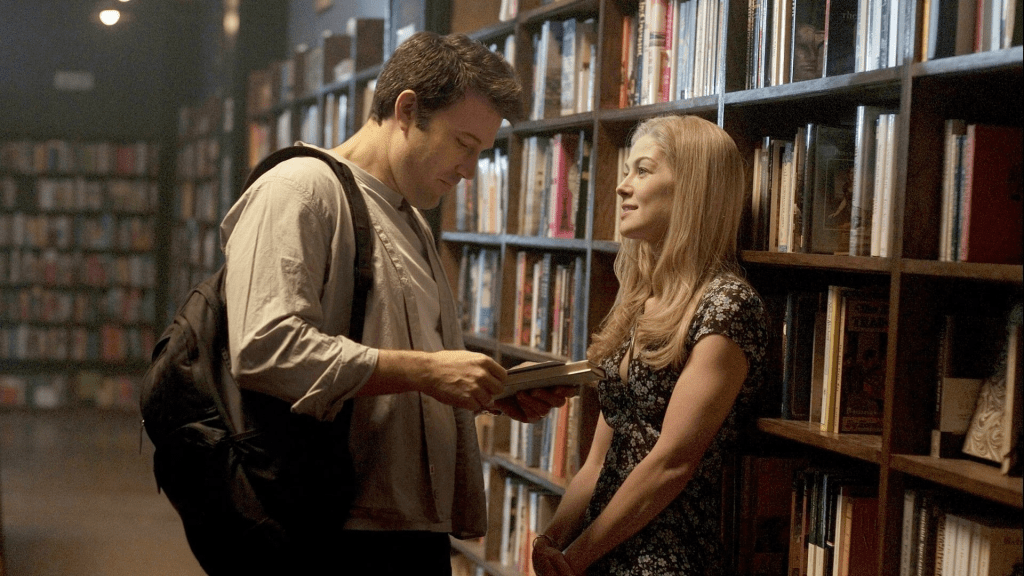
The chances of Fincher doing a mystery thriller that settles on excellent are nothing but high. With Gone Girl, he did that precisely with back-to-back screen adaptations. Based on Gillian Flynn’s best-selling novel, Nick Dunne’s world turns upside down when his wife Amy suddenly disappears on their fifth wedding anniversary. What happened to her? Was she kidnapped? Could it be possible for Nick to be involved? These are the questions we’re constantly considering that those who have or haven’t read the book will be pleased by. Between the clues and the discussions of a love-hate marriage in this small town, we’re looking at one of the most engaging mysteries of our time. Every time I throw on Gone Girl, it’s like following a trail of mystery that always ends with a secret or surprise that I wasn’t expecting. Fincher’s aesthetic is a wonderful fit for how we might see someone via the lens of the media, never knowing the whole story when someone is accused of a crime they didn’t commit or committed, and offering a thought-provoking critique of the advantages of a failing marriage.
Ben Affleck gives his best performance outside the films he directed as a man desperate to know why Amy disappeared and aims to be the good guy during this investigation. Rosamund Pike, however, steals the spotlight in every scene in the second act as Amy Elliot Dune, demonstrating her manipulative nature and intelligence. Despite having flaws, she and Nick depend profoundly on one another. And when you have a film where Tyler Perry is actually good for the first time in forever, it’s automatically a win. The ending is an aspect I go back and forth on, whether I liked it or not, but the dark nature of the story fits right into Fincher’s filmography. How Gone Girl got snubbed for Best Picture and Best Adapted Screenplay especially makes no sense. At least Pike earned a well-deserved Best Actress nomination.
Full Review—> RIGHT HERE
3) Se7en
Release Date: September 22, 1995
Budget: $34 Million
Domestic Box Office: $100.1 Million/ Worldwide: $327.3 Million
RT Score: 83%
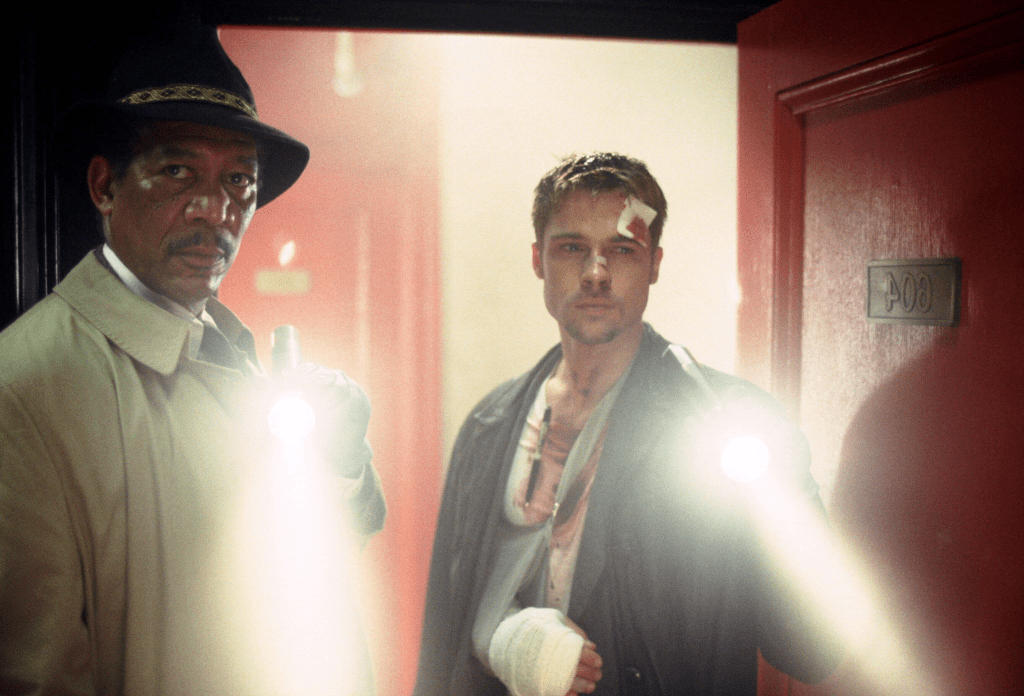
Fincher’s follow-up to his debut film, Se7en, is one of the greatest thrillers ever made, thus anyone who said otherwise is entirely incorrect. The concept of recently appointed investigator David Mills (Brad Pitt) and soon-to-retire William Somerset (Morgan Freeman) pursuing a serial killer whose goals involve exploiting the Seven Deadly Sins to purge the world is alluring enough. There’s something about the world Fincher creates within this unnamed city where crime is everywhere, and this rabbit hole these two detectives go on makes for an unsettling time that you can’t look away from during this investigation.
Se7en balances the best of both worlds in horror and thrillers that are riveting without us noticing. But even when it’s not all dark, you appreciate a few of those quiet moments of characters talking to have us care for them more. Brad Pitt and Morgan Freeman worked flawlessly with each other as two men with different perspectives on society caught in a deadly game of cat and mouse. It’s intense in every sense of the word, especially once it’s revealed who John Doe is, leading to one of the most shocking endings in cinema that’s made even scarier by never seeing what’s inside the box. Can you believe the studio wanted to go for an upbeat climax? I loved how bleak it went. Thankfully, Fincher bounced back with a loved film that was better received than his directorial debut.
2) Fight Club
Release Date: October 15, 1999
Budget: $63 Million
Domestic Box Office: $37.03 Million/ Worldwide: $100.8 Million
RT Score: 79%
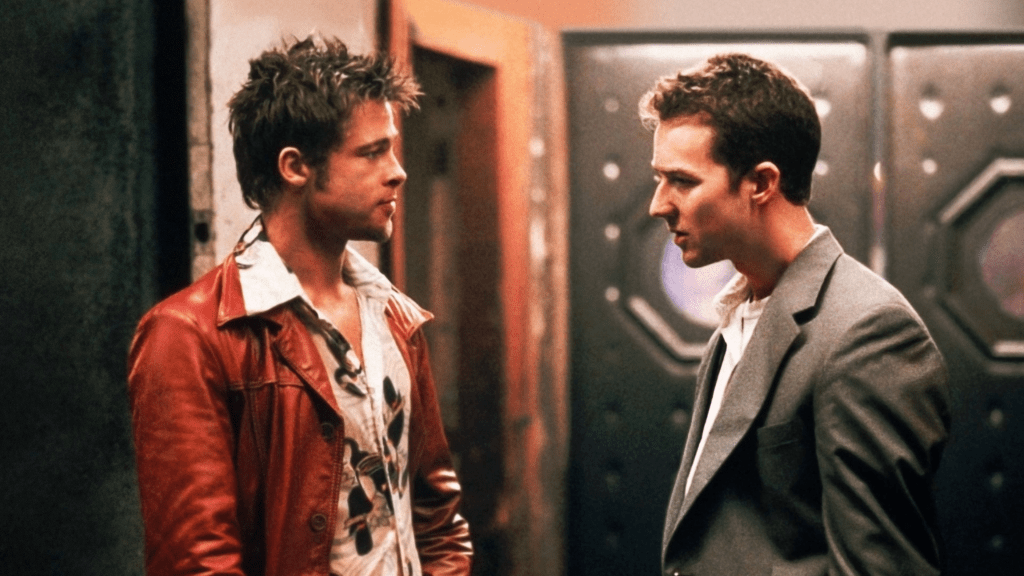
Out of all the films in his filmography, it’s no surprise Fight Club has stayed in the pop culture zeitgeist. And for good reason. It’s hard to believe this wasn’t a hit at the box office, and most critics dismissed it then. However, decades later, this adaptation of Chuck Palahniuk’s novel is more than just men fighting each other; it’s surprisingly more thought-provoking in what it says about our role in today’s society. We see Edward Norton’s unnamed narrator losing touch with life. Working a tedious job and suffering from insomnia. However, when he meets a man named Tyler Durden (Brad Pitt), they create the ultimate alternative to depressing support groups — An underground club called “Fight Club.”
When I first saw this, did I grasp what it was saying? Not precisely. However, when viewed through an adult lens, the crime drama’s ability to address themes of consumerism, masculinity, and our quest for fulfillment in life—what Fincher called a “coming-of-age” for people in their 30s—almost seems eye-opening. Pitt’s portrayal as Tyler Durden, the cool guy who spits out crazy philosophy that’s nearly true to those who make us fall in love with this soap maker brawler, has gone down as one of the greatest roles in cinema history out of all the performances he’s done. Along with having some of the best screen time ever with his co-star, Norton has never been better as a character who is more redeemable than some of his other roles at the time.
It’s one of those films where you can pick up on little details you missed the first time. When the big twist is revealed, it completely surprised me and made the last third more entertaining, leading to an unforgettable ending from Fincher with one of the perfect needle drops, “Where is My Mind” by Pixies. Fight Club is a ’90s classic from him that was both darkly humorous and ambiguously compelling at its release and now. Even hours after it’s completed, it’s impossible to ignore it.
1) The Social Network
Release Date: October 1, 2010
Budget: $40 Million
Domestic Box Office: $97 Million/ Worldwide: 224.9 Million
RT Score: 96%
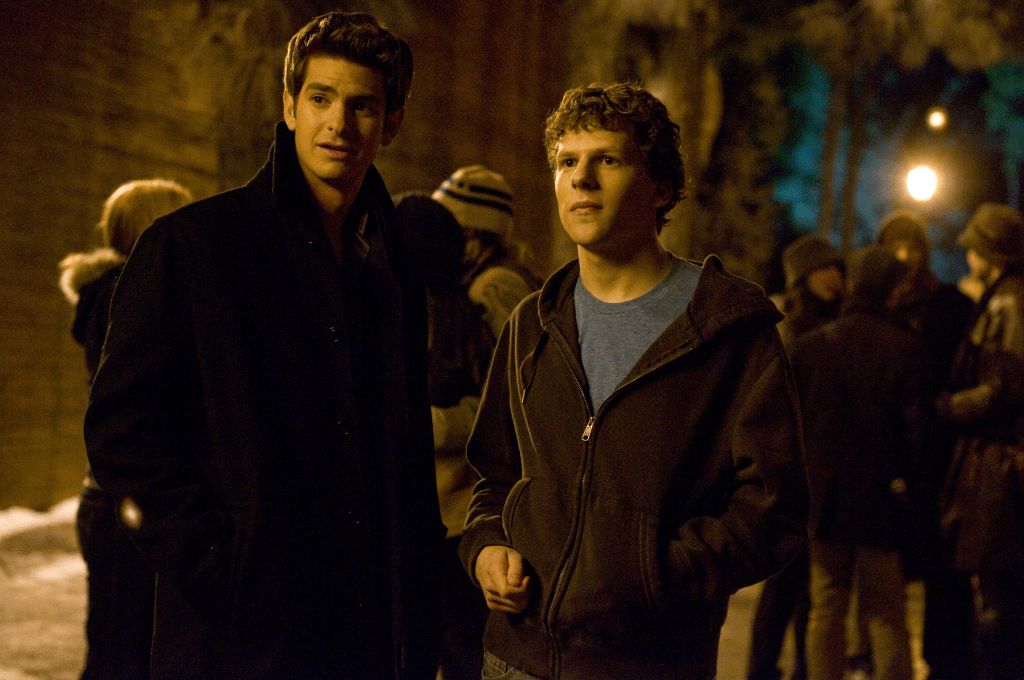
If I had to choose between this and the period drama The King’s Speech for Best Picture, there’s no doubt in my mind that I’d go with The Social Network because it’s what people remember the most. And in a time where a dramatized biopic is more relevant than the actual site it’s centered on, that’s saying something. As we all know, it chronicles Mark Zuckerberg (Jesse Eisenberg) and the creation of the worldwide social media site Facebook while dealing with lawsuits from co-founder Eduardo Saverin (Andrew Garfield) and twins Cameron and Tyler Winklevoss (Armie Hammer) for accusing him of stealing their idea.
You wouldn’t expect to spend two hours immersed in a Facebook movie. But that’s the beauty of Fincher using his abilities to create a drastically distinct and restrained drama. Calling The Social Network a “Facebook movie” doesn’t do it justice; it’s more about how jealousy and power rule one’s mind, leading to the riches of success or an eventual collapse from peers. Not every detail in this is authentic based on what the real Zuckerberg said. But since nobody has exactly liked him in real life over the past few years, should we listen to him? I don’t think so. Because the characters are talking, a film like this should have been tedious, but Aaron Sorkin’s writing kept the audience interested, making the fast-paced, clever banter easy to consume. The script is fantastic to this day, and it first drew my attention to his work.
Jesse Eisenberg, Andrew Garfield, and Justin Timberlane all delivered outstanding performances, with Garfield nearly standing out and deserving of a Best Supporting Actor nomination. Those who questioned a filmmaker like Fincher could create something so memorable may have been surprised. Of everything he’s done, The Social Network is the one I’ve watched the most, finding new ways to love it even more when I saw it opening weekend. By that, it’s the most respected picture Fincher has done to date, and it’s no surprise it’s recognized as one of the best of the decade and twenty-first century. It’s brilliantly scripted, neatly edited, and keeps your focus on every scene.
Full Review—> RIGHT HERE

 DC's Take