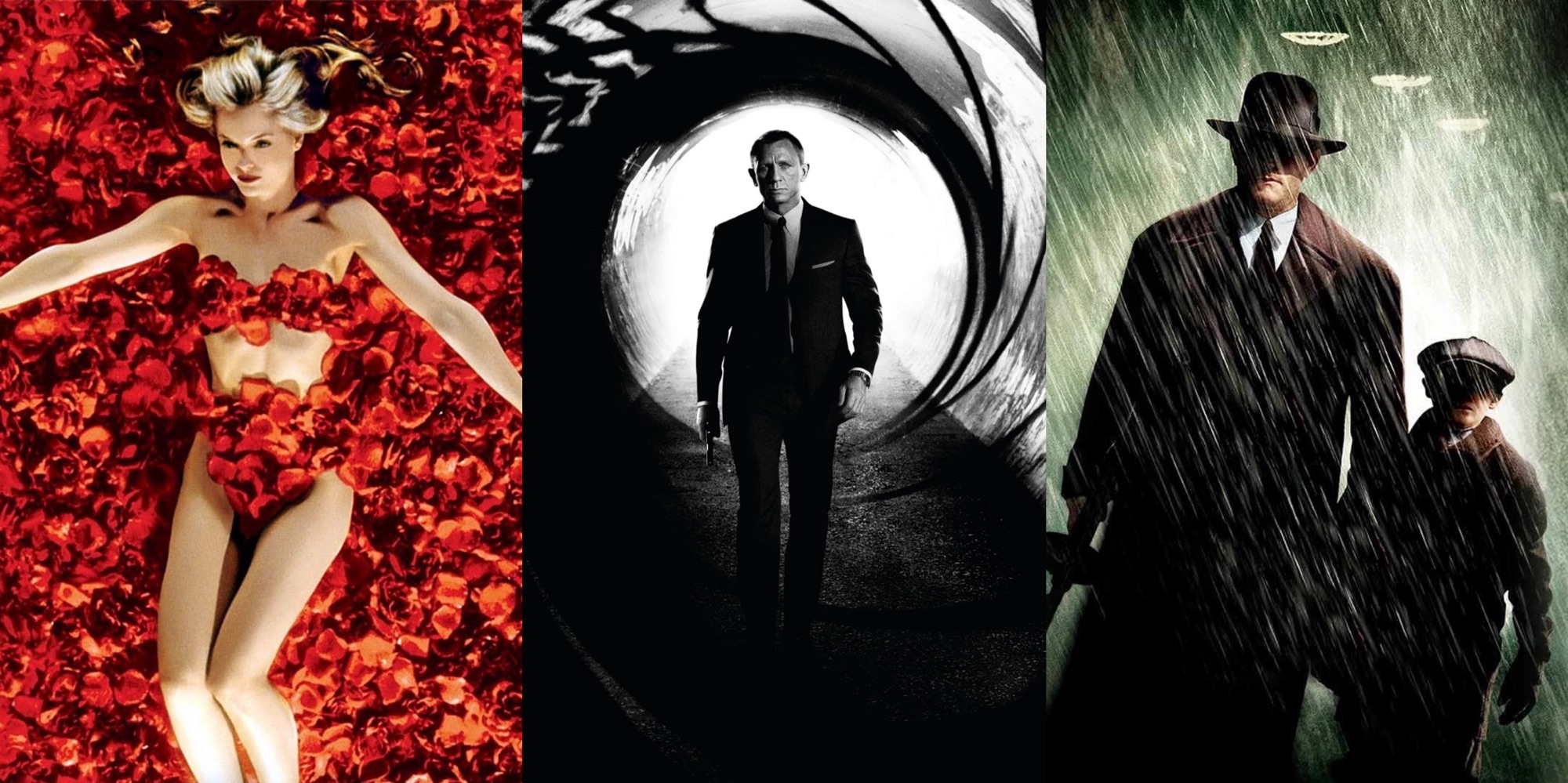
Sam Mendes, a filmmaker who defied the odds, made a grand entrance into the industry by winning the Academy Award for Best Director in 2000. This early success set the stage for a career that has spanned two decades and is marked by a diverse range of films, including war dramas, intimate character studies, and even two James Bond installments. His journey from the theater to the big screen has been a testament to his storytelling prowess and his ability to work with the best actors.
Occasionally, when one of his films doesn’t hit a home run, the contributions of his frequent collaborators (Thomas Newman, Roger Deakins, etc.) can still shine and earn more respect over time. While not all are perfect, his films have a distinctiveness that sparks anticipation whenever his name is linked to a new project. This is especially true with the recent ambitious news of his involvement in directing four separate films about The Beatles. With only nine films under his belt, each bears the unmistakable imprint of his vision. In this long-awaited edition of Director’s Canvas, we delve into the ranking of Mr. Mendes’ filmography and the excitement surrounding his future projects.
9) Jarhead

Release Date: November 4, 2005
Budget: $72 Million
Domestic Box Office: $62.6 Million/ Worldwide: $97.1 Million
RT Score: 60%
Some may forget Mendes directed the war film Jarhead in 2005. In his first war film and overall third, after American Beauty and Road to Perdition, he retells US Marine Anthony Swofford’s story of serving his country, training as a sniper, and being stationed in the Persian Gulf War, aka “Operation Desert Shield.” From the trailers, it would be easy to assume Mendes made his own Full Metal Jacket in a realistic portrayal of war. That’s not what everybody got when the men felt bored during their time, and so did I. To the film’s credit, Jake Gyllenhaal and Peter Sarsguard gave solid performances, and Roger Deakins’ cinematography is gorgeous, especially at night with the burning oil wells.
But Jarhead suffers from a lack of action and emotional attachment to the characters. You understand these men and fire their weapons for a purpose, but something needed to come across as compelling. A box office disappointment with mixed reviews, not everyone linked this to the filmmaker. However, it has three disposable direct-to-DVD sequels from Universal that nobody wanted or probably watched in their spare time.
8) Spectre
Release Date: November 6, 2015
Budget: $245 Million
Domestic Box Office: $200.1 Million/ Worldwide: $880.7 Million
RT Score: 63%
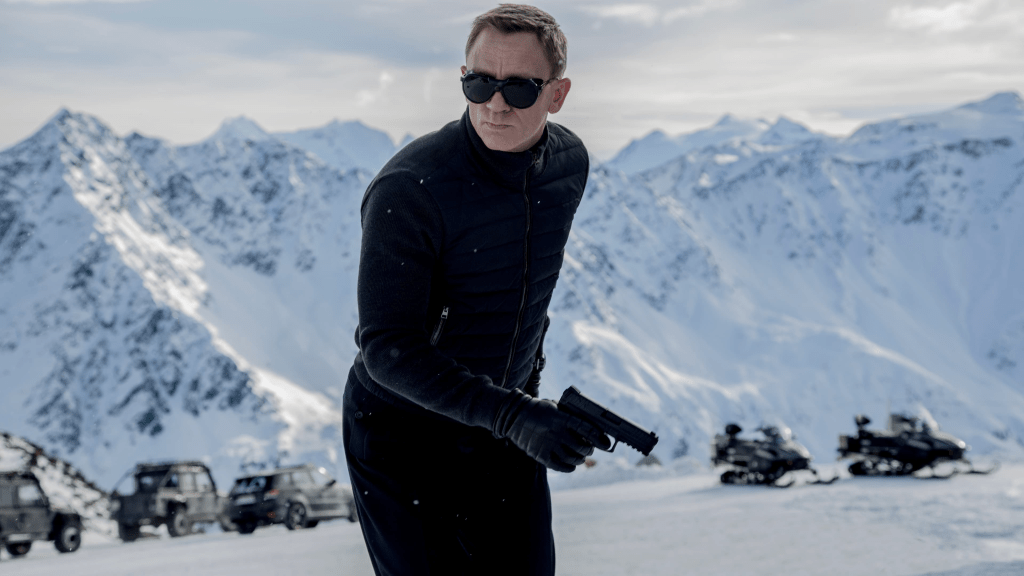
Following up on anything from Skyfall isn’t the most uncomplicated feat to conquer, but Mendes was ready for the challenge in his second James Bond film, Spectre. Being the second director to oversee back-to-back Bond films after John Glen during the Timothy Dalton era, this wasn’t bad by any stretch of the imagination. Still, it didn’t quite meet those expectations in a year of outstanding spy movies (Kingsman, Mission: Impossible-Rogue Nation). Bond’s 24th adventure puts him on trial for finding the crime organization primarily known as “Spectre,” led by Christoph Waltz’s Blofeld.
Over those nearly two and a half hours, it’s no surprise that Mendes continues to film some incredible action sequences, including the opening in Mexico City or the Astria plane chase. Plus, Daniel Craig gives this performance his all despite looking bored. But fans like me consider Spectre a disappointment it deals with a middle-of-the-road storyline that never finds its hook, unlike the previously well-received chapters. You can feel Mendes was trying his best, but he was obviously tired in his attempt to top what he accomplished three years prior, especially with a budget close to $250 million.
Full Review—> RIGHT HERE
7) Empire of Light

Release Date: December 9, 2022
Budget: $13.5 Million
Domestic Box Office: $1.2 Million/ Worldwide: $11.4 Million
RT Score: 46%
Before the release of Empire of Light, Mendes’s most recent, the momentum was there for what could’ve been one of 2022’s best films, at least for me. With Searchlight Pictures behind it, the cast and an element would be on the power of cinema; how did that not sound perfect? As the first film I saw during that year’s Heartland International Film Festival and part of the early buzz, it was unfortunate how this drama didn’t move me emotionally. Set in the early 1980s on the English Coast, Hilary Small (Oliva Colman) is the duty manager at the Empire Cinema, and she forms a bond with new employee Stephen (Micheal Ward) while struggling with her mental health.
We all figured Empire of Light would be a prime candidate for a classic among Mendes’ other work. At the center is this connection between Hillary and Stephen that offers a glimmer of light into their personal troubles. No doubt, both Colman and Ward give great performances. Though Mendes penned a screenplay alone for the first time, the overall journey barely fulfills its promises. For telling a story regarding one’s mental health (bipolar disorder) and dealing with the racism Stephen faces, the two do not fit together as expected when managing their emotions. The entire appeal lacked amusement, particularly in the connection. Does it have a fantastic score, gorgeous cinematography from Roger Deakins (nominated for an Oscar), and enough to make us think? Sure. But Empire of Light needs to provide a deeper meaning to what Mendes set it out to be.
Full Review—> RIGHT HERE
6) Away We Go

Release Date: June 5, 2009
Budget: $17 Million
Domestic Box Office: $9.4 Million/ Worldwide: $15.8 Million
RT Score: 67%
Away We Go might’ve been a forgotten gem from the late 2000s. Despite having actors John Krasinski and Maya Rudolph, people may have expected the type of road trip dramedy that debuted at Sundance, but it was refreshing to see the director ease things up with a lighter plot than usual. Following Burt and Verona, they’re about to become first-time parents with daily challenges in their ways. When Burt’s parents decide to live two years in Belgium, they rethink their decision to find the right place to raise a family, traveling from city to city to see what’s perfect for them.
This doesn’t feel like one of his films, and that’s meant to be a compliment since it’s the simplest thing to come from him. We’re experiencing Burt and Verona visiting estranged friends and family and experiencing environments they could envision themselves in. The story’s structure isn’t all memorable, especially when moving from one location to the next after an hour. Even when it’s not a trip to gear towards awards, it helps that Krasinski and Rudolph share wonderful chemistry, experiencing the humorous and stressful parts that come with soon-to-be parents. What’s most surprising is the supporting cast this got, including Catherine O’Hara, Jeff Daniels, Allison Janney, and Maggie Gyllenhaal. This brought some funny moments courtesy of Krasinski, but the standout scene is just him and Rudolph on a trampoline at night, making their promises. Away We Go doesn’t go out of its way to provide the most profound message, but it’s certainly a passable watch since it might’ve flown under the radar.
5) Revolutionary Road

Release Date: December 26, 2008
Budget: $35 Million
Domestic Box Office: $22.9 Million/ Worldwide: $76 Million
RT Score: 67%
Hollywood had been for another film to reunite star Leonardo DiCaprio and Kate Winslet after their on-screen romantic in Titanic. During the 2008 Oscar season, we finally got it with Revolutionary Road, a much different love story that doesn’t have the happiest endings. Based on Richard Yates’ novel, the marriage of Frank and April Wheeler is under much strain. Both had dreams to give up to fulfill the typical American lifestyle in the suburbs. Once they decide to move to Paris to get the happy life they’ve always wanted, whether it’s enough to feel alive again in a time where keeping their relationship afloat is possible.
Revolutionary Road lacks the cinematic aspect of Mendes’ other films for some. Though it could’ve been even better as a stage play, he and screenwriter Justin Hay examine the realistic hardships of a likely crumbling marriage. Just when we thought it would be fine, what happens when a rash decision arises when the job you loathe offers something better or even an unplanned pregnancy? To no one’s surprise, DiCaprio and Winslet (Mendes’ wife at the time) perfectly embody the so-called perfect couple of the ’50s longing for the desires they’ve been wanting yet can’t make it work. There’s love, but it might eventually build to an explosion of regret. Surprisingly, Michael Shannon’s brief appearances as John knows the truth around them and isn’t afraid to speak his mind. It’s a performance nobody saw coming, leading to his first Academy Award nomination for Best Supporting Actor. It can be overdramatic near the end, but it excels as a drama when two great actors work in its favor. Revolutionary Road analysis on a complex marriage will find reliability only for a few viewers, but it brings out the best in what Mendes provides with his characters.
4) Road to Perdition
Release Date: July 12, 2002
Budget: $80 Million
Domestic Box Office: $104.4 Million/ Worldwide: $181 Million
RT Score: 81%
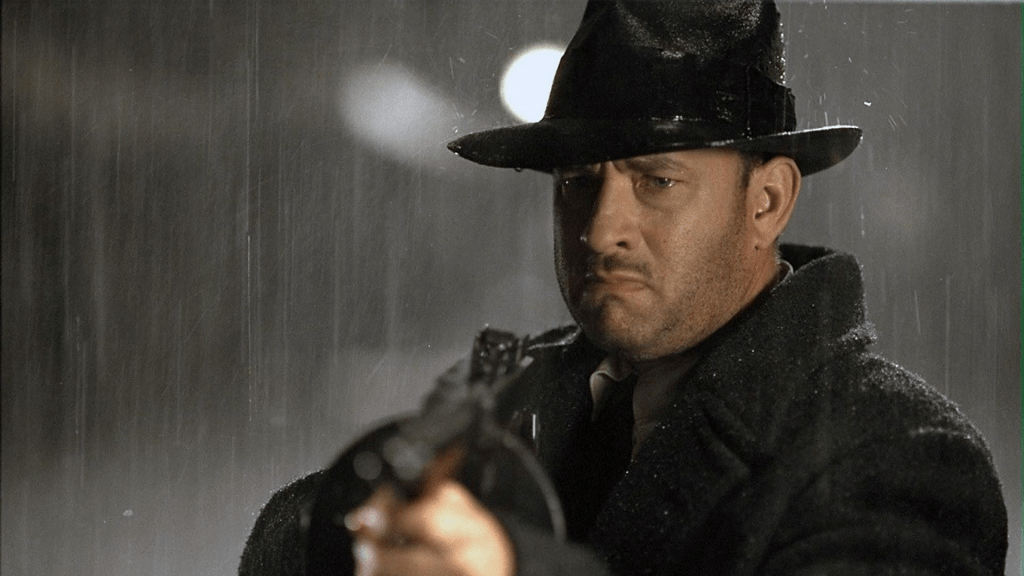
Two years after becoming the breakthrough filmmaker for everyone to look out for, Mendes’ second feature film takes us toward a bleak and suspenseful crime drama deserving more attention two decades later: Road to Perdition. Based on the 1998 graphic novel by Max Allan Collins and Richard Piers Rayner, Tom Hanks plays Michael Sullivan, an enforcer during the Great Depression for the Irish mob working for John Rooney (Paul Newman). His children know nothing about his real profession. That changed when his 12-year-old son Michael Jr. (Tyler Hoechlin) witnessed a murder, leading the father and son to go on the run after murdering the rest of Mike’s family.
A significantly different film in tone from American Beauty, this is a breathtaking road story of how one is willing to defend a loved one at any cost. Almost all of what Mendes executed is well-told through its carrying themes of how the cycle of violence might carry over to a kid and the relationships that can affect fathers and sons. Everyone is excellent, with Hanks giving one of the few performances of his career playing against type. In his last live-action role before his passing, Paul Newman was as incredible as John Rooney, who views Michael more as a son than his actual child, Connor (Daniel Craig). But what an impressive turn from Tyler Hoechlin (best known now for portraying Superman on television two decades later) to hold his own when acting with Hanks. Road to Perdition may be too cold for everyone. But while that detachment is palpable, it will never be classified as a sophomore slump for the director in this underappreciated adaption. The film was nominated for six Academy Awards: Supporting Actor for Newman, Art Direction, Original Score (one of my favorite Thomas Newman scores), Sound, and Sound Editing. It won Best Cinematography for Director of Photography Conrad L. Hall, who passed away in January 2003.
3) American Beauty
Release Date: September 15, 1999
Budget: $15 Million
Domestic Box Office: $130.1 Million/ Worldwide: $356.3 Million
RT Score: 87%
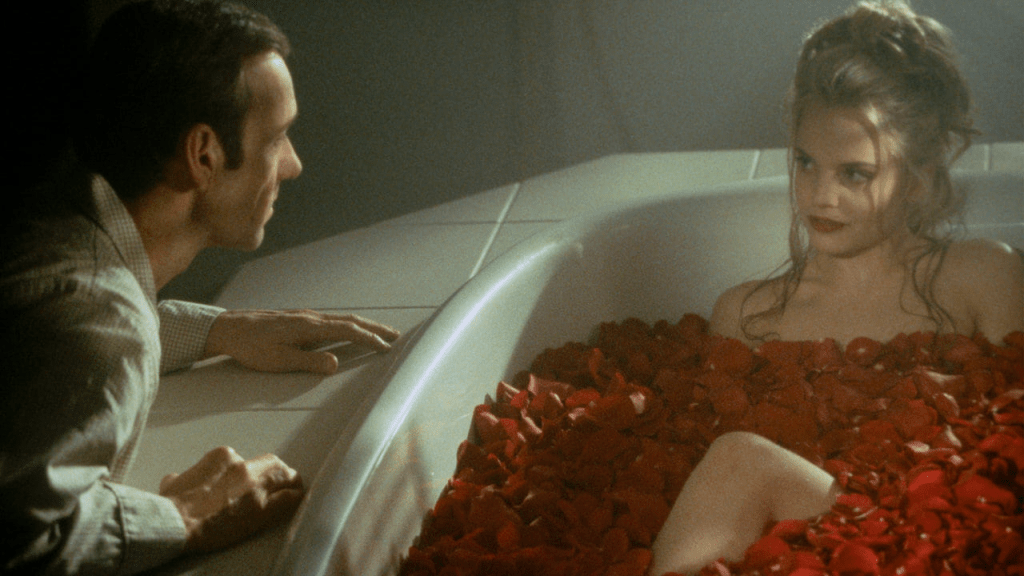
Mendes’ career has taken off since 1999’s American Beauty, a significant success. This was one of my favorite films in my late teen years, and I felt the same way Ricky Fitts did when he captured the plastic bag dancing in the wind. But over 20 years after its release, with critics and audiences loving it, there’s this sad realization that this might be one of those Best Picture winners that has been a turn of heads for apparent reasons. That said, it’s still a great drama, admit the glaring problems we now see. The life of suburban husband Lester Burnam (Kevin Spacy) needs a change, especially when his family—wife Caroline (Annette Bening) and their only daughter Jane (Thora Birch)—is very disinterested in him. That all changes when he finds a sudden fascination with Jane’s new friend Angela, instantly leading to reshaping his way of life. He quits his job, smokes pot, and even exercises.
In his directorial debut, American Beauty is a close-up examination of a mid-life crisis through a range of emotions seen through a profound or cynical lens. But if you look closer, certain parallels between characters and real life become more uncomfortable now than they probably were back then. For example, the father lusting over a girl half his age or the homophobic, closeted father.
Not everyone will relate to the multiple themes in its retrospective, which feature characters who aren’t the best. While Alan Ball’s screenplay is flawed, it’s no surprise that initial reactions were high for a drama with a comedic and dark tone. Upon these reflections, this subtle motif of red is sprinkled regarding lust and even death. Spacy and Bening deliver outstanding performances, and Thomas Newmen’s score is still among his best. Regardless of the backlash continuing to receive today, it went on to win five Academy Awards: Best Picture, Director for Mendes, Actor for Spacey, Original Screenplay, and Cinematography. One of the worst Best Picture winners? That’s up to you, but I can think of other underwhelming winners from the ’90s.
2) 1917
Release Date: December 25, 2019
Budget: $95 Million
Domestic Box Office: $159.2 Million/ Worldwide: $384.6 Million
RT Score: 89%
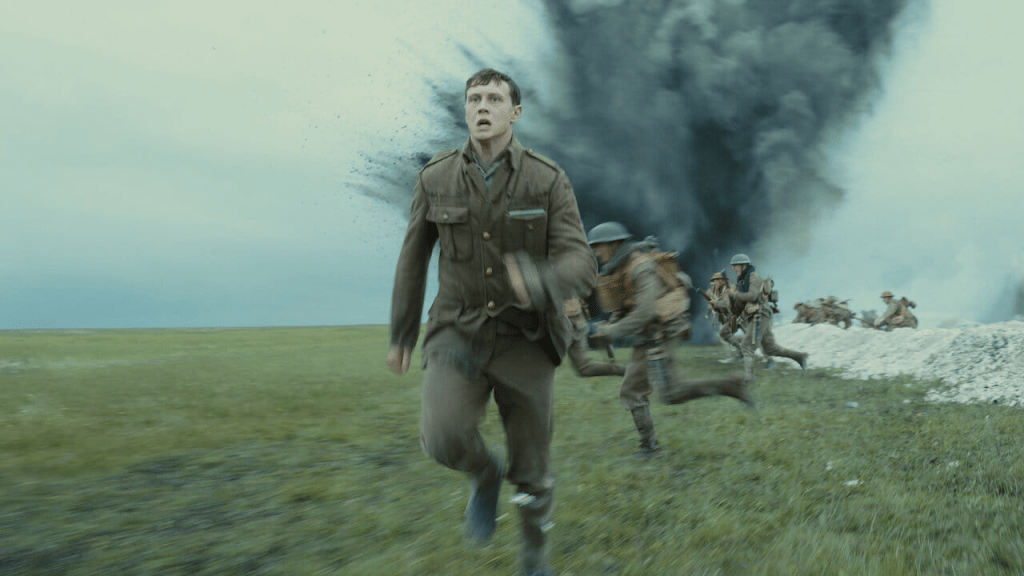
The 2010s stepped up their game with the war genre, providing instant gems like Dunkirk and Hacksaw Ridge to prove the point home. Just as the decade ended, Mendes gave audiences the unforgettable 1917. Following two soldiers, Will Schofield and Tom Blake (George MacKay and Dean-Charles Chapman), in World War I, the two embark on a mission to deliver a message to call off an upcoming attack. The story is inspired by what Mendes’s grandfather, who fought in the war, told him, and it could’ve been a “gimmick” to have it appear as a one-shot. However, Mendes and Roger Deakins’s cinematography, which won him his second Oscar, made the experience intense and challenging. And I’m a sucker for long continuous takes. Our job of following these men for two hours takes immersive to a whole other level on the race against time across enemy lines; it’s dangerous to put in front of men who’ll save lives if completing everything they encounter goes wrong. To more stress during these sequences, every moment leaves you in suspense despite knowing little about them.
1917 shows the importance of what war can bring beneath the bullets and explosions, which makes for impressive filmmaking. Every minute is a technical marvel, from the sound to the action. No one should have the guts to say it wasn’t all that when the Battlefield sequence set to Thomas Newman’s “Sixteen Hundred Men” is an all-timer.
Full Review—> RIGHT HERE
1) Skyfall

Release Date: November 9, 2012
Budget: $200 Million
Domestic Box Office: $304.3 Million/ Worldwide: 1.109 Billion
RT Score: 92%
When compiling a list of the best action movies of the 21st century or in the past decade, one must include 2012’s Skyfall. The third outing for Daniel Crag in the long-running spy franchise was what the world desperately needed for a blockbuster. We all remember Casino Royale for returning James Bond from mediocrity, while Quantum of Solace left everyone’s heads upon leaving the theater. It was a challenge, but Mendes flawlessly brought a mulligan to this series to new heights. The 007 agent is trusted to discover how MI6 got compromised through a series of attacks targeted at M.
From a background of primary character-driven dramas, nobody knew if Mendes could handle a popular character. That skepticism was thrown out the window before the opening credits, feeling the scale raised. Everything in Skyfall gives the experience they make up for how lackluster the previous installment was in how it stays true to the series formula with that sense of dark fun all around while continuing to give us a Bond story stylish and surprisingly emotionally. These are some of the most breathtaking action sequences I’ve ever witnessed and are so beautifully shot, thanks to Roger Deakins’ cinematography. Craig continued to be the perfect James Bond in a more rusted yet smooth way as he’s getting older, and Jeni Dench has never been better as M. But Javier Bardem’s villainous turn as Raoul Silva truly rivals Mads Mikkelsen’s Le Chiffre of the most memorable Bond villain out for revenge, not taking over the world.
The surprising turn with Mendes behind the camera helped make the franchise more popular thanks to Skyfall, and it helps when comparing it to The Dark Knight or The Bourne Ultimatum, which is a considerable compliment. And how does one not love Adele’s Oscar-winning title theme, which remains a masterpiece? Those who don’t like it because of how seriously it takes itself are clueless since it isn’t your daddy’s bond, where it’s campy. With Skyfall, it’s nothing short of taking this to a realistic level with the terrific, slick action and performances, and it showcases Mendes’s commitment to tackling an ongoing franchise. For my money, it’s one of the best action movies of the 21st century.
Full Review—> RIGHT HERE

 DC's Take