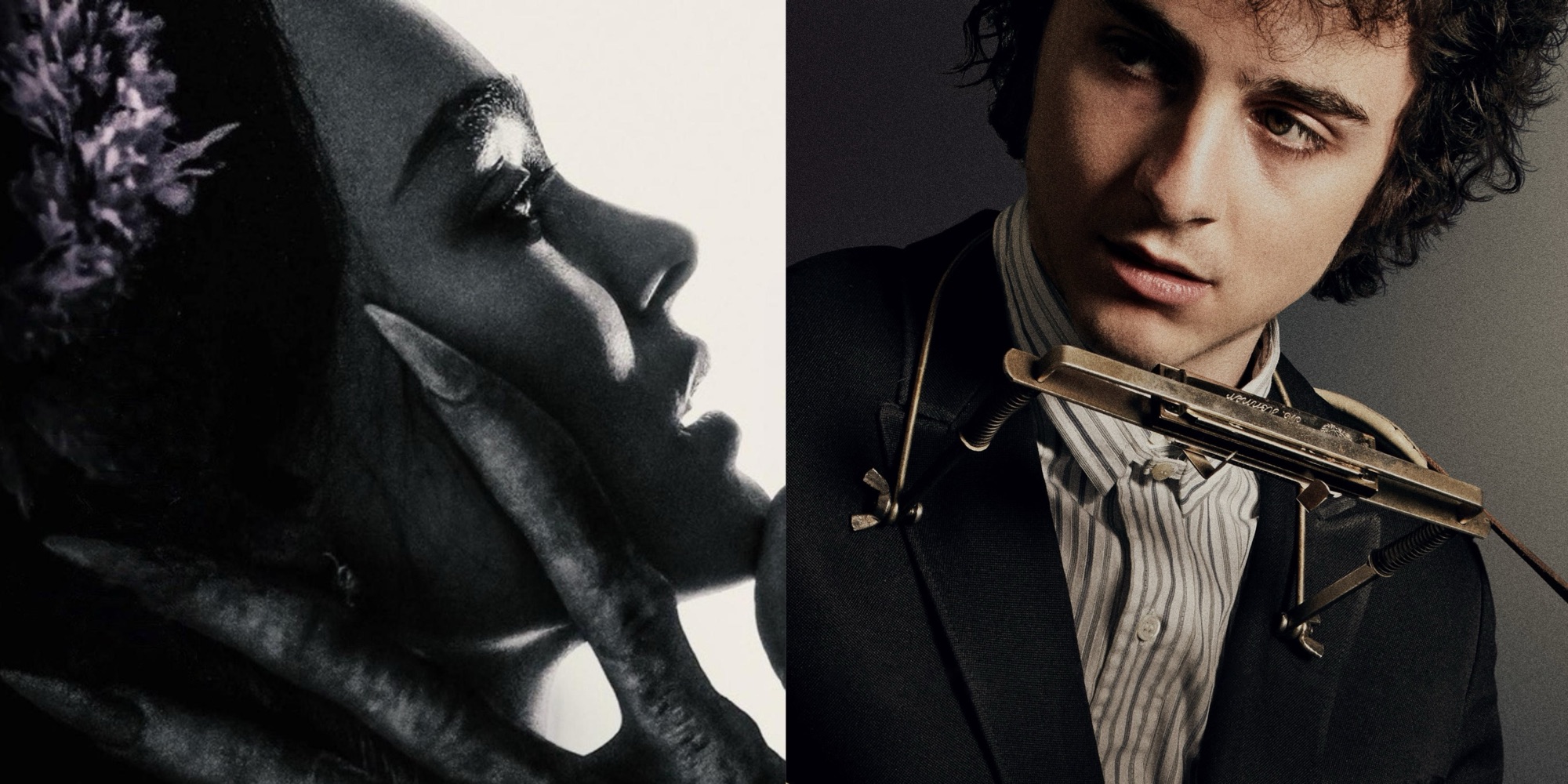
‘A Complete Unknown’
Nearly twenty years after directing Walk the Line, one of the most definitive musical biopics, James Mangold appears to be taking a similar approach with his new film, A Complete Unknown. Many factors contribute to its anticipation this awards season, mainly the focus on a real-life musician. Although I didn’t particularly love Mangold’s latest film on my first viewing, it’s impossible to overlook the outstanding performance by Timothée Chalamet, who has never been better.
What’s the Story: In 1961, a 19-year-old Bob Dylan (Chalemet) arrives in New York City from Minnesota with very little money and his guitar, intending to visit his idol Woody Guthrie, who was in the hospital suffering from Huntington’s disease. While there, Bob met fellow musician and social activist Pete Seeger (Edward Norton), who was immediately charmed by him and took him under his wing. Before long, Bob made a name for himself in the music scene as a talented folk singer, gaining appreciation from his fans. His career also led to a complicated love triangle involving fellow folk singer Joan Baez (Monica Barbaro) and activist Sylvie Russo (Elle Fanning), before the controversy surrounding his decision to go electric rather than stick to traditional folk sounds in his music years later.
It’s surprising how divided opinions are about Bob Dylan; he has always been a love-him-or-hate-him kind of artist. While I wouldn’t consider myself a fan, I’m familiar with several of his songs, such as “Like a Rolling Stone,” “Knockin’ on Heaven’s Door,” and “The Times They Are A-Changin’.” Do you think someone could come to appreciate him more after watching A Complete Unknown? It might depend on your taste for the folk genre. Mangold and co-writer Jay Cocks, adapting from Elijah Wald’s novel “Dylan Goes Electric!”, crafted a straightforward biopic that focuses on Bob Dylan’s rise to fame without becoming overly dramatized, as some experienced with other recent biopics. The film avoids a glossy portrayal, instead using the cinematographic style of Phedon Papamichael to authentically transport us to the early ’60s, a time that many associate with Dylan. While the film doesn’t offer many surprises, it effectively conveys the story’s essence.
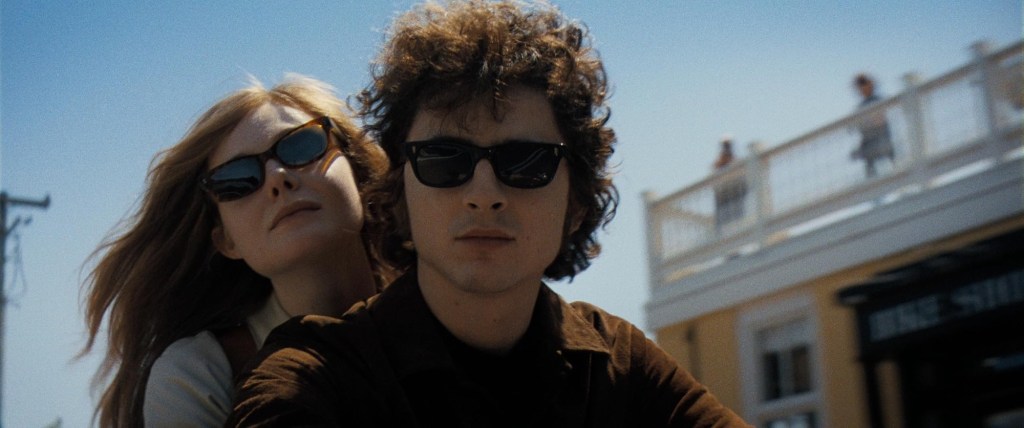
Having Chalamet portray the singer seemed like the most challenging role of his career, as he needed to convincingly transform into the character and leave a lasting impression on audiences. However, viewers will likely agree that he delivers one of his best performances. His extensive research throughout the film’s development paid off, allowing him to channel Dylan’s introverted mindset and let his music speak for itself. From what I know about him, he has always been a remarkable songwriter rather than a conventional singer. You can really see Chalamet embodying this character, especially since he plays the guitar and harmonica. The real Dylan is still alive, but the film explores his early twenties, a time when he became a well-known name in the genre, even though he was perceived as unlikable in some circles.
The best part about Chalamet’s presence in the film is that a standout supporting cast surrounds him. Monica Barbaro delivered a fantastic performance as Joan Baez, who also sang live. Her collaboration with Bob starts with respect and only gets rocky as they struggle to get along while performing “Blowin’ in the Wind” on stage. Additionally, this is the best performance I’ve seen from Edward Norton, who plays Pete Seeger. His relationship with Bob creates a supportive connection that helps shape Bob’s decisions throughout the story. Elle Fanning delivers a strong performance as Sylvie, a character based on Suze Rotolo. However, her character feels somewhat underdeveloped, particularly in the second act, where their complicated relationship deepens. I was pleasantly surprised by Boyd Holbrook (his third collaboration with Mangold following Logan and Indiana Jones and the Dial of Destiny), who stole the scenes as Johnny Cash, the Man in Black. Holbrook and Bob had a strong chemistry as they began their relationship as pen pals, offering each other encouraging words along the way.
As solid as this was, something about Bob’s life still feels like a mystery. It’s just recounting a few years of his life, yet it doesn’t provide many details about his family or the distinction of what made him who he is, buying into how he doesn’t believe in popularity. Topped with the same drama around him, it can make the nearly two-and-a-half-hour runtime feel like having difficulty finding any emotional throughline to the characters. The musical sequences are undoubtedly a highlight, especially his performance at the 1965 Newport Folk Festival, which led some fans to accuse him of “selling out.” For him, incorporating electric sounds into his new songs felt uncomfortable. However, whether this change significantly impacted his career is debatable, as not every fan embraces an artist’s evolution in sound. A recent example of this is Taylor Swift, who pivoted from country to pop, and she’s doing well.
Even though A Complete Unknown left me wanting to know more about the man in question, Timothée Chalamet truly shines as Bob Dylan in this biopic, which remains fascinating for those eager to learn about his history. It’s easy to see why he deserves a place in the Best Actor conversation. I’m very curious to rewatch it, as I was a bit tired during my first viewing. While the film may not set a precedent for this genre, it will likely cultivate a greater fascination for Dylan and his music, much like Todd Haynes did with I’m Not There.
Grade: B-
‘Nosferatu’
Looking back at some of the most anticipated horror movies of the year, how could anyone not have Nosferatu up there? Writer/director Robert Eggers’s fourth film has already caught the eyes of many who want to see how he’ll take on the classic vampire that was an unauthorized adaptation of Bram Stoker’s Dracula. I appreciate his work, but I wouldn’t categorize him as one of my favorite directors just yet. I never understood why everyone loves The Witch, although The Lighthouse effectively conveys the madness of isolation. However, he indeed found his voice with his underrated Norse mythology drama, The Northman, demonstrating that his filmmaking can appeal to a mainstream audience. Despite his last film not having a huge box office draw, Focus Features made the right decision for Eggers to finally get the passion project off the ground a decade later. Even if you’re unfamiliar with the 1922 silent film and hope to feel a sense of dread for two hours late around the holiday season, Eggers gets it right when Nosferatu might be remembered fondly as one of the better horror remakes.
What’s the Story: In the 1830s, estate agent Thomas Hutter (Nicolas Hoult) travels to Transylvania for a fateful meeting with Count Orlok (Bill Skarsgård), a prospective client. In his absence, Hutter’s new bride, Ellen (Lily-Rose Depp), is left under the care of their friends, Friedrich and Anna Harding. Plagued by horrific visions and an increasing sense of dread, Ellen soon encounters an evil force that’s far beyond her control.
Everything he brought to his previous films enhanced what he could achieve with Nosferatu. There’s truly no one else who could have created this version. You may already know the story of Dracula, especially from Francis Ford Coppola’s adaptation in the ’90s, which means the setup that leads to the unfolding events might not hold many surprises. However, despite the familiarity with the tale, there is a compelling sense of immersion in how Eggers skillfully navigates the narrative while maintaining an exceptionally dark and bleak tone throughout. Sometimes, it can get a quick, funny line, but combined with a scope one can imagine, it creates an agitated and creepy atmosphere that never toed the line by adding a few jumpscares that genuinely got me. And while this doesn’t go for a typical horror outing, it goes for a slow-burning time. That’s still my biggest gripe with Eggers as a director when it would help move the story faster (the passage of time did throw me off). Not everybody who adores him will feel the same, but that alone is why it’s hard not to throw the “masterpiece” label on it now.

Despite having only one negative aspect and knowing how it will end, this film commands respect for nearly every technical element on-screen. Jarin Blaschke’s cinematography creates one of the most visually stunning horror films to date. The beautiful visuals, intricate costumes, and production design that evoke the 19th century are all meticulously crafted and do not go unnoticed. These elements alone are sufficient to ensure that a vampire movie can be taken seriously in the entertainment industry once again.
Hoult is having a strong year with his line of work, especially after recently giving one of his best performances in Juror #2. As Thomas, we’re in his place when first meeting Count Orlak, feeling unsure about what’s going on once we step into his castle and knowing how to sell terror if we were in the same situation. Skarsgård as Orlak is unbelievable. If you thought his portrayal of Pennywise the Clown from the It series was terrifying, he’s completely unrecognizable in his appearance as another iconic horror figure. From his deep, raspy voice and hiding his presence through shadows and the background, I kept forgetting that it was him under the prosthetic makeup and an additional feature to his look I didn’t see coming. Kudos to the marketing team for skillfully concealing his appearance until the right moment. It’s fantastic that he has the opportunity to redeem himself with this exceptional role following the disastrous remake of The Crow.
But who impressed me the most from the cast had to be Lily-Rose Depp. Before this, I thought of her as another nepo kid starring in less-than-stellar work to pass by Hollywood, unsure if she could make Ellen physically and emotionally captivating to follow. This role requires so much of her on-screen, from convincingly changing her emotions to her convulsions/seizures when Ellen is tranced through the darkness or possessed by a presence who knows her fears. Depp might’ve given the most surprising performances all year, but I don’t see getting any major awards consideration from her. However, she proves she can act when the right script is given to her. The rest of the cast doesn’t disappoint, from Taylor-Johnson, Ralph Ineson as Dr. Wilhelm Sievers, Emma Corin as Fredich’s wife Anna, and Willem Dafoe as Professor Albin Eberhart, the Abraham Van Helsing adjacent character who knows Nosferatu is real. Funny enough, Dafoe received his first Oscar nomination for his park in the 2000 mystery Shadow of the Vampire, where he played the actor who first played Nosferatu, Max Shrek.
By the end, Nosferatu will stand as Robert Eggers’s strongest directorial outing and probably my favorite film he’s done so far. It gets under your skin with its sense of dread. While it may not make my top ten list, I was impressed by its dark, atmospheric take on a familiar story and the memorable performances from Depp and a transformative Skarsgård. Given that this was one of my most anticipated films toward the end of the year, it certainly leaves a lasting impression. The last shot alone is a piece of imagery that’s gonna linger in my head.

 DC's Take