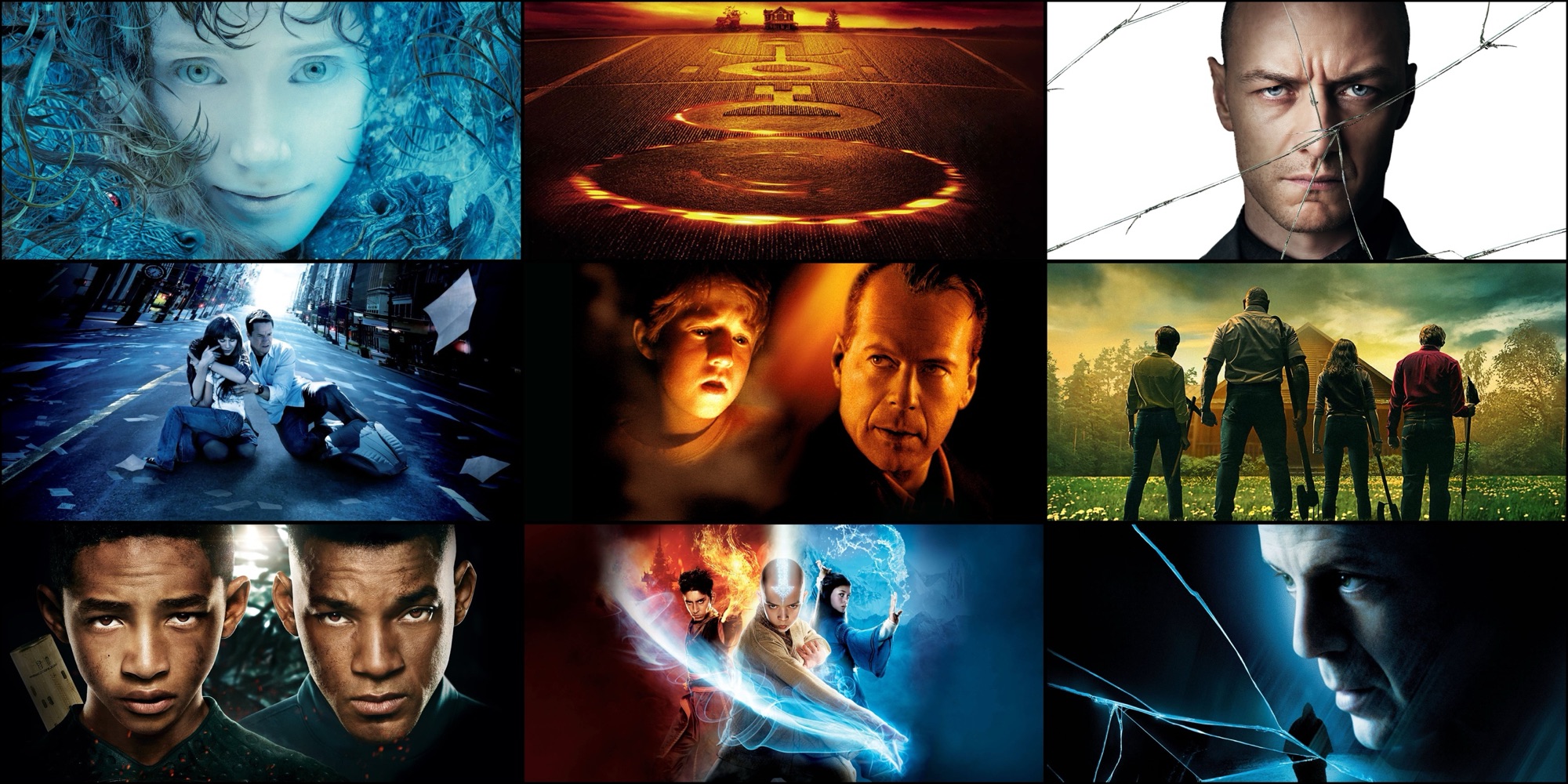
Has there been a filmmaker more polarizing than writer-director-producer M. Night Shyamalan? Maybe, but his name comes first. Say what you will about the Pennsylvania native (born in India). But there’s no denying he started strong with three hits since The Sixth Sense 25 years ago, becoming synonymous with mind-bending twists and suspenseful storytelling. So many people quickly assumed Shyamalan was destined to be Hollywood’s next answer to Alfred Hitchcock or the next Spielberg, according to Newsweek. Since The Village, his reputation has seen his fair share of critical and commercial duds one after the after, feeling like he’s relying on an incoming twist. Unsurprisingly, he’s just one of a few directors to get nominated for an Oscar only to receive Golden Raspberries years later.
Honestly, there was a time when I was a hater to the point of mispronouncing his name jokingly, but not just because some of his films were horrible. I and everyone else expected more from him since thrillers seemed to be his bread and butter. Shyamalan’s filmography is a rollercoaster that will see him return to form or confuse us with what we paid to see, like with his latest project, Trap.
In this latest installment of Director’s Canvas, we look back at Shyamalan’s filmography and evaluate his feature films from worst to best. Praying with Anger, his directorial debut is the only one not included because it is not well-known and is often skipped. If I put these in categories: 15-12 (Unwatchable), 11-7 (Mediocre/ Okay), 6-4 (Good/ Re-watchable), and 3-1 (Great).
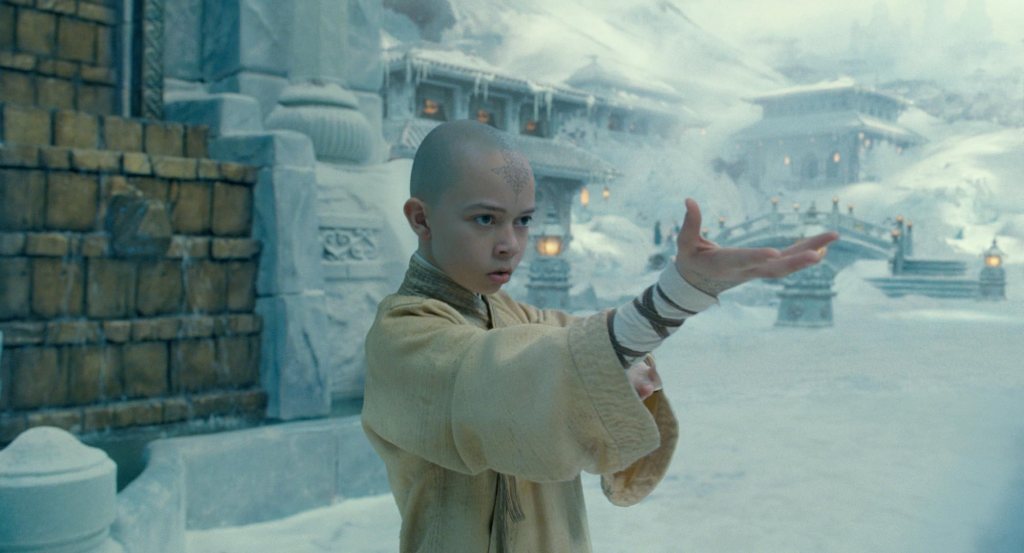
15) The Last Airbender
Release Date: July 1, 2010
Budget: $150 million
Domestic Box Office: $131.8 million/ Worldwide: $319.7 million
RT Score: 5%
Attempting to make live-action movies based on cartoons has usually been risky since many people grew up watching that specific title. Only a few succeeded, but The Last Airbender is a lesson on how not to do an adaptation of the critically acclaimed Nickelodeon series Avatar: The Last Airbender. Shyamalan needed to improve with his run of films, but when this was announced, the potential was there. And we ended up getting something horrible in every sense of the word. After being freed from an iceberg, a young Avatar named Aang (Noah Ringer) must master all four elements (Water, Fire, Air, Earth) to restore balance to their world and defeat the Fire Nation.
Despite hearing rave reviews for nearly two decades, I still haven’t seen the show. Shyamalan was trying too hard to fit an entire season into a two-hour feature film that failed on every level. Nothing in the storyline has ever had the potential to be enjoyable and innovative with Aang. However, it is utterly dead to construct an already-created environment where humans can bend the elements. You also get dull scenes of exposition mixed with embarrassing and wooden performances from everybody (Noah Ringer, Jackson Rathbone, etc.), adding to the fact the whitewashed casting can’t be ignored. The action had no personality, and the stakes were below zero. When my sister and I saw this on my 14th Birthday, it left me devastated and pissed off, realizing Shyamalan made an absolute mess. To this day, The Last Airbender is one of the worst movies I’ve ever seen, failing to bring to life a classic. With five Razzies to its name (including Worst Picture) and a canceled trilogy, it makes Dragonball: Evolution look tolerable by comparison.
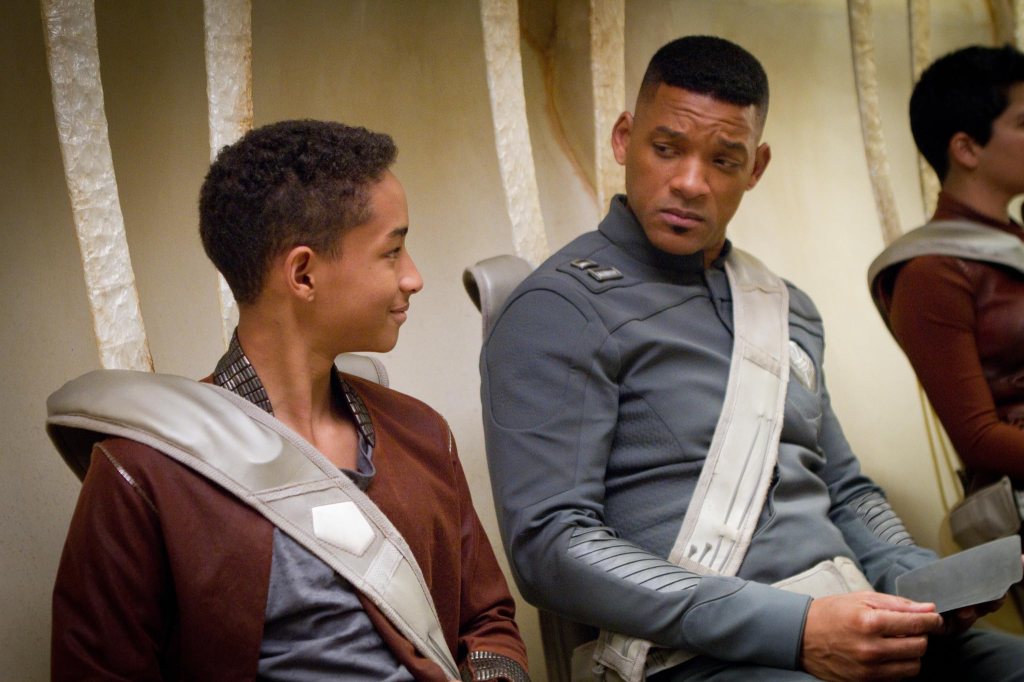
14) After Earth
Release Date: May 31, 2013
Budget: $130 million
Domestic Box Office: $60.5 million/ Worldwide: $243.6 million
RT Score: 12%
After Earth is one of the few films I’ve seen where I nearly left the theater. My gut prompted me to walk back in for some absurd reason and hope that anything would improve. Oh, how wrong? Every time I think about the original 2013 sci-fi, it irritates me how tedious and bad it turned out to be a decade later. After crash-landing on an inhabited Earth that’s been evacuated 1,000 years ago, Cypher Raige (Will Smith), a soldier without fear, sent his son Kitai (Jaden Smith) to retrieve a rescue beacon and reach a distress signal to get them back home through the uninhabitable environment with dangerous predators.
It could’ve been promising on the survival aspect alone, and the fact Sony’s marketing didn’t even mention Shyamalan’s name was enough to get people in and focus on how it could be another sci-fi hit starring Smith, who came up with the story. Was it, though? Nothing peeks from the unimpressive CGI and takes itself seriously, even with a few failed attempts to be funny. It’s all boring, with no scene standing out. We all enjoyed the on-screen pairing of Will and Jaden in The Pursuit of Happyness. That charisma and chemistry are absent mainly for playing father and son when they barely have scenes together once Kitai goes on a mission, leaving us with no emotional attachment. It was a clear sign of Hollywood nepotism at its worst, a controversial topic for the movie. Within the first two minutes alone, it was going to be a rough ride, and it’s worse when the movie is on Jaden’s shoulders, and it quickly shows how terrible his line deliveries are and an all-time bad and cringy performance. After Earth, the second-worst film of 2013 (behind Movie 43), was never going to be the beginning of a franchise. Will put it best when he described it as “the most painful failure of his career.” It was nominated for six Razzies, winning Worst Actor, Supporting Actor, and Screen Combo.
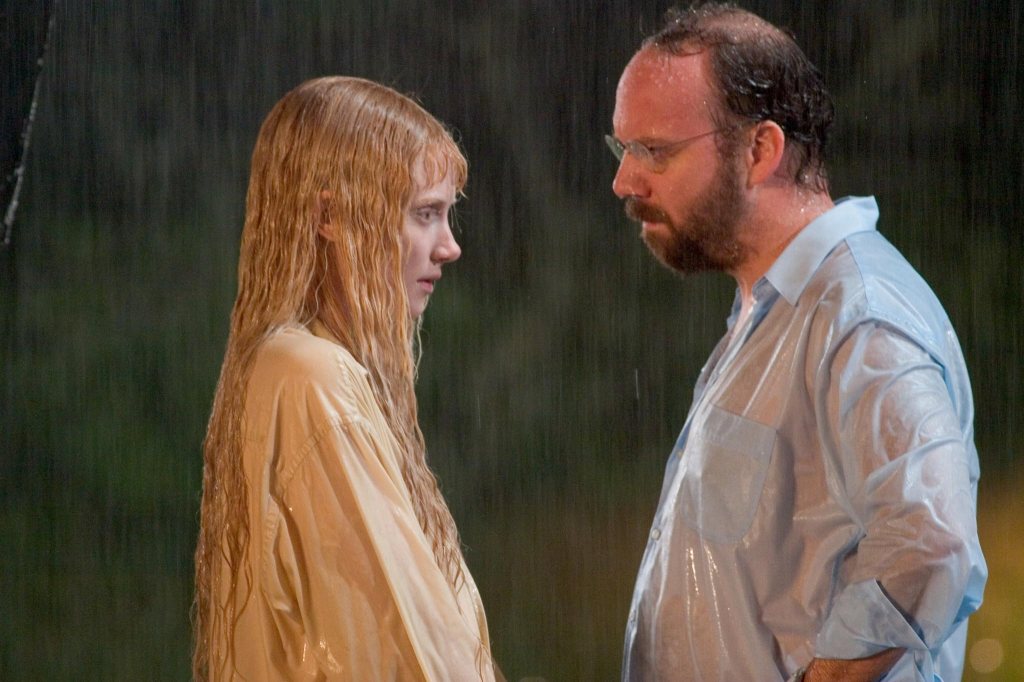
13) Lady in the Water
Release Date: July 21, 2006
Budget: $70 million
Domestic Box Office: $42.3 million/ Worldwide: $72.8 million
RT Score: 25%
If you were one of the few who had the misfortune to see Lady in the Water in theaters, you probably included this Shyamalan fantasy somewhere on the worst of the year. But who can blame them? To his credit, it is undoubtedly the most original story when described as a fairytale, but the intrigue stopped, throwing out all sense of meaning. When Cleveland Heep (Paul Giamatti), an apartment complex super in Philadelphia, is saved from drowning in the pool by a girl named Story (Bryce Dallas Howard), she tells him she’s a water nymph from the “blue world.” She needs his help to return home before these unknown creatures called the Scrunt to reach the surface.
Giamatti’s performance is the saving grace throughout since he’s always been one of those actors who can turn lousy material into something good. However, just because Shyamalan told this bedtime story to his daughters does not guarantee that we will find it interesting. In fact, it’s painfully boring. All this world-building said through exposition to us never lets us imagine it when the ridiculous names Story tells Cleveland is never fascinating to take seriously or follow. But Shyamalan puts himself in a non-cameo role to prove his character’s book will inspire the next President of the United States and change the world, or something that only shows him as self-indulgent. That also implies not subtly trying to get Bob Balaban to be the snooty film critic. Lady in the Water was noticed as the first sign things might go downhill for him, as shown by its Razzie wins for Worst Director and Supporting Actor.
12) The Happening
Release Date: June 13, 2008
Budget: $48 million
Domestic Box Office: $64.5 million/ Worldwide: $163.4 million
RT Score: 18%
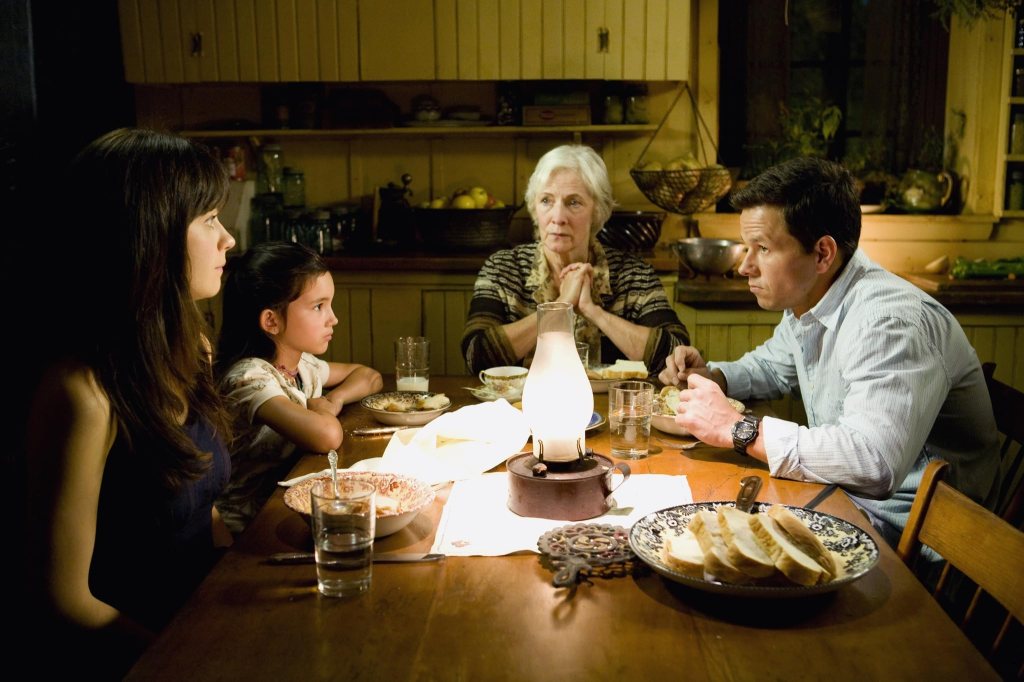
Though there wasn’t much expectation for The Happening, given that his previous two films didn’t meet the expectations of both reviewers and viewers, it might have been because this was his first R-rated thriller with a mystery at its core. I didn’t see it in theaters, but my mom and sister did while they saw The Incredible Hulk opening day. Luckily, I decided not to see the weird, failed attempt, which was the least disturbing. An unknown toxin is released into the air and is spreading across the Northeast, causing unexplainable mass suicide in the country. All the while, science teacher Elliot Moore (Mark Wahlberg) and his wife Alma (Zooey Deschanel) try to stay safe before this mysterious plague gets a hold of them, too.
What sets The Happening apart from anything Shyamalan has done is that this was his so-called attempt to make a B-movie. And if that was his intention, I don’t think this was what we had in mind. The story was already dumbfounded to think plants or toxins in the air are killing people and making the wind terrifying, with the twist spoiled midway. It may start chilling, but it goes into hilarious territory, providing unintentional laughs in any bad movie. You’re telling me you didn’t laugh when a guy ran himself over with a lawnmower? Mark Wahlberg’s performance lets us know he doesn’t know what’s going on with every line delivery, almost coming off as a question every time. But Zooey Deschanel isn’t better with her wide-eyed expressions, which is sad because she’s a decent actress. And it is worse when we see Wahlberg’s character talking to a plastic plant. His response to the movie is self-explanatory: “F— it. It is what it is. F—ing trees, man. The plants. F— it.” The Happening is terrible. Though, it might provide some laughs when drunk.
11) Wide Awake
Release Date: March 20, 1998
Budget: $6 million
Domestic Box Office: $282,175/ Worldwide: N/A
RT Score: 45%
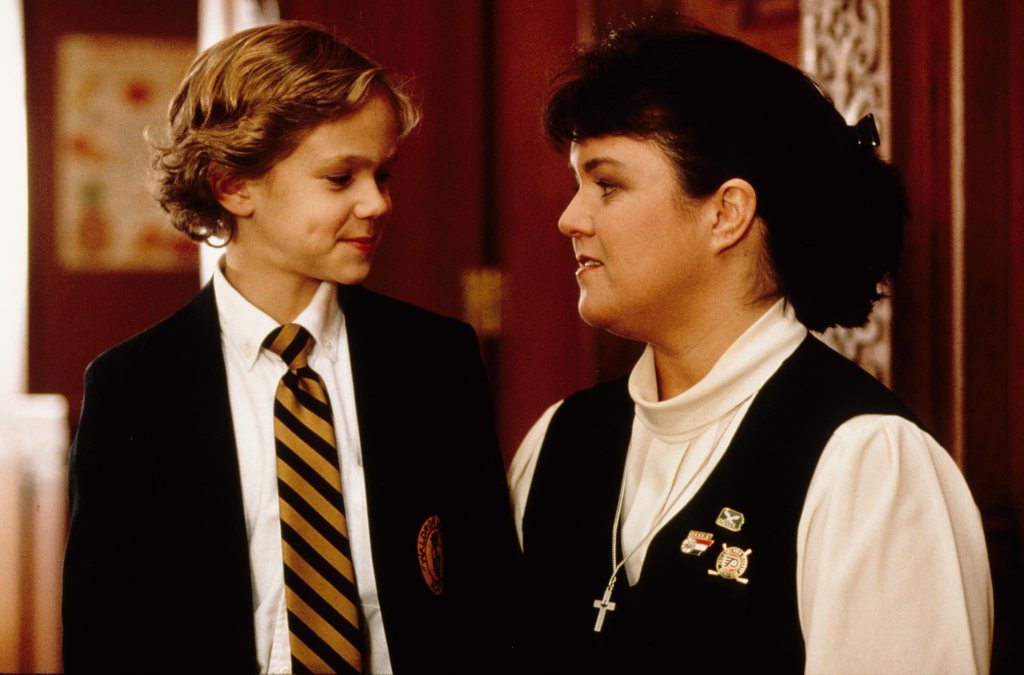
Did you know Shyamalan came out with a film one year before The Sixth Sense? I probably didn’t realize it, especially when I was older, when there’s Wide Awake. The thing that stands apart from everything he’s done since is this is more of a lighthearted family drama that’s different, even if the results are just painfully satisfactory. We follow Joshua A. Beal (Joseph Cross), a ten-year-old on a mission to find answers about whether God exists after the death of his grandfather (Robert Loggia), with whom he was very close.
Many did not see Wide Awake when it came out or were even aware this existed. But looking at it now for the first time, it’s hard to believe he directed it. After filming, it was plagued with production problems, including being completed three years prior and when the disgusting humanoid pig (Weinstein) re-cut the movie. There is an importance of someone young wanting to know the answers to life through various religions. But besides decent performances from the young Cross, who’d later star in Jack Frost and Ryan Murphy’s Running with Scissors, and Rosie O’Donnell as a Phillies-loving nun at his Catholic school, there’s something about the story he’s telling that comes across as corny and emotionless to care about Joshua’s journey, primarily through what seems like endless narration. It wouldn’t have happened if Shyamalan wanted us to make us cry since we had difficulty finding the right tone. Wide Awake isn’t as bad as I imagined it would be, it’s just nothing special when it deals with touching on losing faith far better in Signs. Technically, this was the first twist he had done, though I saw it coming.
10) Old

Release Date: July 23, 2021
Budget: $18 million
Domestic Box Office: $48.3 million/ Worldwide: $90.1 million
RT Score: 50%
It was already confident that Old, released in the summer of 2021, would be among his more bizarre movies. And after seeing this twice now, I find it difficult to accept that Shyamalan could pull off a lousy story with an intriguing idea. Two families progressively age without a means of escape while lounging on a quiet beach in a tropical resort.
Just when you believe Old was going to have this profound message about not letting time pass us by or living in the moment with loved ones, this goes down the list of his worst cliches, which come off as unnatural from the writing and are not even worthy of being part of a Twilight Zone episode. Even worse, talented actors like Gael García Bernal and Vicky Krieps don’t excel at their work, and let’s not forget to mention Ken Leun’s awkward performance. It’s one movie where you’re trying to pick apart potential plot holes instead of paying attention to the uninteresting characters in the ensemble. I haven’t read the graphic novel “Sandcastle,” which his daughters gave him on Father’s Day, but Old wasn’t as laughably bad as The Happening, but he could’ve made more effort with an idea like this.
Full Review—> RIGHT HERE
9) Glass
Release Date: January 18, 2019
Budget: $20 million
Domestic Box Office: $111 million/ Worldwide: $247 million
RT Score: 37%
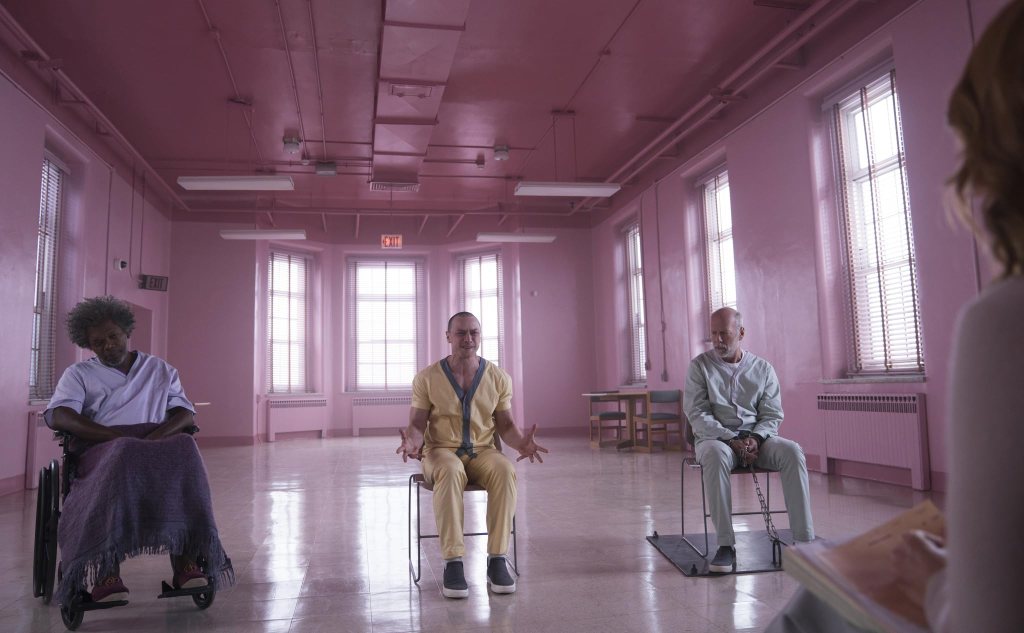
The thought of Shyamalan directing the third movie in an unexpected trilogy sounded too good to be true. Continuing what we got previously in Split but also Unbreakable nearly two decades later, Glass had almost everything in store to be a great time. Unfortunately, it was a closure to a trilogy that was a wasted opportunity to be spectacular. When David Dunn (Bruce Willis) thought he had captured Kevin Wendall Crumb (James McAvoy), both were caught and put in the Raven Hill Memorial, where Elijah Price/ Mr. Glass (Samuel L. Jackson) is also held. There, Dr. Ellie Staple (Sarah Paulson) tries to convince all three of them are delusional to think they don’t have powers.
After a great first half and reintroducing us back to Dunn, the shift to the psych ward made it hard to sustain the excitement. Because of that, you don’t get much action and a plot that goes nowhere. Out of the three leads, McAvoy continues to commit through his variety of identities, carrying Glass on his shoulders when Willis doesn’t get much to do and Jackson not saying anything until an hour in. Though the intended tone is more grounded in superhero fare, there’s more to it than just tying up loose ends to connect the three films, especially considering how little the plot advances and how little the momentum is felt. Towards the end, it turns into one of the most underwhelming third acts in any of his films, leaving me thinking, “Well, that wasn’t life-changing.” Glass isn’t as bad as some made it out to be, but compared to the other two, it’s undoubtedly a letdown, and surprisingly, I expected more.
Full Review—> RIGHT HERE
8) Trap
Release Date: August 2, 2024
Budget: $30 million
Domestic Box Office: $15.6 million/ Worldwide: $20 million (as of 8/5/2024)
RT Score: 52% (as of 8/5/2024)
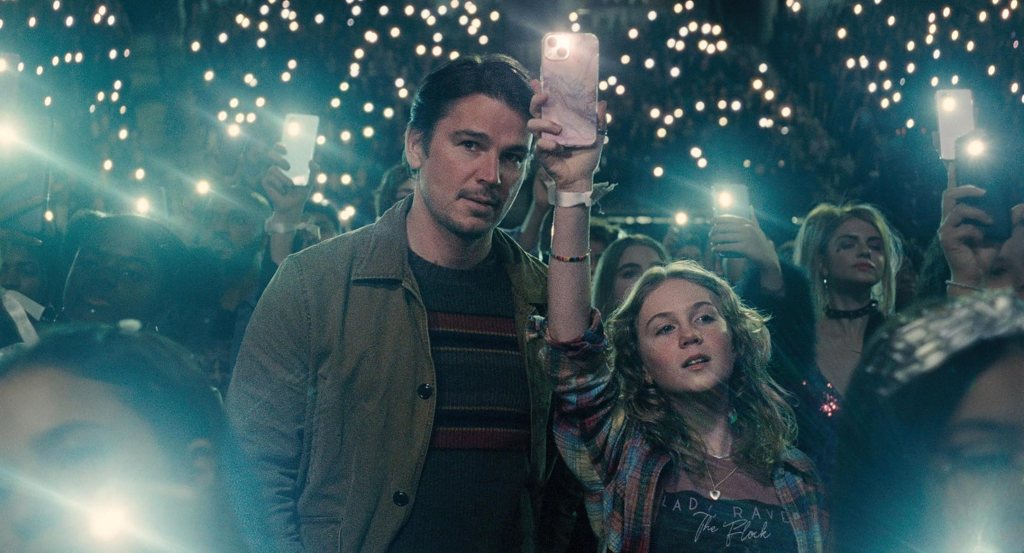
Out of everything Shyamalan has done over the last decade, there’s something about his latest film, Trap, that makes me wonder whether it was supposed to be intentionally funny. So far, what we have is another thriller of his that will elicit many reactions, good and bad. For me, it was a slick yet messy experience. Josh Hartnett’s Cooper Adams takes his daughter to see her favorite pop star, Lady Raven. What was meant to be a great time turns into a stressful situation once he finds out the entire concert is a sting operation to catch the serial killer, The Butcher, who he is.
On the one hand, anyone will get a kick out of Hartnett’s performance, as he’s maintaining a calm composure in hiding his dark, psychopathic secret from his kid while trying to use his brain to exit the arena without getting caught by officials. The complexity of his characters is enough to root for him in the endgame. Having the story primarily set at the concert shows that he knows how to handle a simple story with limited settings. On the flip side, it becomes absurd after the first half, when the suspense slips in and out. This occurs when it chooses to depart the arena environment and loses a significant amount of energy. And it’s difficult not to interpret the film as a way to demonstrate to his fans how wonderful his daughter is as a vocalist. I wouldn’t call Trap one of his strongest outings, but there are some laugh-out-loud moments to get out of this on a good day.
Full Review—> RIGHT HERE
7) The Village
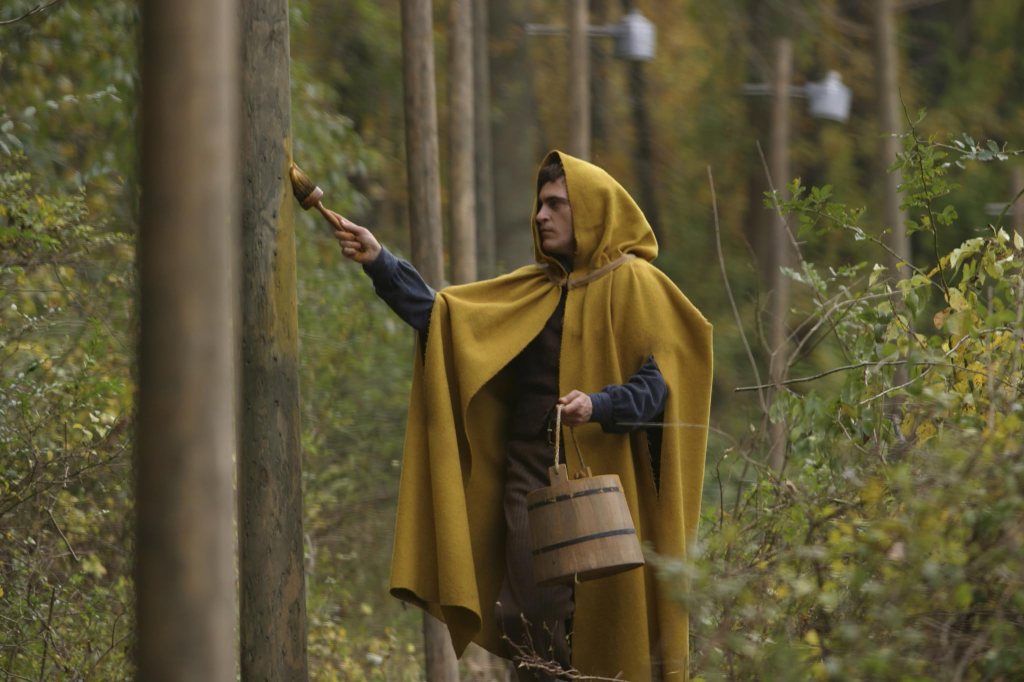
Release Date: July 30, 2004
Budget: $60 million
Domestic Box Office: $114.2 million/ Worldwide: $256.7 million
RT Score: 44%
Coming off of three previous box office successes, The Village had to be one of the most anticipated movies for fans who had no clue what to expect. Twenty years later, it’s still carrying splitting opinions, calling it misunderstood or terrible. It’s never one to be called “bad,” but I still consider it a disappointment that didn’t meet those expectations. Set in the 1800s, the remote village of Covington lives in fear of mysterious creatures, referred to as “Those We Don’t Speak Of,” hiding beyond the woods. When one of their own is seriously injured, Ivy (Bryce Dallas Howard), a blind woman, ventures into the woods to find medicine.
The Village provides the most extensive cast Shyamalan has worked with, including Joaquin Phoenix, Howard, William Hurt, Adrian Body, Sigourney Weaver, and Brendan Gleeson. And luckily, it has some qualities to admire, from Roger Deakins’ beautiful cinematography, James Newton Howard’s Oscar-nominated score, and Howard and Hurt delivering standout performances. However, what divides opinions about this is how it misled viewers into thinking they saw a psychological horror movie, although it’s more of a period drama with sporadic scary moments. Most of the frustration ultimately came with the twist ending that had me citing, “Really?” Everything was building toward this potential intrigue of what these creatures wanted, or having this suspension of what this town was hiding was some secret. It all culminated in an anti-climatic finish that left me questioning how it doesn’t make sense. The Village is at its best when creating a creepy atmosphere within this community, but it serves more than an underwhelming thriller.
6) Knock at the Cabin
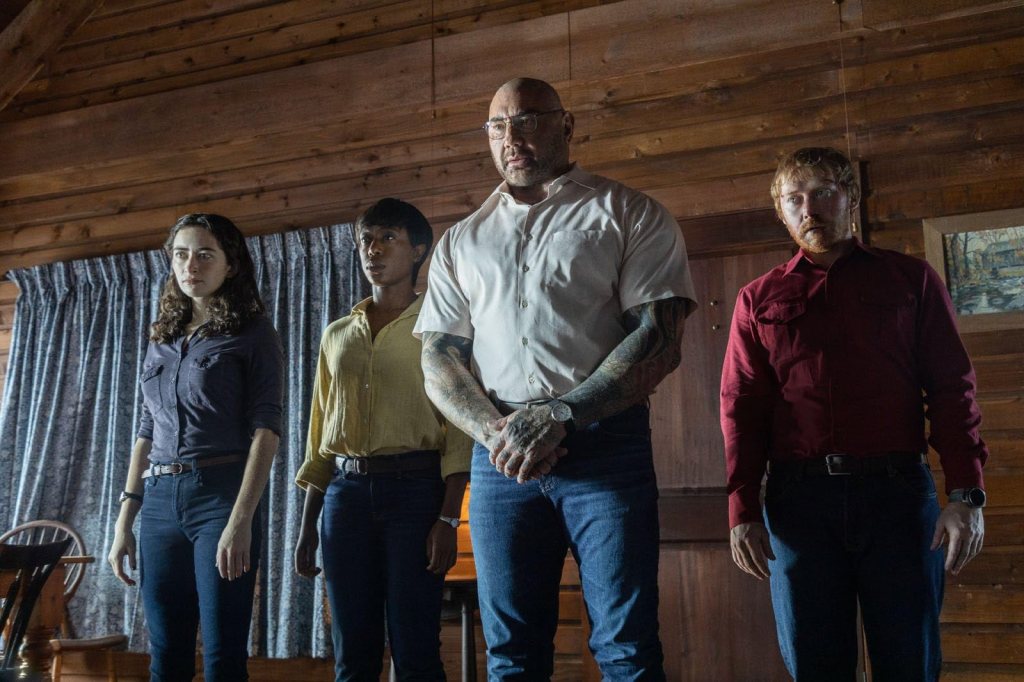
Release Date: February 3, 2023
Budget: $20 million
Domestic Box Office: $35.4 million/ Worldwide: $54.8 million
RT Score: 67%
Shyamalan’s adaptation of Paul G. Tremblay’s 2018 novel “The Cabin at the End of the World” is surprisingly divisive among fans, especially for those who read it. Around this time, it’s another film of his where I didn’t have expectations, though I’m only hoping it’ll be back to basics with him after both Glass and Old didn’t work for me. Though flawed as Knock at the Cabin may appear within the plot, he has to get some credit for its sense of urgency. Four strangers take a couple and their daughter hostage in their remote Pennsylvania cabin. But this isn’t any random home invasion, as the intruders tell them they must sacrifice one to prevent the apocalypse from happening.
Except for a few flashbacks, the conflict is limited to the cabin’s interior, demonstrating Shyamalan’s skill at giving the impression that the walls are closing in on us if we were in this predicament. Like Jonathan Groff and Ben Aldridge’s characters, Eric and Andrew, it’s a matter of what you believe is true or nefariously skeptical about the BS told to think killing one of their own will stop the chaos around the world. Yet, it lets us ponder an important, risky question: “Are we willing to sacrifice a loved one to save the world and face whatever’s coming?” Leave it to him to have a philosophical and emotional thriller in this conundrum. Dave Bautista honestly gives one of his best performances, showcasing he has dramatic skills outside of sci-fi and action. By the end, it doesn’t quite stick to the landing since it leaves you with more questions and differs from the book. Who knows how this would’ve turned out from another director, but Knock at the Cabin keeps the concept tense throughout, making it watchable.
Full Review—> RIGHT HERE
5) The Visit

Release Date: September 11, 2015
Budget: $5 million
Domestic Box Office: $65.2 million/ Worldwide: $98.4 million
RT Score: 68%
No part of me was remotely excited about The Visit since his last three movies had me questioning what happened to his talents behind the camera. But hearing early word of mouth and how it’s on a lower budget (borrowing the $5 million to mortgage his own house) with Jason Blum producing, maybe this could be a return to form for him. To my surprise, walking out of the theater (one of the first movies I saw in college), I found this decent, which hasn’t been said about one of his efforts in forever. Siblings Rebecca (Olivia DeJonge) and Tyler (Ed Oxenbould) visit their grandparents, Nana (Deanna Dunagan) and Pop Pop (Peter McRobbie), for the first time while she films everything for a documentary for their mother (Kathryn Hahn). For the entire week, they didn’t realize that they were having some disturbing behavior abnormally.
What made it work was the use of found footage, a gimmick that played out so much in horror movies back then. But works in its favor since Becca is an aspiring documentarian, which makes it more concerning. As far as performances go, DeJonge and Oxenbould weren’t bad, with the hopes of DeJonge having a steady career afterward. Is it horrifying? Not really, even though there were a few eerie moments. Though they don’t always work to surprise you, there are occasional jump scares. Additionally, the final act intensifies the unsettling element you were hoping to uncover, even with its expected twist. The Visit isn’t everyone’s cup of tea, and I won’t go as far as to say it’s excellent. But it came out as a surprise coming from Shyamalan. This showed suspenseful and humorous moments when needed in some sort. It was too early to tell if Shyamalan was back to his roots as a terrific directed, but it’s one of those movies that keeps you locked in until the end. For me, this was a semi-return to form.
4) Split
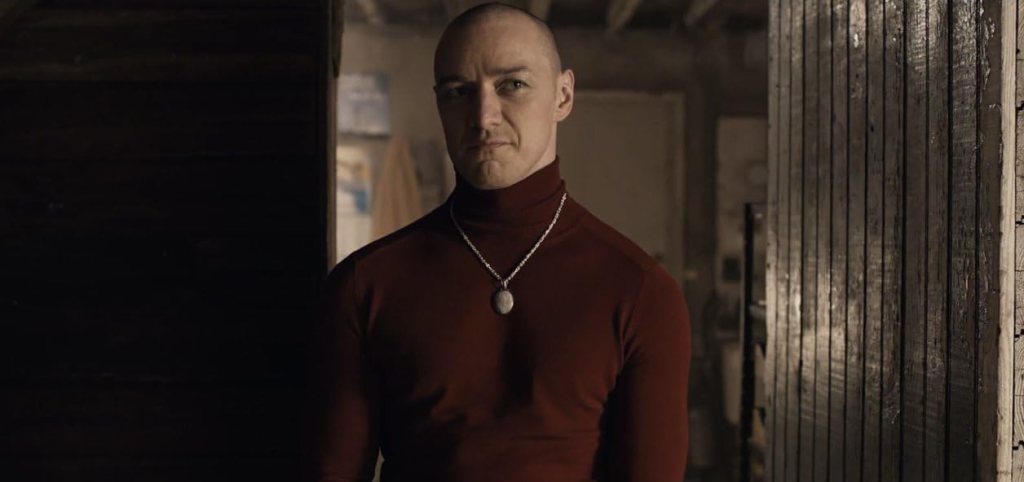
Release Date: January 20, 2017
Budget: $9 million
Domestic Box Office: $138.3 million/ Worldwide: $278.4 million
RT Score: 78%
Two years after The Visit, Shyamalan and Blumhouse teamed up again for a thriller some happily called a proper return to form in Split, which I agree. Watching this was a reminder of how creative his mind was with his earlier work. It proved to be his most favorable film in recent memory, best described as his Psycho. After a man (James McAvoy) kidnaps three teenage girls, he keeps them locked up somewhere underground, only they discover he’s diagnosed with dissociative identity disorder (DID). With 23 identities living inside his brain, they’ll soon face another, “The Beast.”
There’s a lot to like about Split, but everything would’ve fallen apart without McAvoy’s career-defining performance. It’s been years since we’ve seen standout acting in Shyamalan’s filmography, and McAvoy disappeared in playing a disturbed man with alternating personalities, including OCD Dennis and nine-year-old Hedwig, switching in and out in complete earnest. He should’ve been in consideration for a Best Actor nomination if the Academy wasn’t constantly ignoring horror. But this is a good story because, rather than assuming the viewer knows what’s going on, Shyamalan explains how childhood trauma can impact a person’s mental health. This applies to both Kevin and Anya Taylor-Joy’s Casey, who is shown reacting to the situation by looking back at her past. Sure, some dialogue isn’t great, and you tend not to care about the other girls. But the claustrophobic setting and intrigue kept me locked in with Split. And just when I thought it would be rare not to have a twist, the fact that this takes place in the same universe as Unbreakable was incredible.
Full Review—> RIGHT HERE
3) Signs
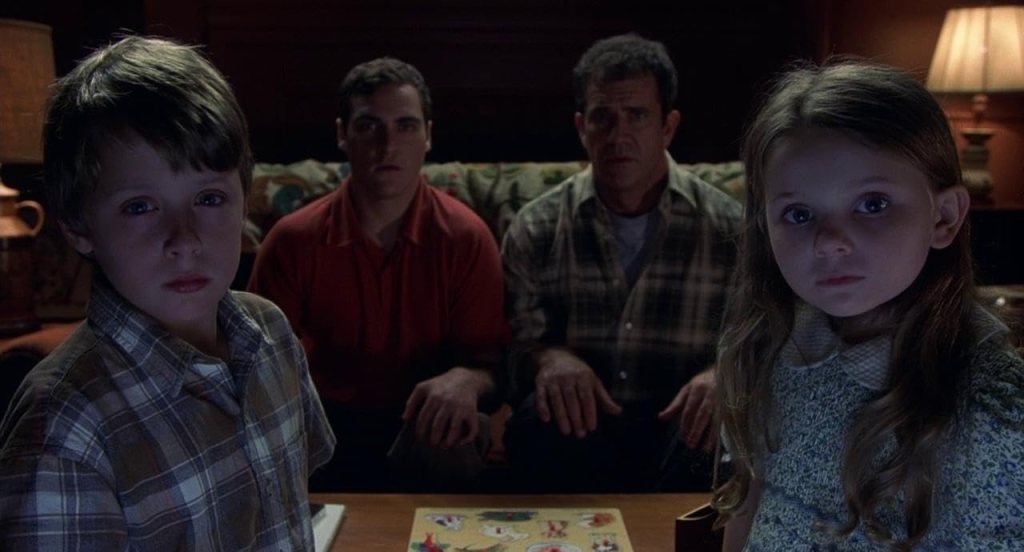
Release Date: August 2, 2002
Budget: $72 million
Domestic Box Office: $228 million/ Worldwide: $408.2 million
RT Score: 75%
Just when you think Shyamalan would make Signs as another typical alien invasion movie with the world on the path of destruction from these other worldling beings, it’s almost like him to change things up to inject this Hitchcock-like thriller about a supernatural event and offer some humanity within its characters. Graham Hess (Mel Gibson), a former priest struggling with faith after his wife died, discovers a series of crop circles in his cornfield. As others have reported, it’s not the only location where the phenomenon is seen around the world, leading to the existence of extraterrestrial life.
Those fascinated with life beyond our universe have lots to love about Signs. However, when it delivers on the creep factor, Shyamalan is at his best when focusing on the characters’ perspectives before it builds up to showing any alien. In the last film he did before becoming the controversial hothead he’d become after, Gibson plays a man who lost his faith and doesn’t believe this ridiculous alien nonsense until it could lead to being a massive coincidence. This family is dealing with the possible end of the world and this sudden obsession with what they could do, coming together in more ways than most. This creates a perfect atmosphere in this farm setting, especially some fantastic suspense in the tall crops or the camouflage. The film also boasts a great cast, including Gibson, Joaquin Phoenix, Rory Culkin, and a young Abigail Breslin in her debut role. Despite the film’s greatness, some aspects of the script have their fair share of problems, from questionable dialogue here and there to how the aliens are defeated. Half of Earth’s population is 70% water, and they still come down? But for my money, there might be some reasonable answers we didn’t know then and probably do now. That’s not to say it made for a compelling ending, but it’s not one that caused anger. Signs has always been one of his very best, and those who don’t think it is will dumbfound me. Of course, this impacted Chris Stuckmann’s life and his ongoing passion for film criticism and filmmaking.
2) Unbreakable
Release Date: November 22, 2000
Budget: $75 million
Domestic Box Office: $95 million/ Worldwide: $248.1 million
RT Score: 70%
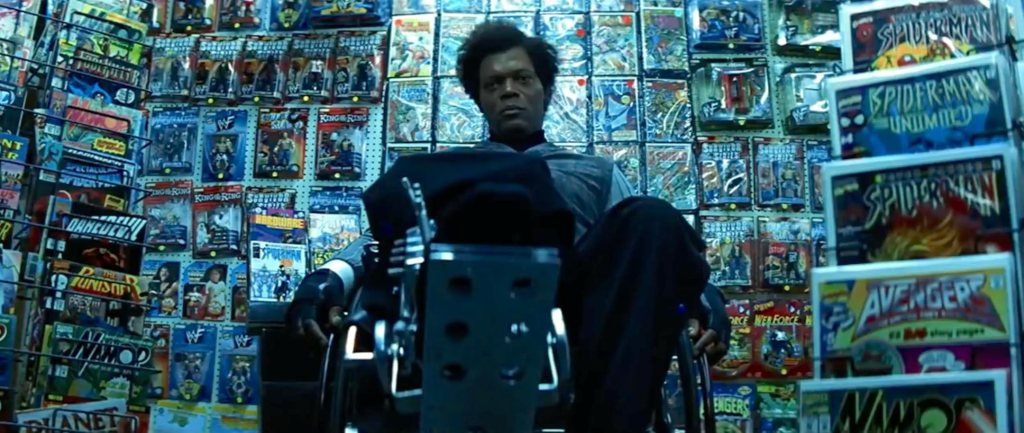
When we look at Unbreakable, it would be the ultimate challenge for Shyamalan to deliver another original film a year after The Sixth Sense. But it was very close to doing so with a movie that not only gets better on subsequent viewings but may also be in the conversation as one of the most underrated superhero movies of the 21st century. After a train crash in Philadelphia, security guard David Dunn (Bruce Willis) is the sole survivor of the Eastrail 177, who sustained no injuries. Having no prior memory of being sick or injured, comic book enthusiastic Elijah Price (Samuel L. Jackson), who suffers from a disease that makes his bones fragile, believes David is a real-life superhero.
Unbreakable isn’t just an ordinary approach to a superhero movie where it carries a big budget and tacts on action scenes one after the other; it’s described as a slow thriller that deals with how one deals with discovering these superhuman-like abilities in the real world, especially when having a character who can get hurt easily and vice versa. This should have been awful on paper, but it plays out like any other comic book origin story, which is more grounded than you could hope for. Essentially, it questions what our potential would be if we were given these powers and whether it would improve our lives and the state of the world. Willis’ second collaboration with Shyamalan shows him in another fantastic performance outside of action, calming David and helping him understand what he’s been dealing with after his accident before the train. Jackson’s Ejliah/ Mr. Glass gives off that vibe to let us know he might be crazy when it reveals more details about who he is. The two scenes that always stand out are when David is lifting weights and his son Joseph (Spencer Treat Clark) adds more to see how strong he is, and when David breaks into the house where the janitor he followed from the station. With that eventual twist, some might’ve written it off, but I found it surprising that it shouldn’t be compared to what Sixth Sense brought. Those who didn’t care for Unbreakable when it first came out and want to relive the glory days of the filmmaker’s career should give this another chance because it’s great the more I think about it.
1) The Sixth Sense
Release Date: August 6, 1999
Budget: $40 million
Domestic Box Office: $293.5 million/ Worldwide: $672.8 million
RT Score: 86%
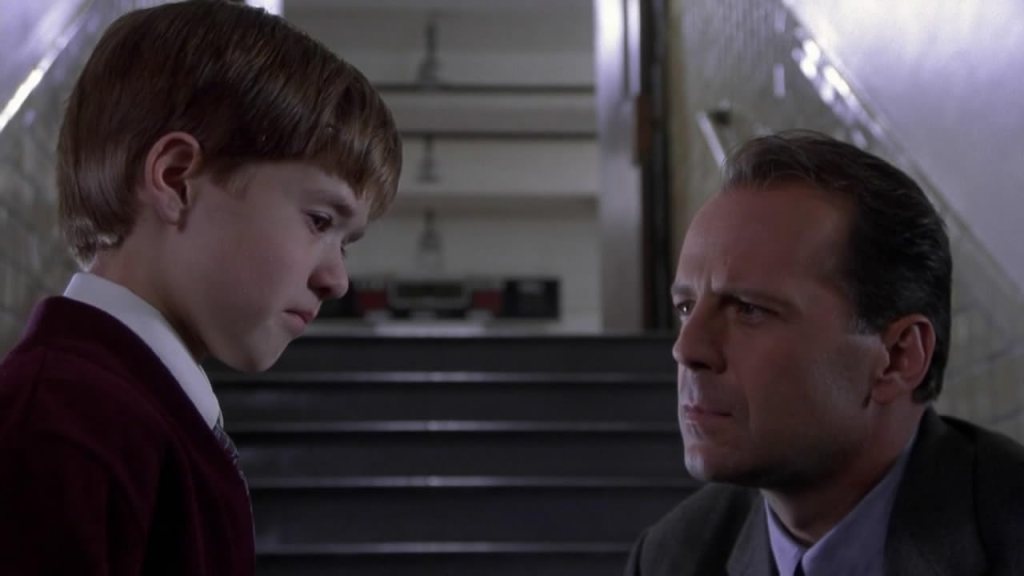
Everybody will remember 1999 as one of the best years for cinema. That’s because it was a vital breakout time for filmmakers (American Beauty, The Matrix) continuing to work today. There’s no denying Shyamalan’s name was one to look out for after The Sixth Sense, which remains one of the greatest psychological thrillers of all time. A child psychiatrist, Dr. Malcolm Crowe (Bruce Willis), starts working on his latest case, Cole Sear (Haley Joel Osment). At first, he is unaware of what is bothering the nine-year-old. Abuse in the home? But the truth is, he can see dead people roaming around wherever he goes and doesn’t know why. It’s an unusual case for Malcolm to assist in, but it could benefit him after failing a previous patient.
Those lucky enough to catch The Sixth Sense in theaters experienced an early gem of Shyamalan’s career. You have to wonder if someone entered this cold and was surprised throughout. When I saw this in my early teens, I assumed it would be a full-on horror. But I love that it wasn’t. Shyamalan keeps you in the dark about Cole’s secret, creating great suspense. Once we know, it gets quite terrifying for a PG-13 film with effective jump scares. Though it’s a film attributed to ghosts, it often explores beliefs in the supernatural and the communication that makes us human. You get possibly my favorite non-action performance from Willis, where he plays Malcolm with this subdued presence, figuring out how to help Cole while trying to reconnect with his wife. But Osment gives one of the best child performances ever, selling the fear a kid has of seeing ghosts and being afraid of telling anyone, including an amazing Toni Collette as his mother, without being labeled a “freak.”
Of course, everybody who’s everybody knows about the ending, which was the first trademark of any Shyamalan movie when using twist endings. Despite knowing it well before I saw it since it’s been referenced many times after, that still didn’t ruin those two hours, and I’m just totally shocked. To this day, it’s an unforgettable and legendary ending that will have you thinking back and picking up on clever hints. The Sixth Sense marked the writer/director’s big break for good reasons by putting together a creepy yet human story that’s a near masterpiece for the genre and quickly earned the most critical acclaim. Becoming the second-highest-grossing film of the year (thanks to strong word of mouth), it made it to the Academy Awards with six nominations, including Best Picture and Director.

 DC's Take
One thought on “Director’s Canvas: M. Night Shyamalan’s Filmography Ranked, from ‘The Sixth Sense’ to ‘Trap’”