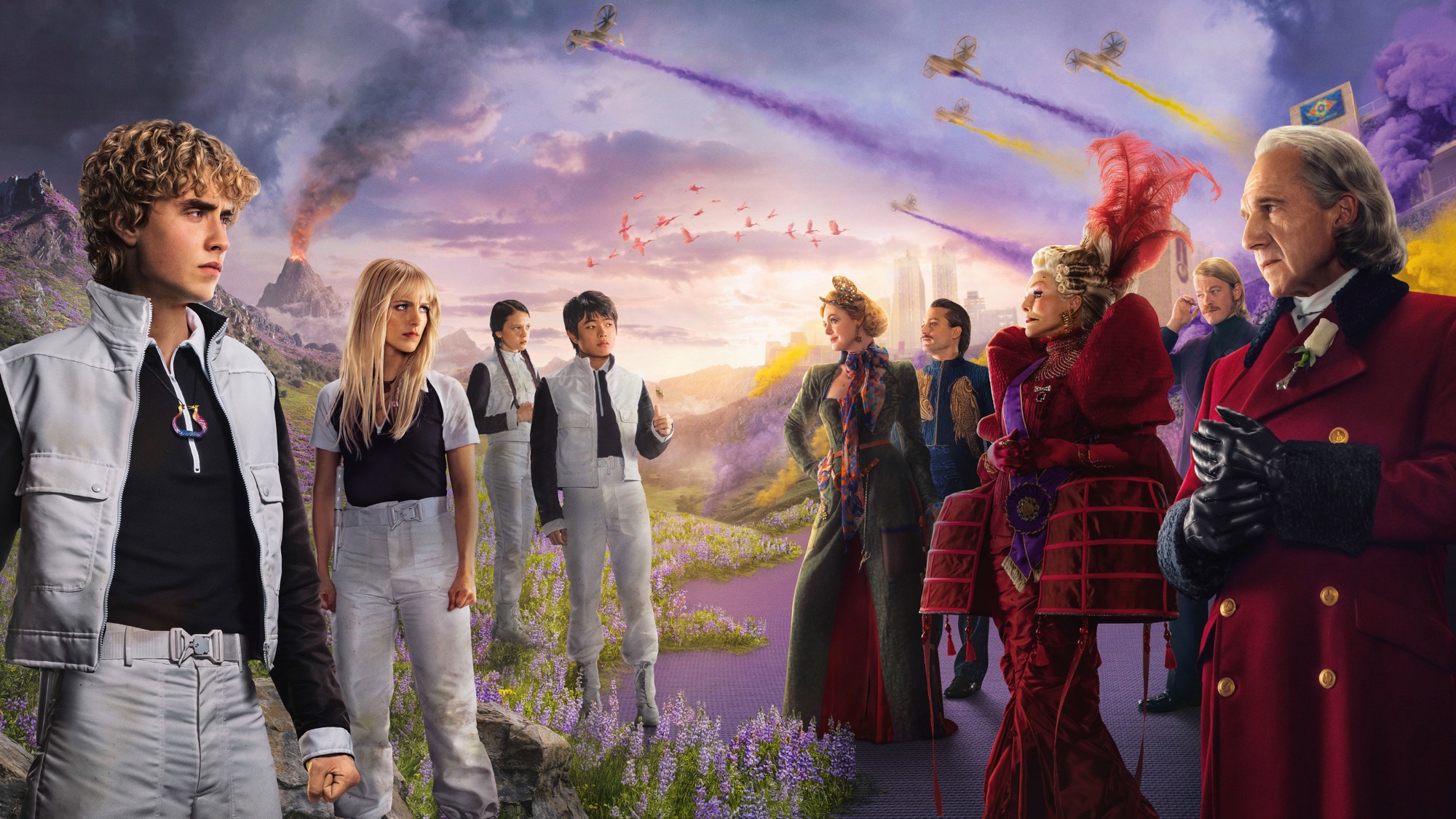
While Hollywood has seen its fair share of YA adaptations that succeeded or failed to become the next big franchise beyond one movie, many people confidently say that The Hunger Games series is the strongest example of a franchise that remains entertaining a decade later. I still haven’t read any of the books, but nearly every movie based on Suzanne Collins’ work has a great fanbase behind it, which has honestly made this dystopian franchise respected. And it wasn’t a total shock that Lionsgate wanted to make another prequel set in the universe. So quickly, in fact, they announced it before the actual book was released last March. There, we were given The Hunger Games: Sunrise on the Reaping. This was one of my most anticipated films of the year because it is a series with no real misses and centers on my favorite—and other readers’ favorite—character, Haymitch Abernathy, whom Woody Harrelson played in the first four films.
Did I know what to expect walking into this? Yes. All it really had to be was a worthy installment, since nothing will ever top Catching Fire for me. Still, it seems poised to be remembered more fondly than the previous prequel from three years ago, The Ballad of Songbirds & Snakes—which I actually liked more than most critics and find a bit underrated. Ultimately, Sunrise on the Reaping is another exciting and even more depressing entry into the world of Panem that will definitely please longtime fans.
What’s the Story: On the day of his 16th birthday, a young Haymitch Abernathy (Joseph Zada) is living his life the best he can in District 12, especially when he’s in love with his Covey girlfriend, Lenore Dove Baird (Whitney Peak). But his day also falls on Reaping Day for the 50th annual Hunger Games. What makes this year more interesting is that it’s the Second Quarter Quell: Each district must provide twice the number of tributes, two boys and two girls. The high-strung Capitol escort, Drusilla Sickle (Glenn Close), calls on Maysilee Donner (McKenna Grace), Louella McCoy (Molly McCann), Wyatt Callow (Ben Wang), and Woodbine Chance. Although Chance tried to escape and the peacekeepers gunned him down, prompting Haymitch to volunteer to protect Lenore, attracting the attention of the cameraman, Plutarch Heavensbee (Jesse Plemons). The four tributes are sent to the Capitol to train, present themselves to the people, and make it out alive in the arena, where Haymitch and others must find a way to tear down the system of the games, controlled by President Coriolanus Snow (Ralph Fiennes).
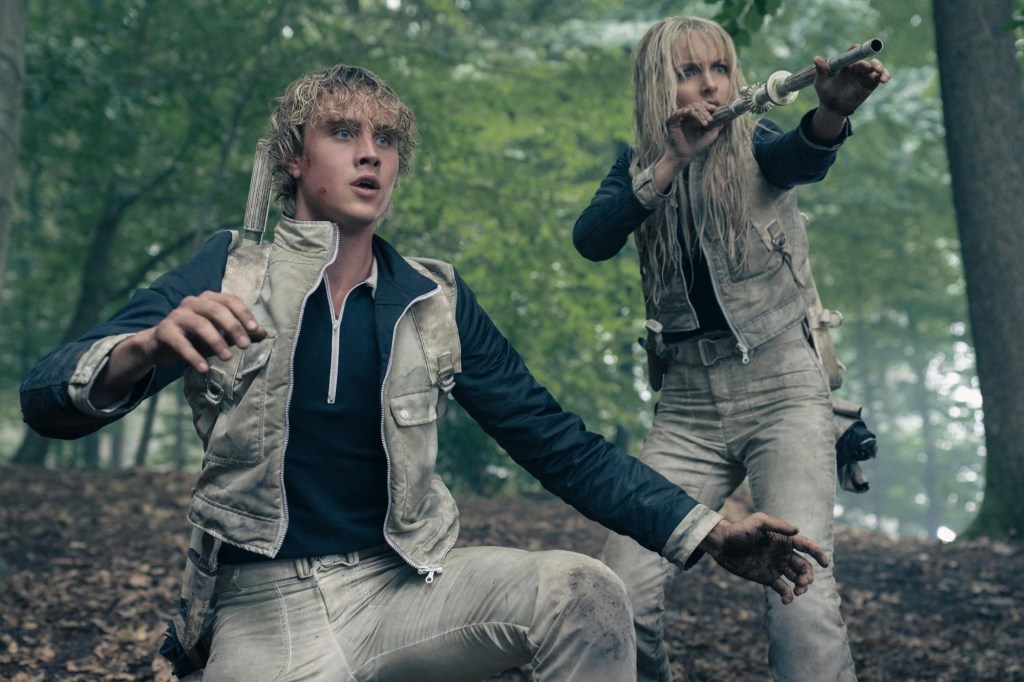
If you go into Sunrise on the Reaping expecting another Catching Fire from a story perspective, it’s nowhere near that. These films follow a specific formula that’s easy to pick up on, especially if you’ve had time to rewatch the previous entries. Some might even say the build-up to the Games with the propaganda and political overview of the Capitol is better than the actual Games themselves, though I tend to disagree.
Given that it’s another prequel—and those who read the book already know how it turns out—the outcome still doesn’t ruin the investment in Haymitch’s journey. To no one’s surprise, director Francis Lawrence really understands the world and can expand on the lore of Panem before Katniss’s existence. And how could he not, when he’s now helmed five of the six released films? Plus, he’s coming off of The Long Walk, one of my favorites of last year. But why Sunrise on the Reaping might have a more positive response than Songbirds & Snakes is that both installments give us glimpses inside of characters and how the games affect them in the aftermath; this gives us more of the games, with the bonus of Haymitch allying with those who want to challenge Snow and destroy this cruel event that shouldn’t let children kill each other for sport. While it’s still entertaining to watch the second half inside the arena, it doesn’t let you forget the stakes and consequences that are at play.
Australian actor Joseph Zada delivers a performance that avoids merely imitating Woody Harrelson, successfully carving out his own identity in the role. This portrayal depicts a young Haymitch not yet defined by the alcoholism and trauma of the man who would eventually mentor Katniss and Peeta, but rather as an optimistic teenager from District 12. Zada is exceptional, effectively carrying the film and—beyond simply mastering the accent—inviting the audience to genuinely care about Haymitch’s survival and his aspirations to return to his family and his life. While Zada is a true standout, the film’s casting is arguably the best in the franchise, feeling perfectly suited for both new and returning characters. Mckenna Grace shines as the headstrong, yet feisty Maysilee in one of the most impressive performances of her career, and while Ben Wang’s screen time is limited, he continues to prove himself as a talent to watch.
With the supporting cast playing younger versions of these familiar characters from the previous films, it’s almost perfect to see how different they were then and how they are decades later. Plemons’ Plutarch, who would later become a head game maker, shows you he’s someone you can trust since he’ll become part of the rebellion. I hope I’m not the only one who sees his career trajectory the same as the late, great Phillip Seymour Hoffman. But then there’s also Elle Fanning as the fashionista Effie Trinket, who captures the same energy and levity as Elizabeth Banks without realizing the reality of the games. And Kieran Culkin steals every scene as the energetic host Caesar Flickerman. It’s certainly a more dick-ish charm on him than what we’re used to seeing in Stanley Tucci’s portrayal. Where Tucci had a welcoming presence when interviewing the tributes, Culkin’s version seems to be easing into the job, not caring about anyone else early on. This won’t work for everybody, but he got a smile out of me every time.

Casting Ralph Fiennes as a middle-aged President Snow was a brilliant choice; if you are going to hire an actor to play a truly iconic villain, who better than Voldemort himself? As the third person to portray the character, after Donald Sutherland and Tom Blyth, Fiennes gives Snow a distinct personality. He makes the role his own by presenting a version of Snow that hints at the ruthless man he will eventually become. A compelling scene between him and Haymitch in his library not only hints at the animosity that will come between them, but also offers a nice callback to his past, specifically the mysterious disappearance of District 12’s first victor and former love, Lucy Gray Baird.
Nearly every Hunger Games movie balances blockbuster spectacle with meaningful character development, and Sunrise on the Reaping does not disappoint. The pacing is smooth—aside from the final act—keeping the audience connected to Haymitch’s revolution without losing sight of the story’s core themes. The film really intensifies once the Quarter Quell begins and the IMAX frame rate shifts. While it wasn’t quite as impressive as my first viewing of Catching Fire, the expanded format still contributed to an immersive experience. From the production design that brings every environment to life to one of James Newton Howard’s most memorable scores, the film kept me hooked. I had no issue with the PG-13 rating, as it delivered the intensity expected of the series. You often forget how the games escalate over time, with no way to escape poisoned water or butterflies that can electrocute you. However, some of the CGI—specifically the arena animals—took me out of the experience; I’m still questioning if that was intentional or meant to look “fake.” Finally, while the conclusion was clearly lifted from the book, I am not sure the final few minutes were necessary; it felt like fan service based on who was involved.
Chances are, if you’re one of the few people who never cared about The Hunger Games since it started, this won’t be the one to get you to jump on board finally. Even though I don’t find it near the very best—much less better than the first two—I gotta give Francis Lawrence and his writers credit for keeping this series feeling alive and still convincing me they know what they’re doing without it becoming nothing more than a forced prequel. Where it could go next is up in the air. Whether Collins writes another book to go further, or chooses to focus on a certain factor like the very first games, I’m curious to see where it goes.
Overall, The Hunger Games: Sunrise on the Reaping is a worthy prequel that proves the franchise still has the power to captivate fans. While not without flaws, the film is equal parts entertaining and devastating; Zada’s powerful performance anchors the story, offering a narrative that feels both familiar and refreshingly executed.
Franchise Ranking:
- The Hunger Games: Catching Fire (2013)
- The Hunger Games (2012)
- The Hunger Games: Sunrise on the Reaping (2026)
- The Hunger Games: The Ballad of Songbirds and Snakes (2023)
- The Hunger Games: Mockingjay – Part 1 (2014)
- The Hunger Games: Mockingjay – Part 2 (2015)


