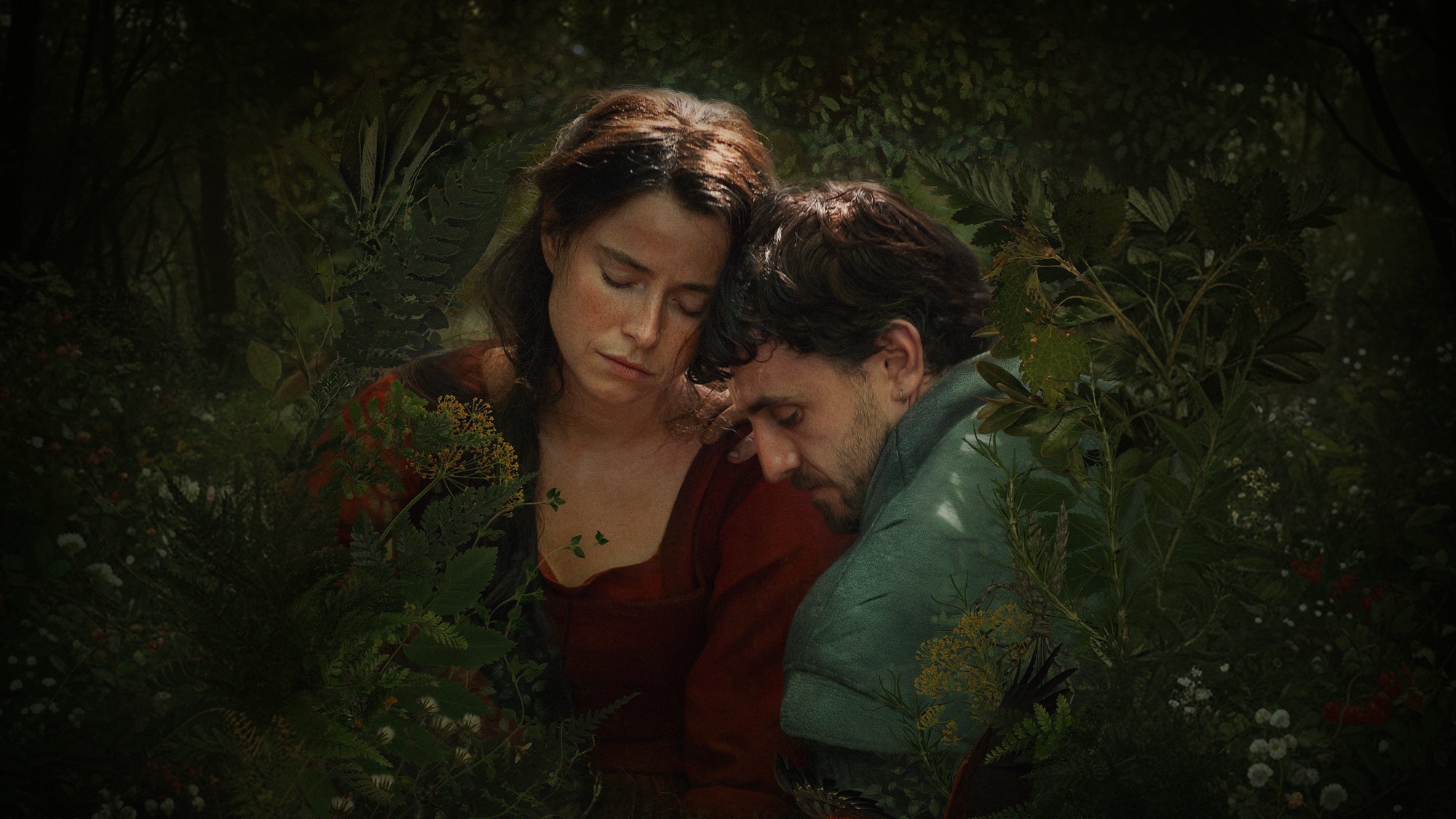
In the heat of this current awards season, all eyes were on Academy Award-winning filmmaker Chloé Zhao to see if her latest drama, Hamnet, was worthy of the buzz around the festival circuit the past few months. Following Nomadland‘s Best Picture Oscar win years back, everyone was anticipating what could be her next potential masterpiece. That wasn’t the case when she entered the MCU with Eternals; it wasn’t her fault, but the project proved too ambitious for her to handle. Luckily, this adaptation of Maggie O’Farrell’s acclaimed 2020 novel brought her sensibility to life through its best-selling, resonant characters. In a film that leaves you feeling the romance and suffering of unimaginable heartbreak, Hamnet is undoubtedly one of the best I’ve seen, unexpectedly devastating me.
What’s the Story: In 16th-century Britain, a young William Shakespeare (Paul Mescal) is an aspiring playwright. While tutoring boys Latin to help pay his father’s debts, he catches the eye of Agnes (Jessie Buckley), who has been called by the villagers “the daughter of a Forest Witch.” Her family has always had a connection to nature, with her mother maybe being a witch. Both Will and Agnes fall in love regardless of how their respective families view their relationship. Soon, they get married, and Agnes gives birth to three children: Susanna and a set of twins, Judith and Hamnet, while Will tries to return to London to pursue his writing. But when tragedy struck the family, Hamnet died of an illness in their household, and both parents’ lives changed, prompting Will to write his most timeless classic, “The Tragedy of Hamlet.”
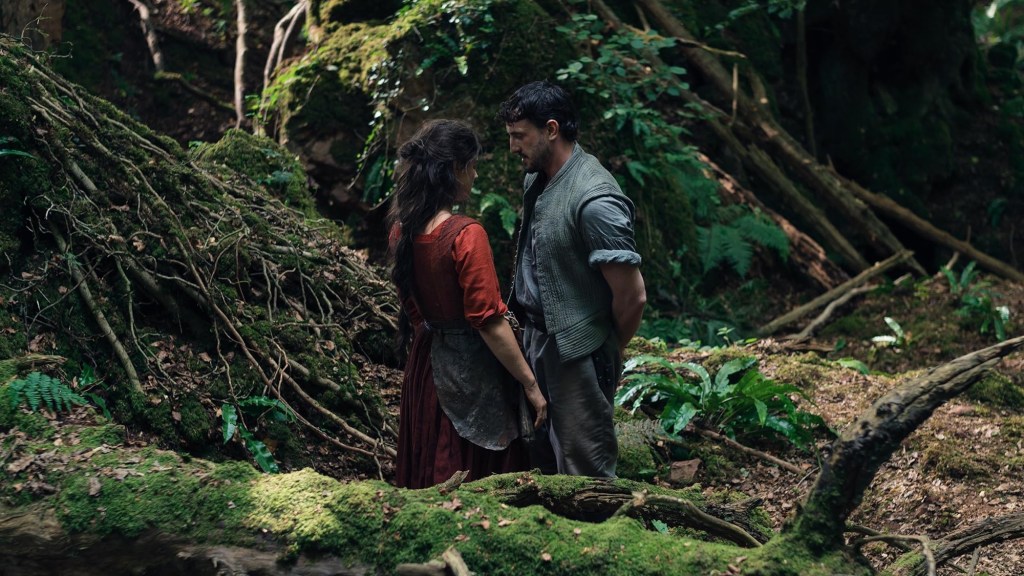
There were some thoughts I anticipated before seeing Hamnet, knowing it was mostly a fictional account of a specific period of Shakespeare’s life. Coming from someone who took a course about him and his work during my junior year of college, I might not have remembered everything, but the few details I did know made sense as I watched. Knowing that his personal life is a mystery to researchers, Zhao and O’Farrell, through their screenplay, explore how people cope with the unexpected loss of a loved one in ways one wouldn’t imagine. The way Zhao captures the material feels like it belongs with some of the best adaptations of the playwright’s work, peeling through the moments of laughter and quiet sadness. Even when you sense something’s coming, in its foreshadowing, or the time we see this family spend together, it’s still able to sneak up on you to the point of taking a turn that few would expect.
Zhao’s talent for crafting grounded and hopeful films, as seen in Nomadland, makes Hamnet so effective, allowing the narrative to take center stage without becoming manipulative. The 16th-century setting feels authentic and immersive, not contrived. I find it compelling how the film presents a believable world, translating the essence of art into a tangible experience. This clarity is what makes the film so engaging. The film’s success is further enhanced by its avoidance of the pitfalls of other fictional Shakespeare-inspired narratives, such as Shakespeare in Love. While captivated by the romantic relationship between Agnes and Will, the film also prompts reflection on the trials and tribulations of parenthood, making it difficult not to contemplate one’s own future as a parent and to wonder how any relationship will fare after a life-changing event that affects both people.
But Hamnet wouldn’t be great without the work of Jessie Buckley and Paul Mescal, two of the best actors we’ve seen this decade, who gave career-defining turns. Their chemistry in the first few scenes they shared is unmatched. Buckley, in particular, is equally touching and heartbreaking, which is why I think she is my choice to win the Oscar for Best Actress. Agnes is a woman you’re instantly drawn to, especially after learning about her deep connection to nature since she was little. She excels at portraying the pain a mother could have in losing a child when she feels like her mission in life is to protect her children. There’s a moment where she gives birth to her first daughter in the forest alone, where you hear the rolling and gusting winds around her while she’s breathing as if they’re physically there coaching her. Buckley also says so much in these close-ups, and just by her looks, to understand how she’s feeling inside after the build-up of what happened to her son. Mescal has never been better when playing this interpretation of William Shakespeare. The son of a glove maker finds his muse to write his plays until he carries the sorrow off, away from his family, while he travels to London. It’s a character Mescal brought to life, strong, yet ultimately, what is the cost of your art to your life? The leads are fantastic, but a major standout is Jacobi Jupe as young Hamnet. His performance is impressive for a child actor, serving as a masterclass in conveying the emotions that follow in the narrative.
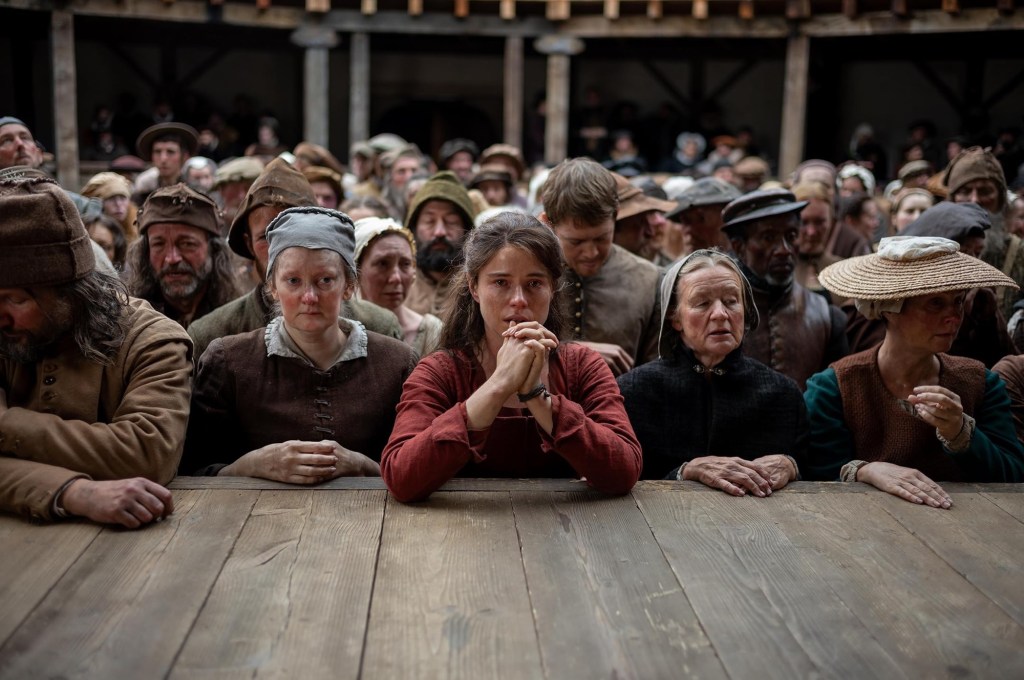
On a technical level, one has to be in awe of Łukasz Żal’s cinematography, which captures the beauty of the greenery forest and the roots of the trees, making me want to escape into nature myself. And Max Richter’s score does a good job of evoking emotion, especially the piece “On the Nature of Delight,” which has been used elsewhere yet still resonates here. But where it was going in the last half, putting the spotlight on “Hamlet” performed in London, will take time to avoid feeling the least bit forced, and will be very bittersweet for many who will overcome it until the last frame. As a film, it was a visually perfect slow burn, with excellent pacing that kept me 90% locked in. That other 10% leaves me wondering if I could watch it again.
Hamnet left me feeling grateful to have such a great movie to end the year, and it’s one of those films that still leaves me overwhelmed by the emotions in certain scenes that linger in my mind days later. I knew the experience would be worthwhile, even if I hadn’t read the novel. I knew I’d at least liked it by the reactions Telluride and TIFF, which awarded the People’s Choice Award at the latter festival. But now I understand why it’s an awards contender and why it deserves the positive accolades it’s received.
Overall, Hamnet features Chloé Zhao’s direction of a profound drama that deeply resonates. It can be described as beautifully devastating, reflecting on how we cope with loss and transform that pain into something powerful. Carried by its unforettable and riveting performances delivered by Jessie Buckley and Paul Mescal, something’s wrong with you if this doesn’t hit you.

 DC's Take