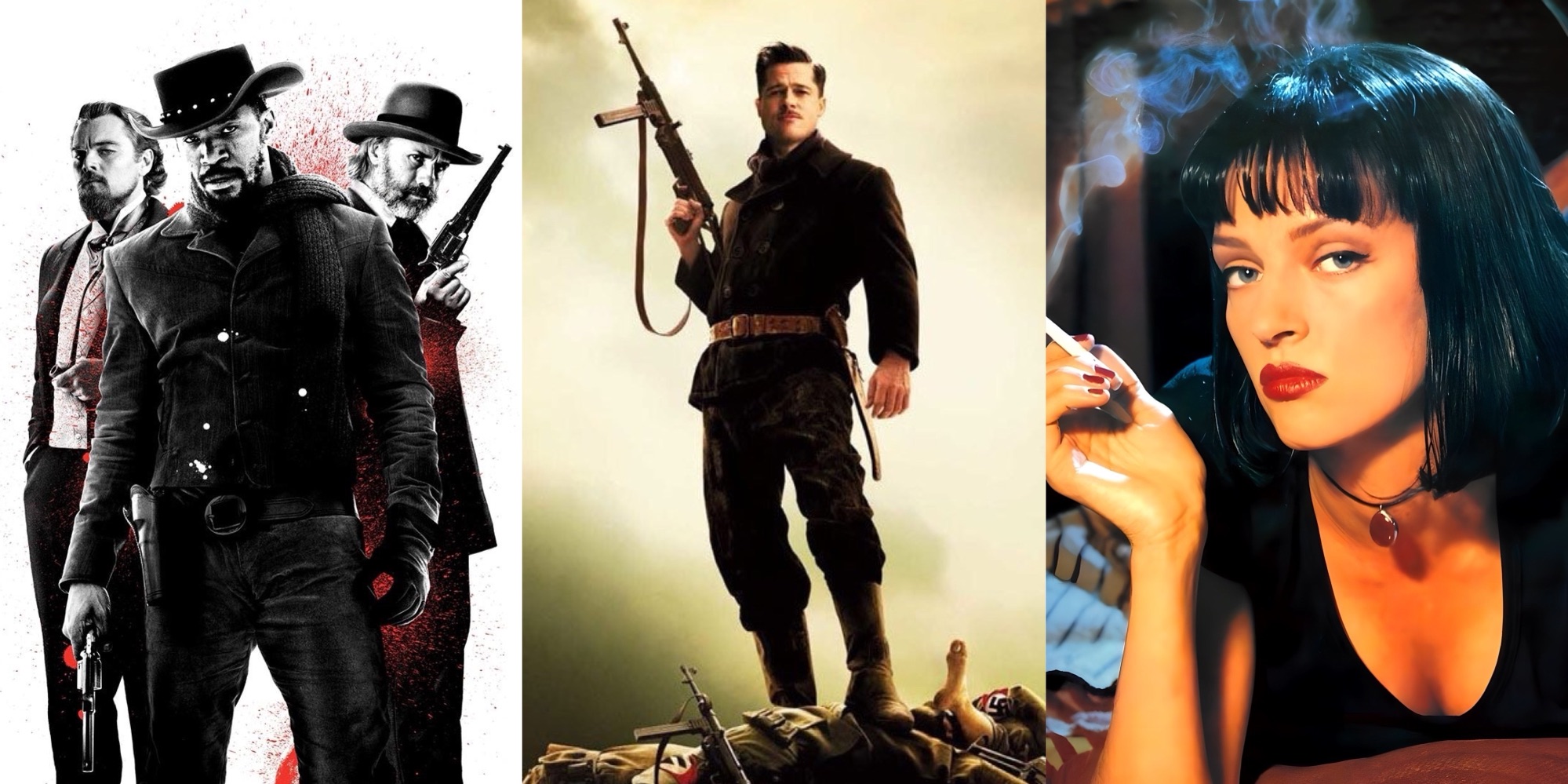
Since bursting onto the scene in the early 1990s, Quentin Tarantino, a filmmaker who exudes a profound love for movies, has seamlessly navigated different genres. Whether it’s a gangster flick, a kung-fu film, or a spaghetti western, his passion for cinema —a love shared by many —has reshaped modern cinema through homages that feel like his own. His ten movies stand as a testament to his steadfast devotion to the art of filmmaking. His background working at a video store adds a personal touch, making you feel inspired to have a lengthy conversation with him and seek out his recommendations.
Ever since I watched Inglourious Basterds, I’ve been fascinated by how he writes his characters, and when I look back at everything he’s done before, it’s perfect for the pop culture era. Even if you haven’t seen any of his works, you’ll know his classic trademarks that make his style unique: Nonlinear storytelling, sharp dialogue, blood, stylized violence galore, outstanding needle drops, and the pervasive use of the “n” word in about 60% of his films. Which, speaking for someone who is black, doesn’t always bother me, but I can see why it’s one of the reasons Tarantino is considered controversial. I don’t like hearing the racial slur in real life, but I think it gets tiresome when anyone always puts two and two together as a joke we already get.
But this is a director who started from the ground up with an indie crime drama to become a two-time Oscar-winning screenwriter, with cinephiles going to see whatever he does opening day, and with a near-perfect career in front of the camera —what’s to complain?
So, while it’s uncertain when he’ll do his next project (which he said would be his last before retirement), my latest Director’s Canvas throws the spotlight on one of my favorite and most influential directors, Quentin Tarantino, and rank all ten of his films from worst to best.
10) ‘Death Proof’
Release Date: April 6, 2007
Budget: $30 million
Domestic Box Office: $25 million/ Worldwide: $25.4 million
RT Score: 67%
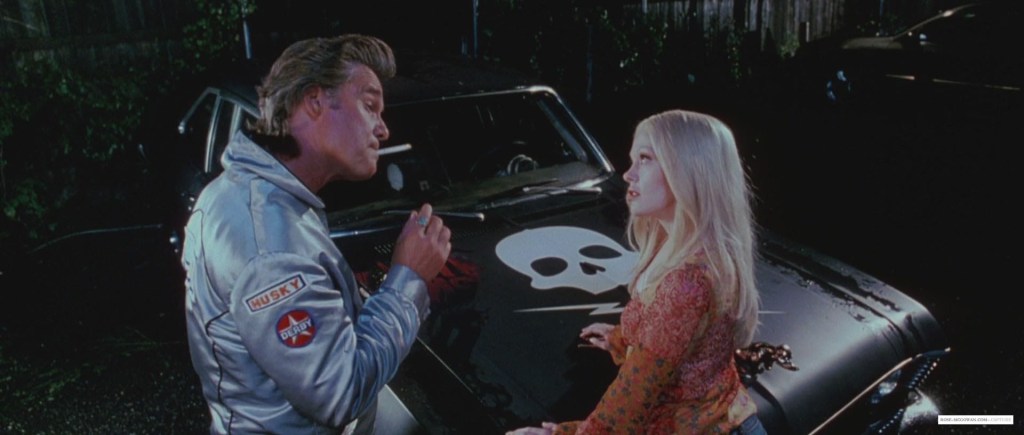
The long-awaited second collaboration between Tarantino and friend Robert Rodriguez came together when they made two separate movies in homage to exploitation films, with the double-bill feature Grindhouse. Tarantino’s Death Proof takes on a high-octane spin on the slasher most fans probably forgot about within his grand filmography. Stuntman Mike McKay (Kurt Russell) is a Hollywood stunt double who stalks women and kills them with his “death proof” vehicle until he meets his match with his latest victims.
Death Proof tends always to be the last film you think of when thinking back to everything Tarantino’s done. That doesn’t make it bad, but it’s an effort that could’ve been great if it had stronger pacing and better writing to remember it by. However, you can tell they had a blast appealing to an audience that grew up watching films that went all out in terms of violence and suggestive content. Kurt Russell’s performance as Stuntman Mike sells how easy it is to be smooth without realizing he’s a psychopath. There’s also some great stuntwork with the cars that proves the filmmaker has a talent for chases, and seeing Zoë Bell in her first legitimate acting role showcases how electric her on-screen presence is. Even Tarantino himself called it his weakest, but still, Death Proof is the only film of his that’s right about saying it’s okay.
9) ‘Jackie Brown’
Release Date: December 25, 1997
Budget: $12 million
Domestic Box Office: $39.7 million/ Worldwide: $74.7 million
RT Score: 88%
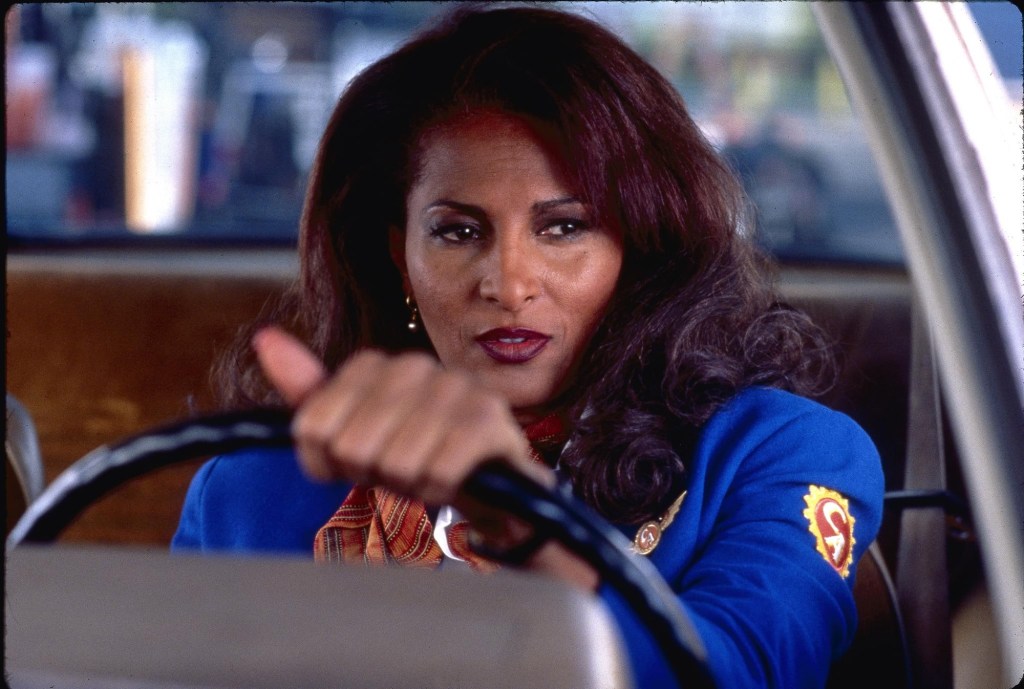
What was going to be the imaginable Tarantino follow-up after winning an Oscar for Pulp Fiction? Even for him, it had to be an impossible mountain to climb to the top. How about Jackie Brown, based on the Elmore Leonard novel Rum Punch? Combining his voice with Leonard’s to make this crime drama stand out, it is certainly different from his first two films. While it has never been one of my favorites, the cleverness of the story still makes for a good time, even if it’s not one of my favorites. Flight attendant Jackie Brown (Pam Grier) is caught smuggling money from Mexico to the United States, working for arms dealer Odell Robbie (Samuel L. Jackson). Lucky for her, the ATF and the LAPD agreed to work with Jackie to set Odell up, unaware that she’s planning to double-cross them to keep the money for herself.
Knowing that Jackie Brown is the only adapted work Tarantino has done to date, it might not have the bloody violence that fans probably expected when it was first released. However, given how it unfolds as a homage to blaxploitation films, it’s the characters and low-key dialogue that keep it interesting, even if it does feel slow at times. Above everything, you watch this for Pam Grier’s fantastic performance, which should’ve been Oscar-nominated, as Jackie, proving she hadn’t lost her touch after becoming an icon of the blaxploitation era. And the romantic chemistry between her and Robert Forester’s Max Cherry remains the most touching for any of Tarantino’s characters. Jackie Brown is undoubtedly one of his more restrained films, but it’s easy to see why it gains more appreciation over time.
8) ‘The Hateful Eight’
Release Date: December 25, 2015
Budget: $44 million
Domestic Box Office: $54.1 million/ Worldwide: $161.2 million
RT Score: 74%
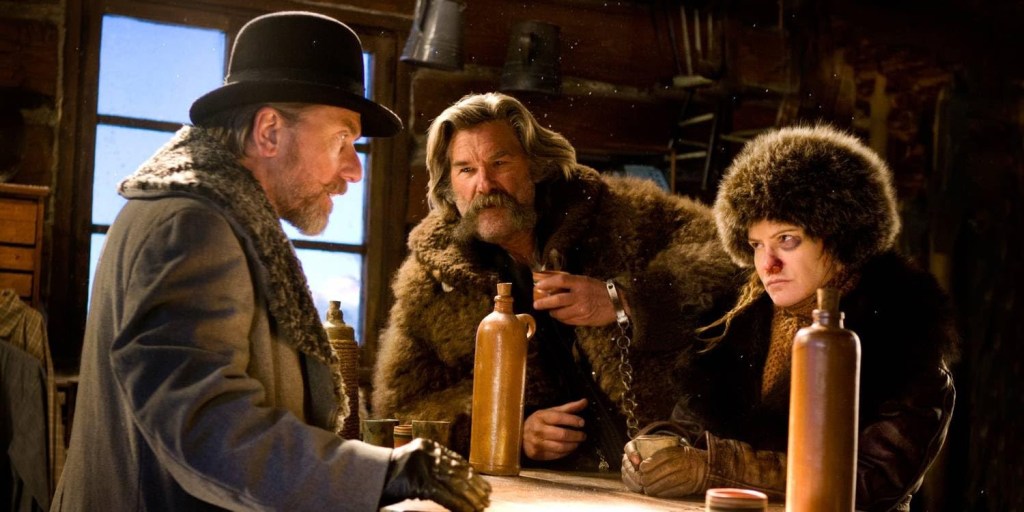
It’s a surprise Tarantino still made The Hateful Eight, considering the script was leaked and initially abandoned. Thankfully, he continued with his latest western with a twist of mystery. While it’s tough to say it doesn’t hold up after ten years, he turns in a breathtaking, if flawed, film that’s perhaps the most underrated in his filmography: A blizzard hittting Wyoming has eight strangers – Major Marquis Warren (Samuel L. Jackson), John “The Hangman” Ruth (Kurt Russell), Chris Mannix (Walton Goggins), Oswaldo Mobray (Tim Roth), Joe Gage (Michael Madsen), General Sanford Smithers (Bruce Dern), and Daisy Domergue (Jennifer Jason Leigh)- stay inside Minnie’s Haberdashery until it’s clea to hit Red Rock. But it seems as though someone or more is not who they claim to be.
Tarantino’s decision to follow up Django Unchained with another Western initially sounded risky. Still, he allows you to feel suspicious about this group of characters in post-Civil War America, within this isolated stopover. While this isn’t his strongest screenplay (the use of the “n” word was too repetitive), it’s really the building of tension over the nearly three hours that helps keep the audience engaged. All the performances were great, with Jackson, Goggins, and Leigh (who earned a Best Supporting Actress nomination) standing out in the ensemble. On a technical level, it’s the best-looking film of his, with Robert Richardson’s 60mm cinematography and Ennio Morricone’s Oscar-winning score to set the mood perfectly. The Hateful Eight isn’t the western classic it wanted to be, but it proves Tarantino hasn’t lost his style, even if it’s not another masterpiece for the time being.
7) ‘Kill Bill Vol. 2’
Release Date: April 16, 2004
Budget: $30 million
Domestic Box Office: $66.2 million/ Worldwide: $152.2 million
RT Score: 84%
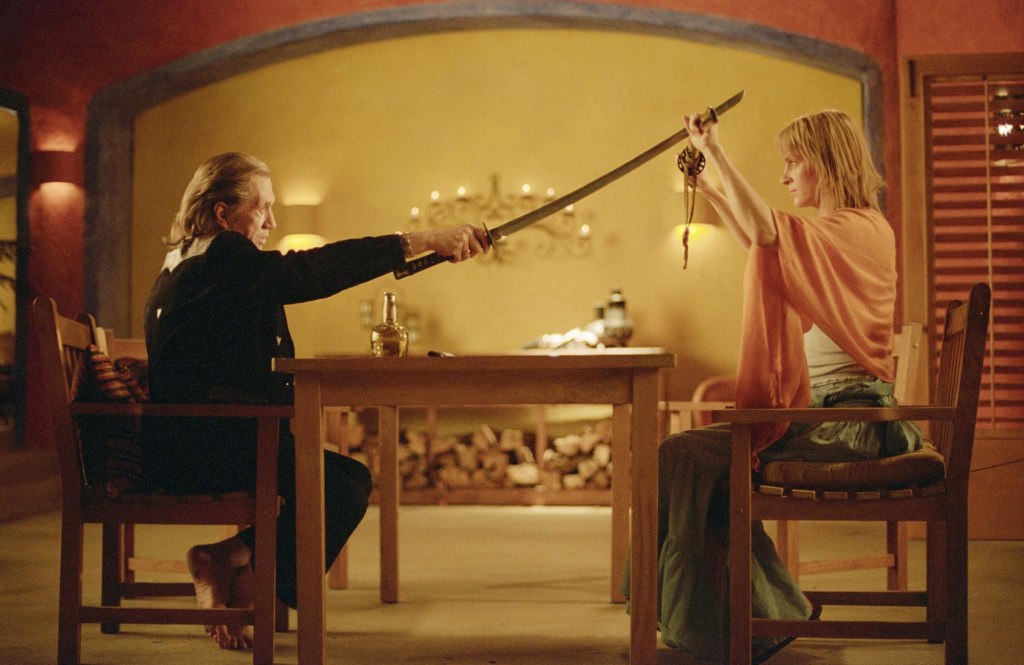
Released just six months after the first part, does it make sense for this story to be split into two because of its intended runtime? Probably not. Sometimes it’s hard to decide which is better, but although I prefer Volume 1 more, Kill Bill Vol. 2 still comes out stronger than anyone anticipated and is nowhere near a disappointment. Continuing her path of revenge, “The Bride” Beatrix Kiddo (Uma Thurman) sets out to kill Budd (Michael Madsen) and Elle Driver (Darryl Hannah), while also seeking her former lover/ father of her child, Bill (David Carradine).
Watching both films back-to-back, Tarantino gives something different, whereas Volume 2 gives us the answers we might’ve pondered. There’s not much action, but it delivers on the classic writing with character mythology, allowing us to delve deeper into the development of The Bride and her relationship with Bill. It’s more of a mix of Kung Fu and spaghetti western that comes together perfectly. The best this half has to offer is David Carradine, who steals the third act with his performance. He was pretty much Oscar-worthy when comparing Beatrix to Superman in terms of alter egos. While it’s a slower part, Kill Bill Volume 2 ends up as another epic tale of revenge that will never get old.
6) ‘Reservoir Dogs’
Release Date: October 23, 1992
Budget: $1.2 million
Domestic Box Office: $2.8 million/ Worldwide: $2.9 million
RT Score: 90%
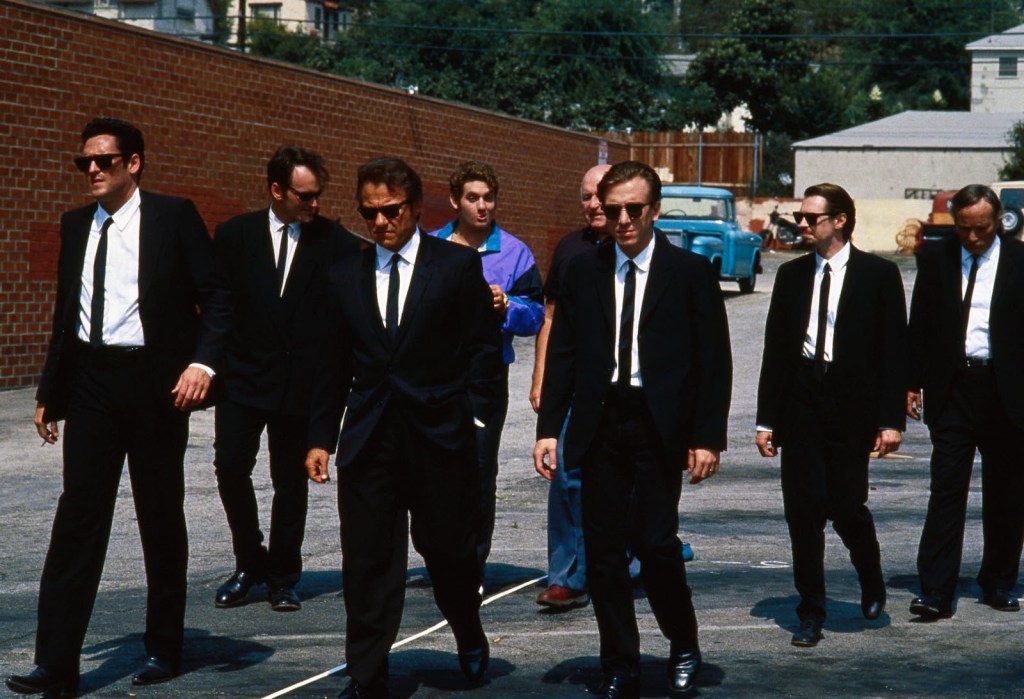
With the ’90s marking a step forward in independent filmmaking, Tarantino started his career on the right note with his unforgettable directorial debut, Reservoir Dogs. Somewhere in an alternate timeline, this would’ve failed. But here in reality, it’s a crime noir that’s a classic then and now. Eight men, identified by their colored aliases, plan to steal diamonds from a jewelry store, only for their heist to go awry after the alarm sounds. As it turns out, one of them turns out to be an informant among them.
Reservoir Dogs marked the beginning of Quentin Tarantino’s signature style. All his trademarks are there: the pop culture references and the shocking, disturbing violence he gets away with. But it’s his storytelling approach that keeps the energy alive, making it feel like a well-executed stage play. The audience never actually sees the heist, only the moments leading up to it and the chaotic, unexpected aftermath as the gang tries to figure out what happened. The truth is, no crime goes off flawlessly. The casting is amazing, with standout performances from Harvey Keitel, Tim Roth, Steve Buscemi, and the late Michael Madsen. The soundtrack is iconic, to the point where it’s impossible to hear “Stuck in the Middle With You” without picturing Mr. Blonde dancing while menacingly cutting off a cop’s ear. As his first film, Reservoir Dogs remains shocking and explosive, showing audiences that there was much more to come from the director.
5) ‘Once Upon a Time… in Hollywood’
Release Date: July 26, 2019
Budget: $90 million
Domestic Box Office: $142.5 million/ Worldwide: $377.4 million
RT Score: 86%
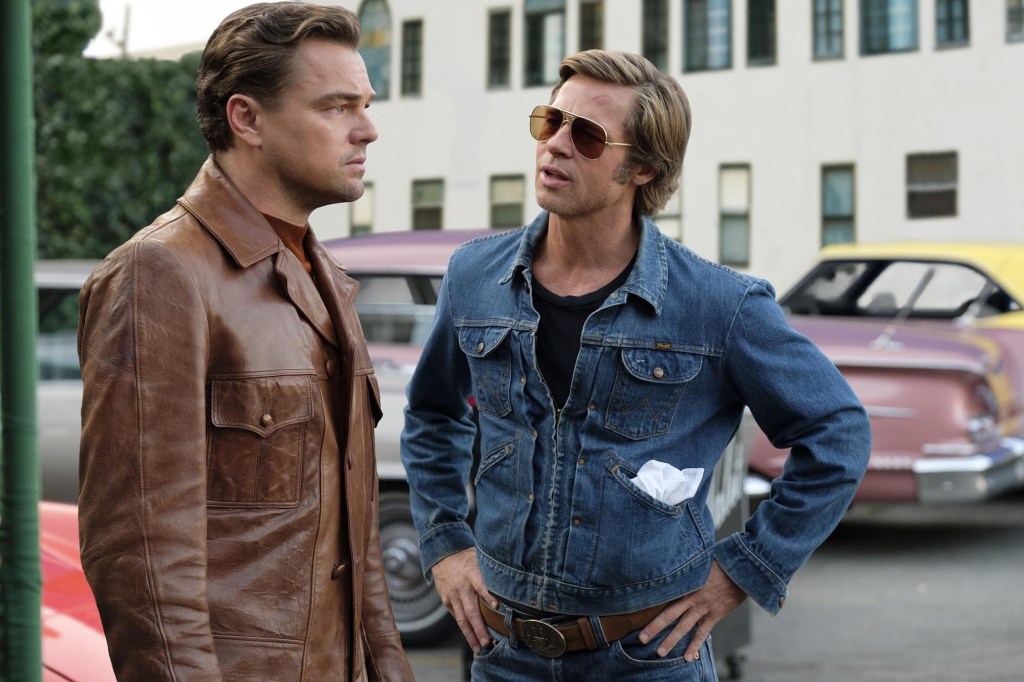
Taking a break from heavy violence (for the most part), Tarantino’s latest period piece transports us back 50 years into the past to live in the days of fictional and recognizable faces in Once Upon a Time… in Hollywood. As viewed as his love letter to the late 1960s, detractors will wrongly call this “boring,” to which their taste will be called out. To quote Al Pacino’s Marvin Schwartz, “What a picture.” Former Western TV actor Rick Dalton (Leonardo DiCaprio) fears for his fading career while working with his best friend/stunt double Cliff Booth (Brad Pitt). Set in the backdrop of 1969, it intertwines with actress Sharon Tate (Margot Robbie) and the events leading up to the infamous Manson Murders.
Despite its unexpectedly slow burn, Once Upon a Time… in Hollywood is one of Tarantino’s most beloved and funniest films to sit through. Through the perspectives of characters navigating changing times in the film industry, it beautifully and authentically captures a view of LA with a fairytale lens that’s made for cinephiles. Not only is the production design flawless, but I loved following DiCaprio and an Oscar-winning Pitt, as Rick and Cliff, respectively, on their day-to-day adventures. Its finale is a true highlight that is hilariously daring. For those who wish history had turned out differently, this movie lets them see their wishes come true. Once Upon a Time… in Hollywood gets better with every viewing, and if there is a chance of this being Tarantino’s last film, he’s going out on a strong note.
4) ‘Kill Bill Vol. 1’
Release Date: October 9, 2003
Budget: $30 million
Domestic Box Office: $70.1 million/ Worldwide: $180.9 million
RT Score: 85%
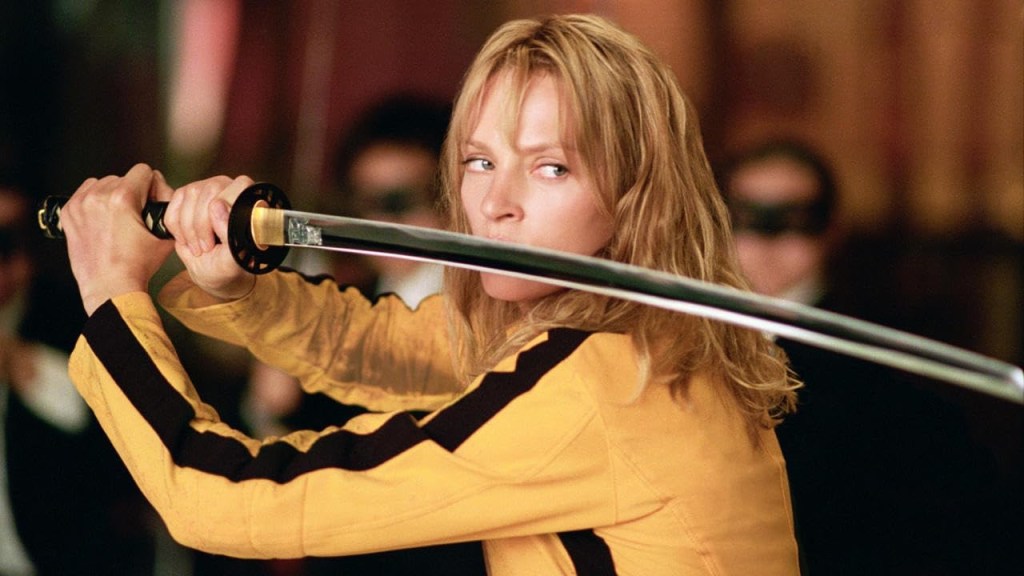
Six years have passed without a new project from Tarantino, but it was only a matter of time before his dedicated audience discovered what idea he has next to share with them. The idea, which he thought of during the production of Pulp Fiction, takes a revenge-focused storyline with a heavy influence of blaxploitation and martial arts cinema. And with his hands, Kill Bill Vol. 1 has him exceeding any challenges he had with this first half. After the Deadly Viper Assassination Squad kills The Bride (Uma Thurman) and everyone else in an El Paso wedding chapel, she’s still alive after waking from a coma for four years. Now she’s on a path of vengeance, coming from those who wanted her dead, from Vernita “Deadly Viper” Green (Vivica A. Fox) to O-Ren Ishii (Lucy Liu).
Even if you’re like me and never grew up watching the genre films that influenced Tarantino, it still makes the experience more special in how entertainingly fast-paced this half came together. And it’s his style that introduces his younger audience to his slick action. By that, he managed to surprise himself. Uma Thurman absolutely crushes it as The Bride, this badass heroine stricken with pain, but remains fearless on this journey. Kill Bill Vol. 1 gives you everything, from Lucy Liu’s unforgettable villainous turn as O-Ren, an anime backstory sequence, and some bloody swordplay between The Bride and the Crazy 88s. As a stylish homage, it remains fantastic after over 20 years.
3) ‘Django Unchained’
Release Date: December 25, 2012
Budget: $100 million
Domestic Box Office: $162.8 million/ Worldwide: $426.1 million
RT Score: 87%
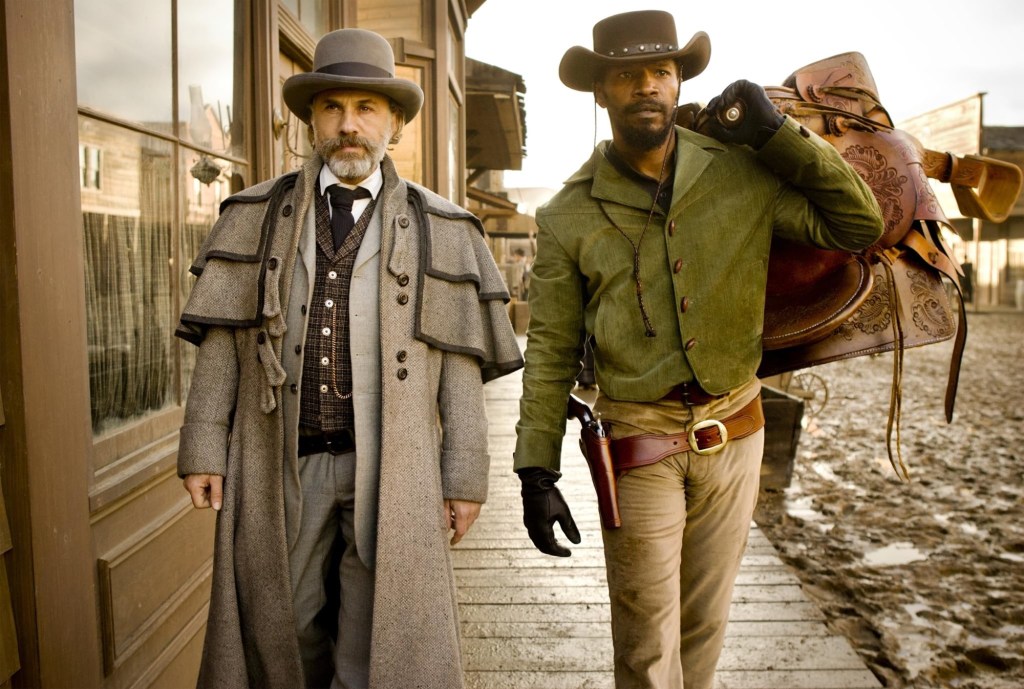
After turning history over its head like there’s no tomorrow in Inglorious Bastards, it was about time for Tarantino to finally give us his take on the spaghetti western with Django Unchained. By far his most controversial film, given the subject matter during the darkest time in American history, his 2012 hit has divided opinions, with some loving it and others hating it. Though it isn’t the easiest of his films to watch, you’re still getting a nearly three-hour bloody taste of revenge, so entertaining to non-Western fans like myself. German bounty hunter Dr. King Schltz (Christoph Waltz) seeks out a slave named Django Freeman (Jamie Foxx). To buy his freedom, he joins Schultz, who is killing wanted criminals, leading him to rescue Django’s wife, Broomhilda (Kerry Washington), from her new owner, Calvin Candie (Leonardo DiCaprio), on his plantation.
Django Unchained lets Tarantino loose, bringing some much-needed style to a genre that had been slowing down in cinema. Of course, the violence is over-the-top within a pre-Civil War world. But as a revenge fantasy, what more could you ask for in a masterfully done tribute to spaghetti westerns? Foxx, as the titular Django, makes for an iconic protagonist, where he doesn’t say much, though his eyes say it all in anger and fearlessness. But it shouldn’t come as a shock that both Waltz and DiCaprio stole the show as Schultz and Candie, respectively. While Waltz’s King Schultz can switch off and on from mild-mannered to cold-blooded while having perfect on-screen charisma with Foxx, this is the most evil audiences have seen from DiCaprio, disappearing in a role that he probably couldn’t shake off.
Captivating from beginning to end, Django Unchained, if Tarainto’s goal was to entertain me, then he accomplished it with one of his very best. Becoming the filmmaker’s highest-grossing film to date, it won two of its five Oscar nominations, with Waltz winning his second Best Supporting Actor Oscar and Tarantino winning a well-deserved second Academy Award for Best Original Screenplay.
2) ‘Inglourious Basterds’
Release Date: August 21, 2009
Budget: $70 million
Domestic Box Office: $120.5 million/ Worldwide: $321.5 million
RT Score: 89%
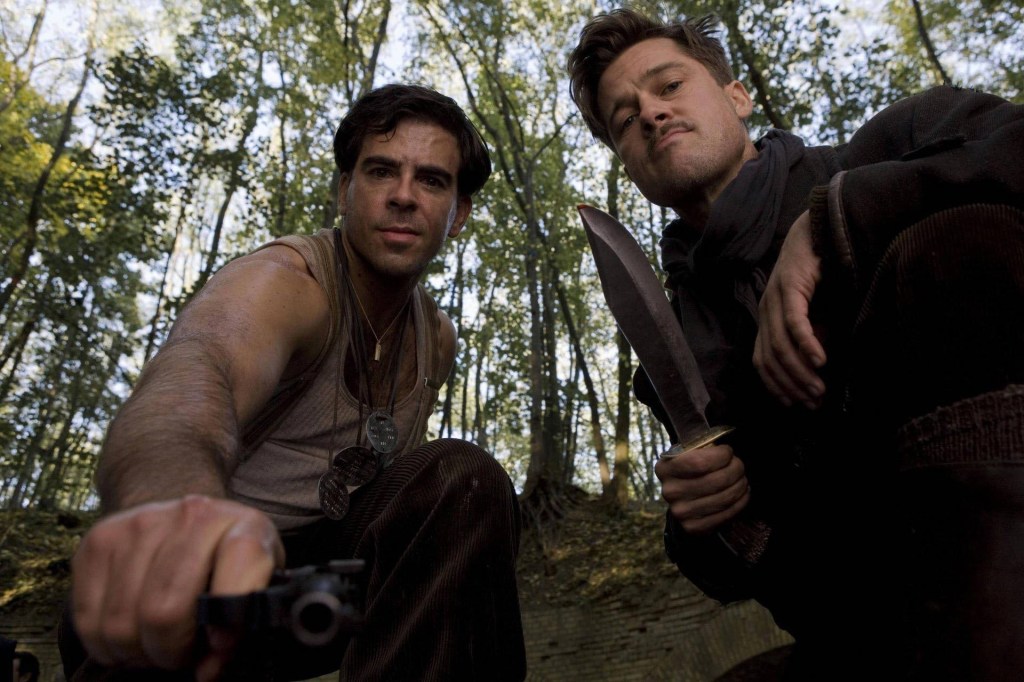
Inglourious Basterds was the first Tarantino film I ever saw as a teenager, and it’s a regret that I didn’t catch it in theaters. Among all of Tarantino’s works in the 2000s, this film, with its unique blend of a period piece and an alternative take on revisionist history, stands out as a masterpiece. Set in Nazi-occupied France, U.S. lieutenant Aldo Raine (Brad Pitt) and his Jewish-American soldiers are on a mission to kill and scalp Nazis. Their plan to dismantle the Third Reich intersects with cinema owner Shosanna Dreyfus (Mélanie Laurent), who escaped the clutches of SS officer Hans Landa (Christoph Waltz), plotting to burn the Nazis during the premiere of the German propaganda film “Nation’s Pride.”
If this was what Tarantino envisioned for himself when making a World War II film, he outdid himself with his best in years. Historical accuracy doesn’t matter here when everything he puts here is thrilling for a brisk two-hour piece of work. Similar to Pulp Fiction, no scene feels wasted —from its all-time opening sequence to its exhilarating climax —a dream we all wished had happened in real life. Pitt’s Aldo is a role that doesn’t get enough credit amid his career. Still, everyone came out of this with nothing but praise for Waltz’s Oscar-winning performance as Hans Landa, who steals every scene he appears in, raising the suspense even higher in one of the best movie villains of the 21st century. By all accounts, Inglourious Basterds plays to Tarantino’s strengths, which only get better every time.
1) ‘Pulp Fiction’
Release Date: October 14,1994
Budget: $8 million
Domestic Box Office: $107.9 million/ Worldwide: $213.9 million
RT Score: 92%
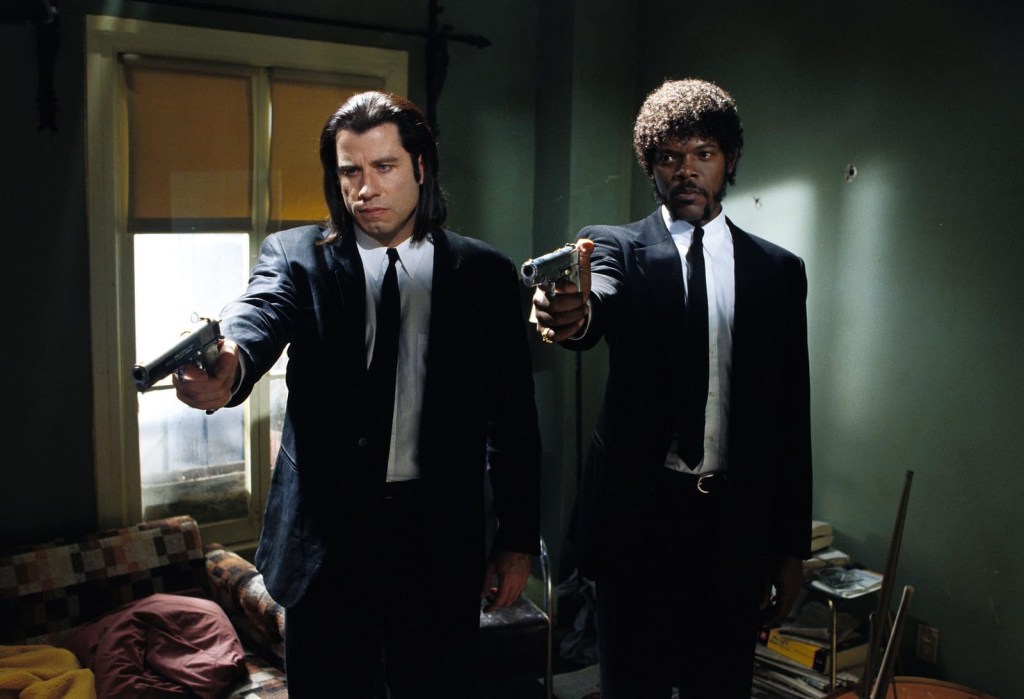
It might be a cliché to put Pulp Fiction in the #1 spot, but how could it not be? While there could be reasonable arguments for one of Tarantino’s other films being someone’s favorite, this was the one that, even after thirty years, left everybody wanting more from the mastermind. It is an original crime story that is both cleverly funny and compelling to watch. Told through a series of interconnected events in Los Angeles, the lives of hitmen Vincent Vega (John Travolta) and Jules Winnfield (Samuel L. Jackson), gangster Marsellus Wallace (Ving Rhames) and his wife Mia (Uma Thurman), and boxer Butch Coolidge (Bruce Willis) become intertwined in ways they didn’t expect.
Everything that drove this to become a classic is there, and it’s all thanks to its incredible screenplay, for which Tarantino won his first Oscar alongside Roger Avary. The decision to make the narrative not follow a chronological order was first employed in Reservoir Dogs, but in Pulp Fiction, it makes the structure of events more refreshing. And it’s the dialogue between its characters that never makes the film dull, making its two-and-a-half-hour runtime feel like a smooth two hours. The film remains quotable to this day, thanks to the memorable ensemble cast that Tarantino brought together. John Travolta’s performance as Vincent was the career resurgence he definitely needed; Samuel L. Jackson’s Jules throws in philosophy like he’s bringing out some “serious gourmet shit” on us; and Uma Thurman’s Mia embodies cool all over.
No story feels padded out, as it has a way of telling its audience it’s more than another gangster flick when it’s all about our characters having intent or being in the right place at the wrong time. Even when it doesn’t explain what’s inside the briefcase, I love how ambiguous it is, allowing us to interpret what it could be. Really, the only problem this has is the one scene with Tarantino’s Jimmie and Jules not getting pissed off for saying what’s inside his garage. But other than that, you can’t call yourself a true film fanatic if you don’t love this.
The face of independent cinema changed forever because of Pulp Fiction. And just like Mia receiving an adrenaline shot, it’s a story that never slows down. With its kinetic energy, top-tier ensemble, and a classic screenplay that harks back to the golden age of cinema, Pulp Fiction is not only Tarantino’s masterpiece or one of my all-time favorites; it might just be the greatest film of the ’90s.

 DC's Take