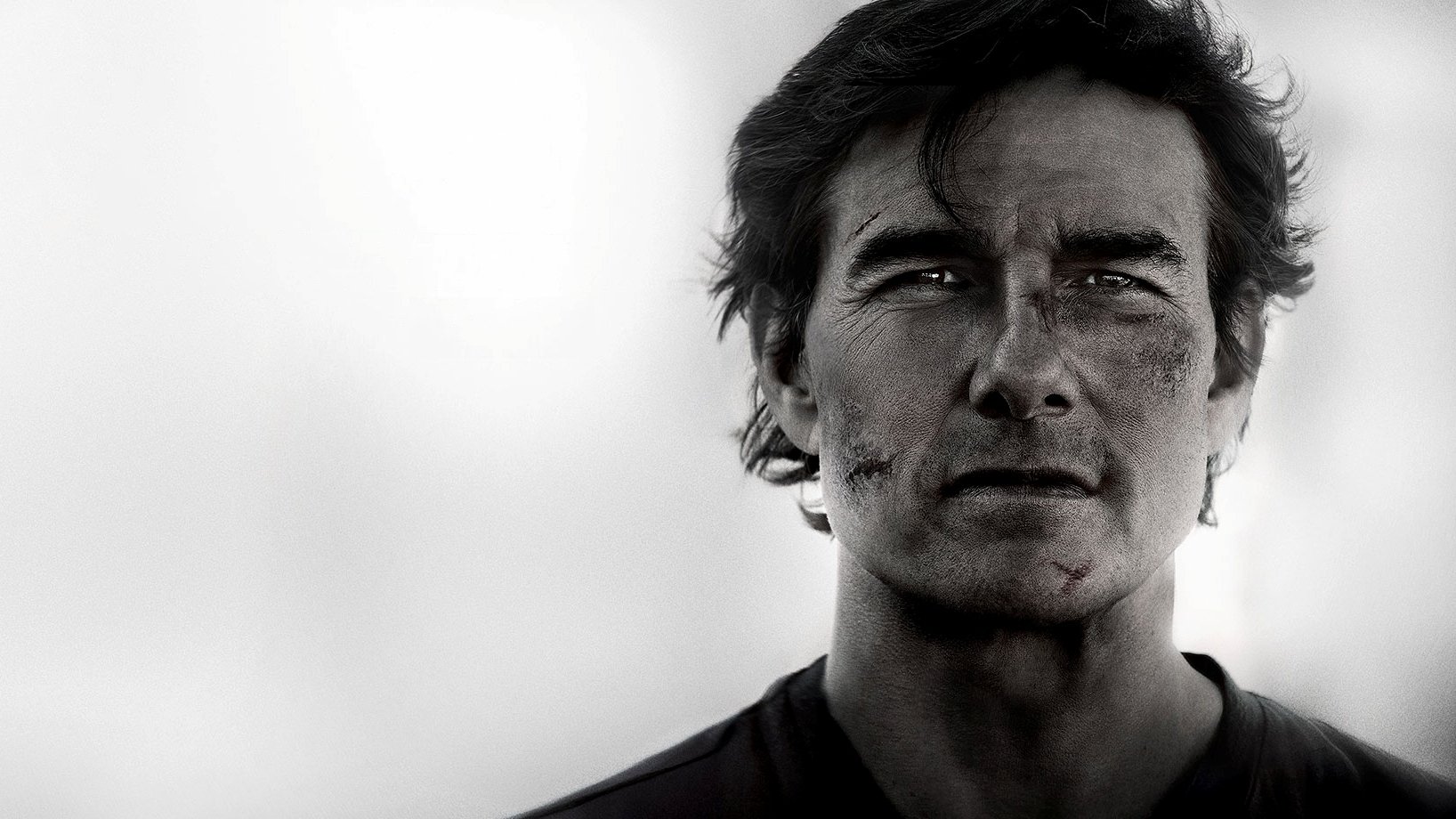
It’s hard to believe the Mission: Impossible franchise has been going on for nearly 30 years. Except for the disappointing second installment, everything else has increased in style to draw audiences worldwide to see what megastar Tom Cruise will do next. It’s probably my favorite action movie franchise, with Mission: Impossible – Fallout still serving as the absolute best and an action masterpiece. Our last taste of excitement came in the form of Dead Reckoning Part One, which was great but surprisingly underperformed at the box office. So, of course, the eighth and “supposedly” final installment, Mission: Impossible – The Final Reckoning, was one of my most anticipated movies of the year without question. The question is whether this works better for a story to be stretched out in two separate parts or live up to the expectations of what the more favorable sequels had to offer. I can say that you’ll walk out of Mission: Impossible – The Final Reckoning thinking it’s a good, satisfying conclusion to this spy series, even if it’s more flawed than its previous installments.
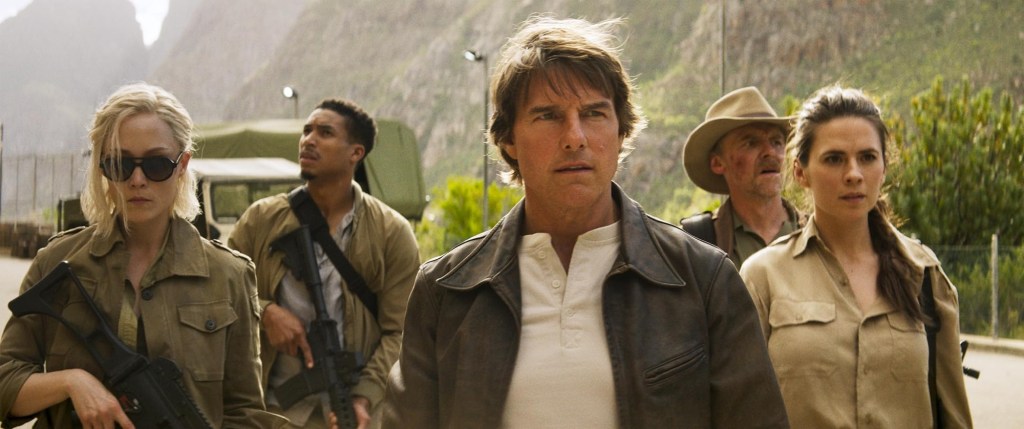
What’s the Story: Two months have passed since Ethan Hunt (Cruise) secured both halves of the key and is still finding ways to take down the self-aware AI known as the Entity, which has taken over the cyberspace of other countries across the globe. With the help of the rest of his IMF team– Benji Dunn (Simon Pegg), Grace (Hayley Atwell), and recruits Paris (Pom Klementieff) and Theo Degas (Greg Tarzan Davis)– they have 72 hours to destroy the Entity before it launches the remaining four nations (the U.K., China, Russia, and the U.S.) nuclear arsenals to start a nuclear apocalypse, which includes them finding the wrecked Russian submarine Sevastopol to retrieve the Entity’s source code.
This half of the franchise has seen returning co-writer/ director Christopher McQuarrie handling this on another scale that continues to draw in people whenever he can when re-teaming with Cruise. The Final Reckoning seems to be the more somber sequel, focused on taking itself seriously rather than being just the typical race against the clock fun. It’s one of the slower installments that are not as non-stop, with more characters talking in between about what’s happening around the plot, such as when Ethan is separated from his team after the first act. Having said that, it can still keep me engaged and realize the stakes are higher than what’s been proposed to Ethan than ever before.
Every time I see Cruise in anything nowadays, I still believe he’s the last actor to be known as “the last great movie star.” Eight movies deep into the series, he continues to show why his performance as Ethan Hunt is not only charismatic but a definitive protagonist to follow until he succeeds in saving one life or many. Cruise’s name is the primary pinpoint of why Mission: Impossible kept its popularity in Hollywood for so long, especially when it started revamping itself in the early 2010s. I still want him to return to a grounded drama in the next few years to prove to the continued haters that he has a range of different genres and earn a long-overdue Oscar before he retires. The rest of the cast still carried over the chemistry, which hasn’t lost focus. Even though this is a lesser role than in Dead Reckoning, Atwell continues to shine as Grace. Pegg’s Benji has always been the team’s heart that sees him go from the tech agent to more of a leader here, and while there isn’t much for Ving Rhames as Luther, his screen presence is always winning. We also see the return of Esai Morales as Gabriel, who comes off as a bland villain here more than in Dead Reckoning, especially when given a few clichéd lines of dialogue. If you think about it, the Entity is more of a threat than Gabriel, and there’s a significant chunk where he’s not on-screen to give us more of a glimpse of his and Ethan’s past. He’s no Philip Seymour Hoffman’s underrated Owen Davian or Sean Harris’ Solomon Lane.
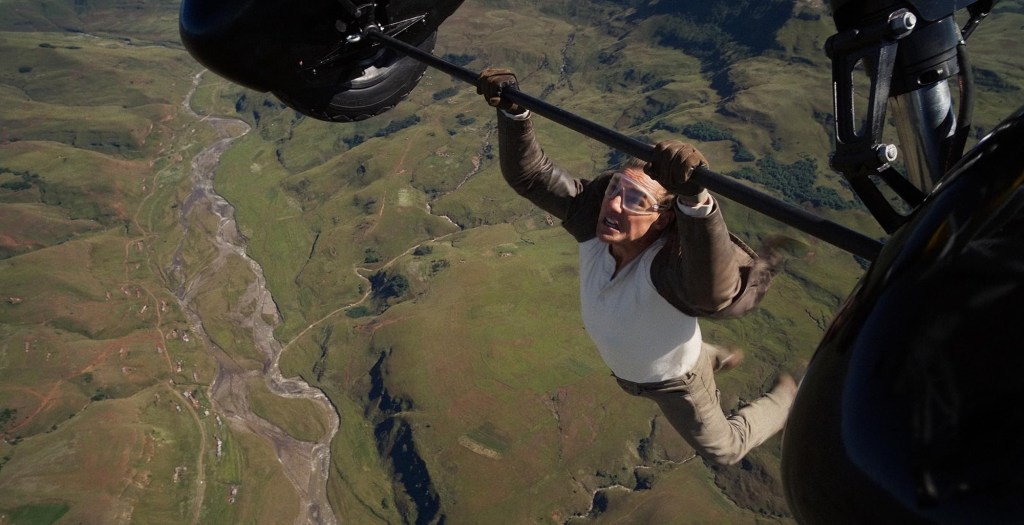
Besides the first movie, The Final Reckoning has the fewest action sequences. But when they show up, McQuarrie certainly delivers the most essential and thrilling element of why these films are rewatchable, then and now. People who show up to see these are only there to witness the next crazy stunt Cruise will put himself in now, but there’s no denying the dedication to crafting them on-screen to make the set pieces stand out after leaving the theater. Not only is there a long, suspenseful scene of Ethan inside the sunken Sevastopol that’s similar to him breaking into the CIA vault because of the lack of a score (the sound design is killer), but the unforgettable climax of him hanging, climbing, and flying outside of these biplanes didn’t disappoint. Cruise does it for our amusement, and I won’t hear another word about it. Both sequences are 100% worth experiencing in IMAX because of the breathtaking filmmaking that pulls them off. Also, the score from Max Aruj and Alfie Godfrey does a great job of replicating Lorne Balfe’s fantastic music.
As dedicated as this was to its characters, the story this time got overstuffed more than the last. It’s the longest runtime at 170 minutes, and you can feel the length. Part of it comes from a messy first act of quickly reintroducing the characters, setting up the stakes at hand with exposition, and having its way of presenting us with recaps of the other movies for memory’s sake. The latter is the film’s way of celebrating their accomplishment with the others, but it became too reliant on them for us fans in an almost distracting way, such as callbacks. This can also get in the way of bringing together new characters (Hannah Waddingham, Tramell Tillman) with little to do, or trying to get a grip on the mission. With the concept of the Entity, this is the only time it can get over-the-top at times, leaning into a sci-fi element, where it’s in Ethan’s hands to end world destruction. With all that packaged together, it’s a lot to take in after one viewing, though the actions of what AI can do seem too realistic.
Judging by the reactions before and after its release, people have mixed opinions about The Final Reckoning. This is nowhere near the worst of the series since we still have the second to hold that place down. But while it certainly has its fair share of problems, it’s hard for anyone to come out of this not having a good time in the theater. Compared to other final films in franchises, this falls behind something like No Time to Die, which I thought had a fitting, unexpected sense of closure for the character. However, I don’t believe this is the last Mission: Impossible we’ll get. The franchise has a strong fan base and a history of successful box office results, so it’s hard to tell if this is the end. We’ll see the box office results to know if it’s true or if there will be another one with a new lead. If so, I can’t think of how it’ll outdo what was offered here.
Overall, Mission: Impossible – The Final Reckoning does tend to feel convoluted within the story. However, when it focuses on the stellar action and another committed performance by Tom Cruise once again, the eighth installment is still a good finale, nonetheless, for an early summer blockbuster release.
Franchise Ranked:
- Mission: Impossible – Fallout (2018)
- Mission: Impossible – Rogue Nation (2015)
- Mission: Impossible – Ghost Protocol (2011)
- Mission: Impossible III (2006)
- Mission: Impossible – Dead Reckoning Part One (2023)
- Mission: Impossible (1996)
- Mission: Impossible – The Final Reckoning (2025)
- Mission: Impossible 2 (2000)

 DC's Take