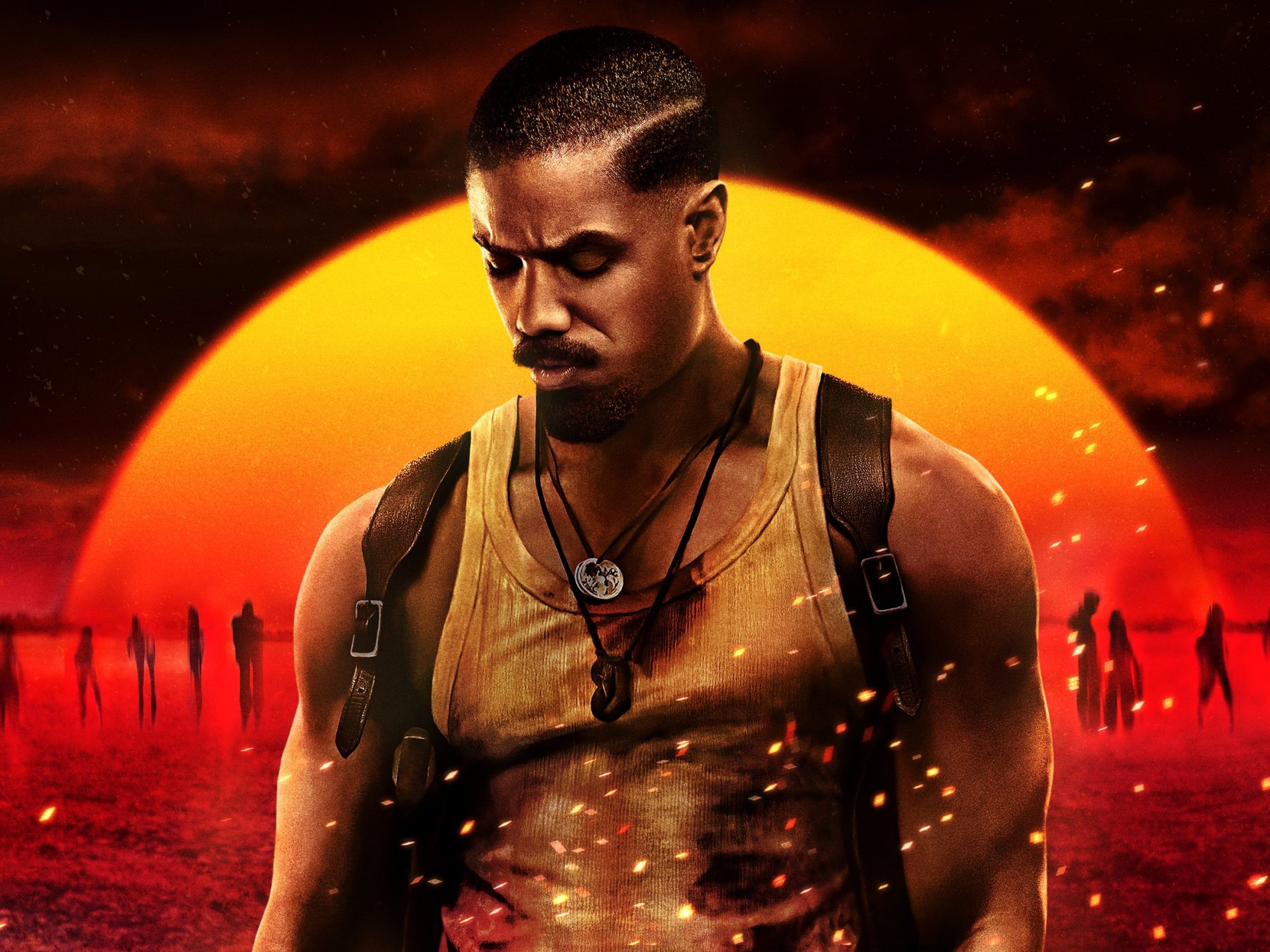
Whenever the conversation about directors comes into play and who currently has the best track record, writer-director Ryan Coogler has to be mentioned for why he’s one of the greatest out there. His groundbreaking work has not only impressed me but also inspired a generation of filmmakers. His talent, which has been showcased by audiences for over a decade, makes me proud of him, especially as a Black filmmaker. We’ve seen him tackle a real-life heartbreaking tragedy in Fruitvale Station, make the crowd-pleasing Creed outshine every sequel in the Rocky franchise, and majorly impact the MCU with Black Panther and its sequel. With his latest film, Sinners, it was about time for him to do an original blockbuster for a studio with a $90 million budget that could serve him well. Since this was announced last year, it would be one of my most anticipated because of his name attached, along with working with his muse, Michael B. Jordan. Not only did it intrigue because it had an unexpected move for Coogler to step into the horror genre, but a Southern horror with vampires in the mix? That might sound too good to be true, yet walking out of Sinners, it will be remembered as one of the coolest, sexiest, and freshest vampire flicks in recent memory.
What’s the Story: Set in 1932 Mississippi Delta, identical twin brothers Smoke and Stack (both played by Jordan), both of whom served in World War I, have to come back home from doing some business in Chicago in the hopes of restarting their lives by opening a juke joint for the community with stolen money. They want to open a place where folks can drink, dance, and let loose. Everybody knows them by name, and they are willing to help them out despite their reputation. But when a trio of unexpected guests, led by Irish Remmick (Jack O’Connell), found their way into the sight of their joint after hearing the sounds of the twins’ cousin Sammie (Miles Calton) performing on the guitar, they soon will have to face a supernatural evil that turns into a terrifying night for all of them.

Sinners was basically the only movie I cared about for the last couple of months, to the point where I tried my damnest to know as little as possible, which meant staying away from the second trailer. What Coogler takes on with the story is what would happen if he were to make his version of Robert Rodriguez’s From Dusk Till Dawn, but with a serious tone and understandable allegories on cultural preservation. The results: A winner. What can Sinners do differently from other vampire movies we’ve seen before? This offers a survival-of-the-night tale within a mostly confined setting that’s able to creep you out with its tension and relevant commentary on America’s society, which is personal to Coolger himself. The first half of the story builds up slowly, set in the Jim Crow South. It takes its time establishing all its relationships with the characters and setting the mood of a time when racial hatred is prevalent before it turns dark. There’s some appreciation to be had for not showing its horror hand early, aside from a couple of quick jump scares in the opening. The viewers know that evil will step in once you invite a vampire inside the twins’ joint, where it’s an establishment that provides a platform for black expression.
After establishing that touch of horror, the tension escalates as the tone darkens when they’re stuck in the old mill, unsure of their plan until the sun rises. That’s when it gets bloody, as expected, for an old-fashioned take on how those who lived in the early 20th century attempted to stay alive from supernatural creatures while providing some unexpected moments of dark humor between the scares. How Coogler handled the action was genuinely great when it called for its characters to get dirty, particularly during a period in the country when racism toward African Americans was rampant, with the twins’ joint serving as a way to escape, as Remmick puts the motivation in them to live an eternal life.
With Jordan in dual roles, how could it not get better? We’ve seen how he’s always giving his performances his all whenever he collaborates with Coogler, but it didn’t seem difficult for him to play Smoke and Stack. It can feel weird saying he plays off himself well, but he does by having us tell the different personalities of those around them, which gives us an attachment to liking them throughout. And it’s easy to tell based on who’s wearing red or blue beneath their loyalty to each other.
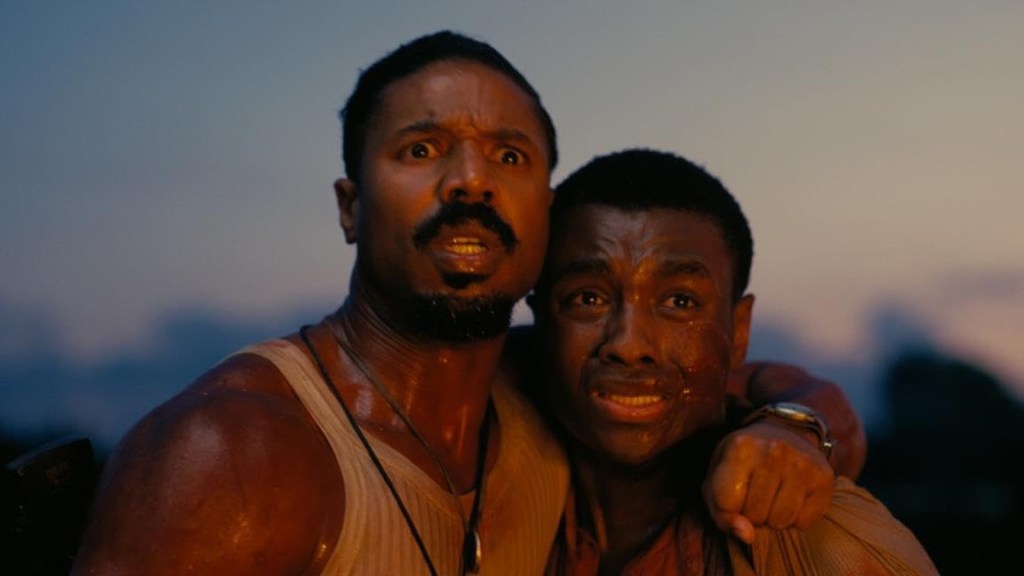
Besides Jordan, the supporting work from the rest of the ensemble proved nearly as good, with Delroy Lindo as the aging Blues musician Delta Slim and Wunmi Mosaku as Smoke’s estranged wife, Annie, with whom she shares a loss to one of their own. Hailee Steinfeld’s performance as Mary, an ex-girlfriend of Stack who passes as white but is half-black and still loves him, is quite different from what we’ve seen in her career (the fact that my number one celebrity crush is engaged still bothers me greatly). But everybody will come out of this amazed by Miles Caton as “Preacher Boy” Sammie Moore. In his debut performance, believe it or not, he truly stood on his own, acting against giants like Jordan in a compelling performance of a young man’s love playing the blues and worrying about what it comes to when his father wants him to follow in his footsteps. He’s excellent in a career move that’ll be one of many breakout roles worth talking about come the end of the year.
However, what I didn’t expect to be a major compliment to the film is that the music is a significant component. Not just from a fantastic score by frequent collaborator Ludwig Göransson, which combines the styles of bluegrass and rock that fit the setting well, but I had no idea how it celebrates the music of connecting through generations, almost presenting itself as another character. This even made the sounds of a traditional Irish song, “Rocky Road to Dublin,” scary. An amazing, continuous one-take sequence left me in awe at how it presents music that brings together the past and the present. From what that moment represented, Coogler might’ve been the only director to set that up perfectly and understand what he was going for, which was truly an experience to witness on the biggest screen imaginable. And any opportunity to catch anything this great in IMAX 70 mm (15-Perf Projection) was worth it, as Autumn Durald Arkapaw’s cinematography captures every detail to showcase the production value.
Everything this has given me is what I wanted. But besides an almost slow start at the beginning, something about the last few minutes won’t work for everybody. Because just when you thought it was wrapping up, the mid-credit scene goes on longer than expected to possibly set up a sequel. Without spoiling, it does tie up a couple of loose ends, I questioned, but why not have it as part of the film instead of all this happening after the end credits? That’s probably the only problem I had with the first movie I loved in quite some time, that I can’t wait to catch again.
Overall, Sinners is another guaranteed classic in Ryan Coogler’s filmography. It’s a horror experience rarely seen in blockbusters of this scale, brimming with excellent music throughout, featuring a never-better Michael B. Jordan in his dual roles, and a story that keeps you gripping until the end. Not many original movies have fared well at the box office lately, but this is what audiences should pay attention to before the packed summer is around the corner.

 DC's Take