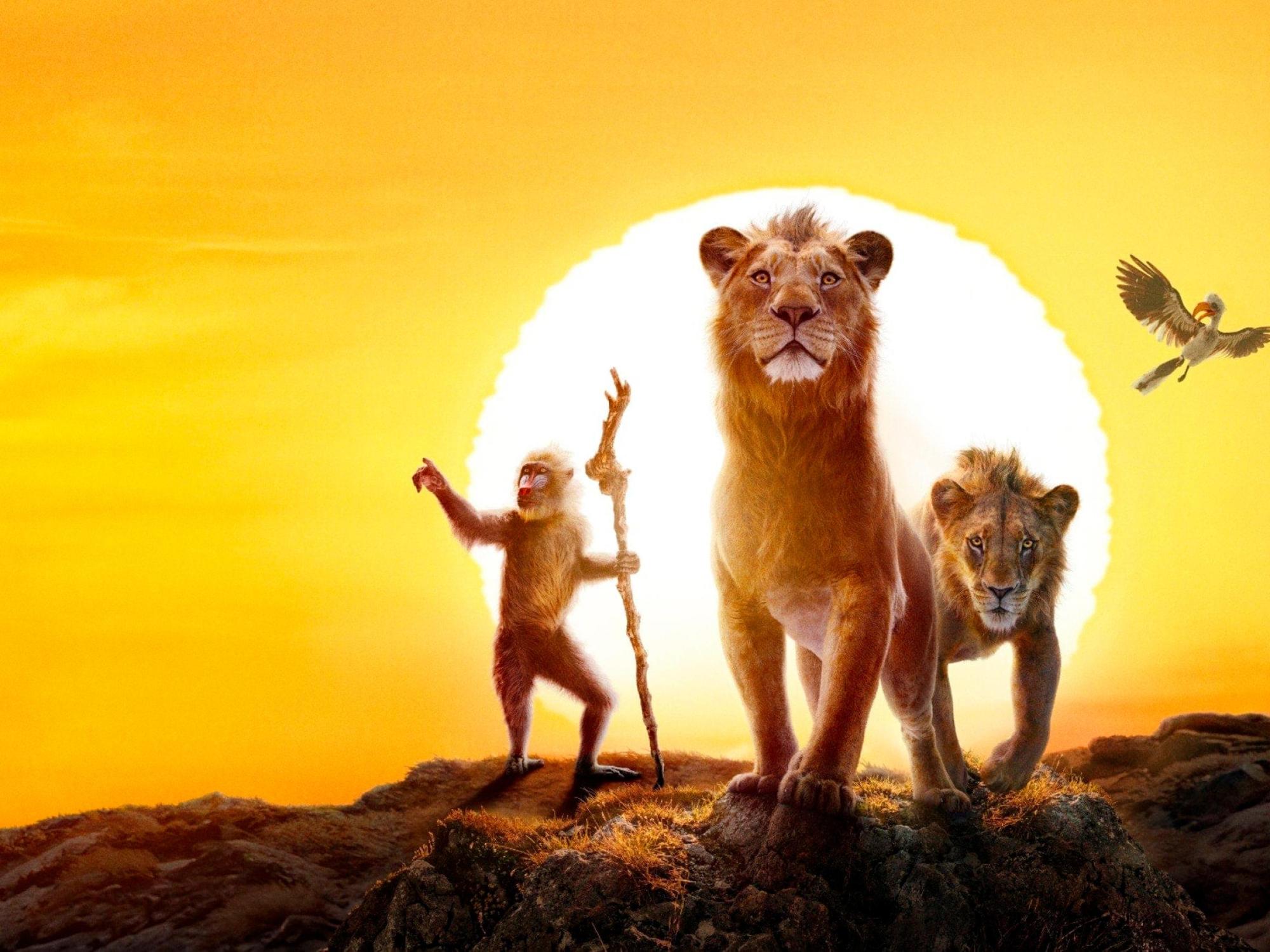
If there was one sequel this year I couldn’t care less about seeing, it has to be Mufasa: The Lion King. Disney’s 2019 live-action remake was a massive disappointment for someone who considered the original animated version 30 years ago one of my all-time favorites. And it was around that time when the studio’s pension for these remakes was growing tiresome for many out there. It was only just yesterday when my dumbass thought it was going to be amazing, only to end up as a shot-for-shot remake that’s visually cool but pointless. It’s not terrible from my perspective, but how it made over a billion dollars worldwide actually perplexes me. Not only is this a sequel, an inevitable reason for Disney needing money, but it’s also a prequel to show us how the former King of the Pride Lands and his brother become enemies. My expectations were already low, but while it’s easy to say this might be a bit better than its predecessor, I walked out thinking it’s not very impressive.
What’s the Story: When Simba (Donald Glover) has to leave home to take care of Nala (Beyoncé Knowles-Carter), their daughter, Kiara (Blue Ivy Carter), is looked after by Timon (Billy Eichner) and Pumbaa (Seth Rogen). Rafiki (John Kani) later joins them. The wise and insightful baboon shares the story of Kiara’s grandfather, Mufasa (voiced by Braelyn Rankins/Aaron Pierre). As a cub, he separated from his family after a flash flood swept him away. Saved by a fellow cub named Taka (Theo Somolu/ Kelvin Harrison Jr.) from being eaten by crocodiles, he’s taken in by Taka’s mother, Queen Eshe (Thandiwe Newton), with his father, Obasi (Lennie James), rejecting “strays” that are not his pride of lions. When they become older and are seen as adoptive brothers, they have to leave their home when a white lion called Kiros (Mads Mikkelsen) wants to take over the kingdom in revenge and go on a journey to reach the mystical land of Milele.
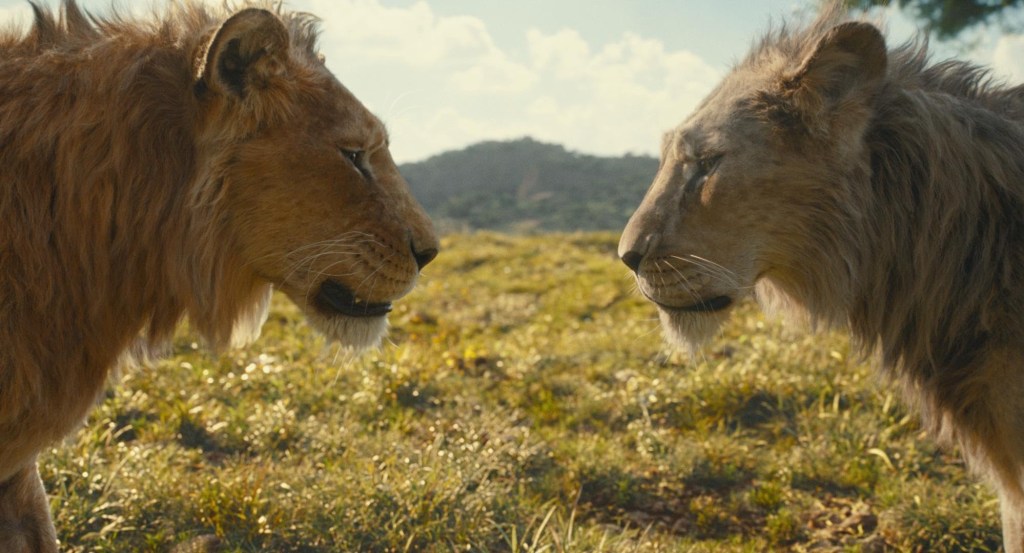
To the film’s credit, it consciously tries to present an original story rather than recreating the 1998 direct-to-video sequel, Simba’s Pride. What we have with Musafa: The Lion King is an origin story whose influences might draw parallels to The Godfather Part II or, since it’s a musical, to Mamma Mia! Here We Go Again. Did anybody ask for information on Mufasa’s backstory? No, but seeing how much the first made despite mixed reviews, we’re getting one regardless of whether we want it. The brotherhood between Mufasa and Taka grows stronger as they grow up, which is reflected in how their destiny comes up.
Even the CGI has improved, believe it or not. While the Oscar-nominated visual effects made the animals look photorealistic, this also had a downside: the lack of facial expressions made it feel like we were watching the most expensive National Geographic documentary ever produced. However, it seems like they listened to the criticism. I noticed an improvement in how the characters smile more, and their anger during the musical sequences effectively conveys their emotions through a cinematic lens. That said, they could have toned down the close-ups.
But when you’re telling a story to characters we already know down the line, the experience is more underwhelming and comes across as boring sit through. There was never a moment holding my interest when it felt dull and rushed to cram everything in two hours. And if I had a kid and took them to see it, chances are they’ll find little to appreciate aside from the catchy music. Prequels are tricky to sell nowadays when audiences know what to expect. On top of that, for being a prequel, any references we know from nostalgia felt forced. To forcing certain moments to foreshadow what we know now, from Taka digging his nails into Simba’s paws or Zazu telling his “morning report.” Rafifi got his stick, or how Scar got his signature scar. The reason why their brotherly relationship doesn’t last is all predictable when it, of course, involves a woman, Sarabi (Tiffany Boone), who becomes Mufasa’s queen in a pretty underwritten love interest to be part of the journey. That alone left Taka/ Scar’s evil turn left more to be desired if they took more time to further it.
Pierre and Harrison Jr. did a commendable job voicing the brothers we’ve come to love and, at times, despise, even though I’m not a fan of making them adoptive siblings. Pierre, in particular, had big shoes to fill, taking on a significant character previously voiced by the late, great James Earl Jones—a decision the film honored with a title card at the beginning. The relationship between the characters is what I care about most. Mufasa is embraced by a pride that helps him connect with his instincts and grow into a leader, while Taka feels a lack of love from his parents, which hinders him from being seen as the rightful heir. Billy Eichner and Seth Rogen return as Timon and Pumbaa, the few bright spots of the first as the comic relief. Here, it’s the opposite. None of their jokes were landing since they’re used as the film’s framing device to cut back to the present day when they are engaging with Rafiki. Every time they come back to break the story up, they become more annoyed with their ad-libbing. Additionally, Zazu (Preston Nyman) was more annoying and just waiting for any lion to eat him. But it was entirely pointless to bring back Glover and Beyonce (who were miscast in the first place) since they’re cameos that show up at the beginning and end.

Out of all the directors who could have taken over after Jon Favreau, Barry Jenkins was not one I expected. It was a move to lend the film some credibility, similar to how the MCU hires well-known directors for its movies. It sounded like a joke when I first heard that he would be involved. Jenkins has made a name for himself as a prominent artist in black cinema, particularly with his Oscar-winning films, Moonlight and If Beale Street Could Talk. Even for a filmmaker with such critical acclaim, he was not suited to bring this $200 million blockbuster to life, nor was he someone who could justify its existence. While he added more vibrant colors to the cinematography, the usual momentum and emotional impact he brings to his characters were lacking in this story about a would-be king trying to establish his name in Pride Rock. It felt as though he was simply following the studio’s direction to make the film more appealing to children.
With music as a huge part of the franchise, it was interesting to learn from the trailers that the new songs were written by Lin Manuel-Miranda, who rarely lets me down in the music department. However, similar to Moana 2‘s songs, they also didn’t entirely stand out here when they were okay, even when we know these can’t match the heights of greatness that Elton John and Tim Rice accomplished three decades ago. The only one I remembered liking was “Milele” in the first ten minutes” while the rest were pretty much out one ear and the other. Part of me wanted to like Kiros’ song because villain songs tend to be popular, but I was confused if I were to take it seriously when it included lyrics like “bye-bye.” However, the score from Dave Metzger and frequent Jenkins collaborator Nicolas Britell didn’t sound all that bad when incorporating familiar shades of Hans Zimmer’s music.
Overall, Mufasa: The Lion King may have improved in areas like visuals and offered some originality for a prequel/sequel. However, the film ultimately falls short of its storyline despite Barry Jenkins’ talents. After watching, you might feel indifferent, thinking, “Whatever,” and it likely won’t leave you feeling angry as the previous installment did. Seeing how this won’t make nearly as much money as the first, the mixed response should let Disney know they need to pump the breaks on the live-action remakes and go in a different direction.

 DC's Take