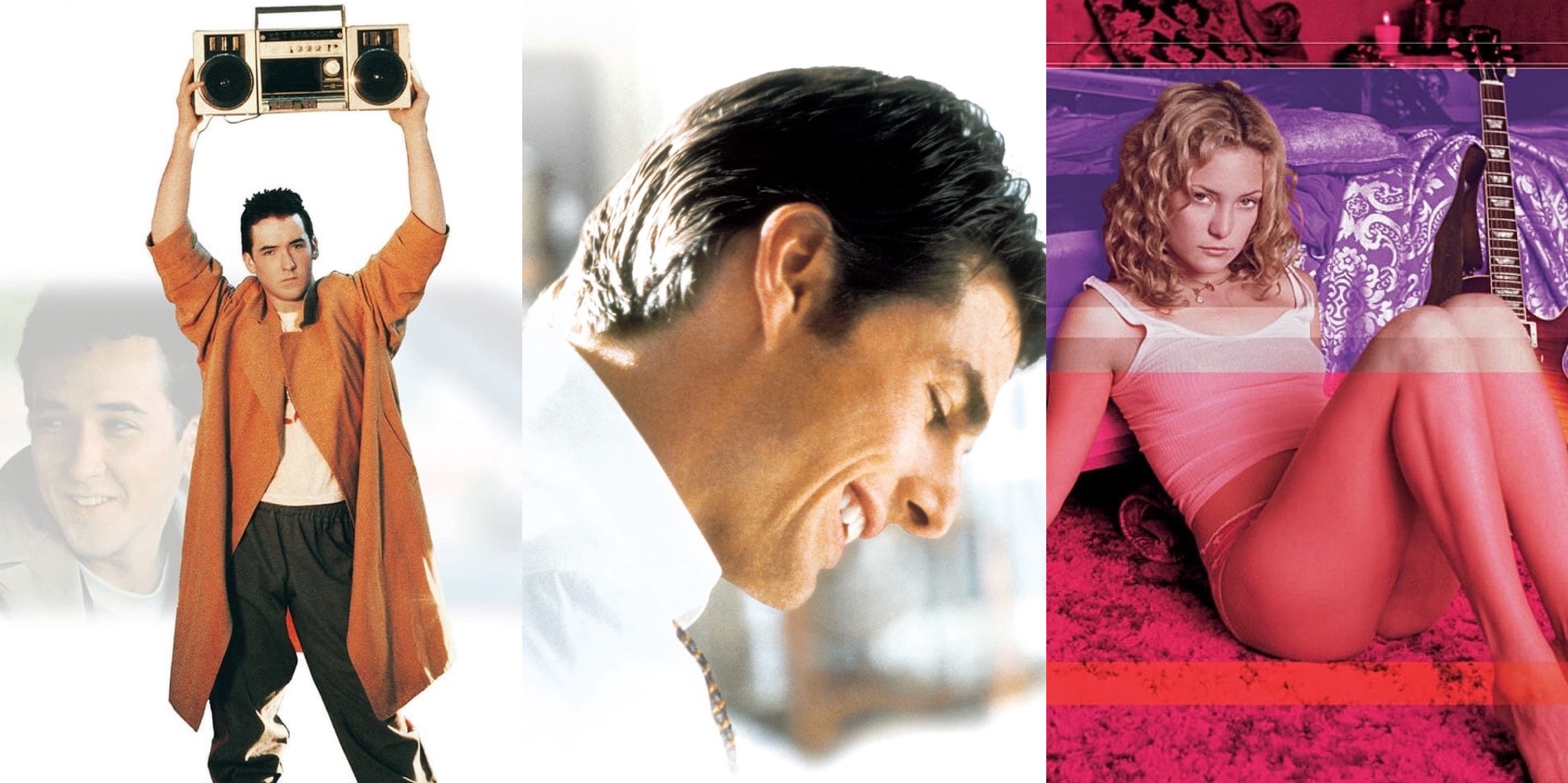
Cameron Crowe, renowned for his keen insights into human relationships and evocative storytelling, has built a distinguished filmography that captures the essence of various life experiences with a blend of humor, romance, and introspection. Crowe began his career as a journalist for Rolling Stone magazine, where his deep connection to the world of music heavily influenced his later work in film. His break into Hollywood came when he wrote the screenplay for the classic ’80s teen movie Fast Times at Ridgemont High, directed by Amy Heckerling and based on the book when he went undercover as a high school student. And just seven years later, he made his directorial debut and launched his flair for dramedies.
Since then, he’s been better days that made us miss its rich character development, memorable dialogue, and a profound connection to music not seen in those less favorable. However, when you look at Almost Famous or Jerry Maguire, his films resonate with audiences, offering a blend of authenticity, emotion, and a unique perspective on life’s various stages. From the exuberant highs of youth to the reflective moments of adulthood, his movies resonate with a timeless appeal that has endeared him to audiences for decades.
On today’s Director’s Canvas, we will rank the eight films in this Oscar-winning filmmaker’s career from worst to best. This will only include his feature films, not his documentaries. As a bonus, I will also recommend a song from each film’s soundtrack that’s worth listening to because his incorporation of music into every film is pure genius.
8) Aloha
Release Date: May 29, 2015
Budget: $52 million
Domestic Box Office: $21.1 million/ Worldwide: $26.2 million
RT Score: 20%
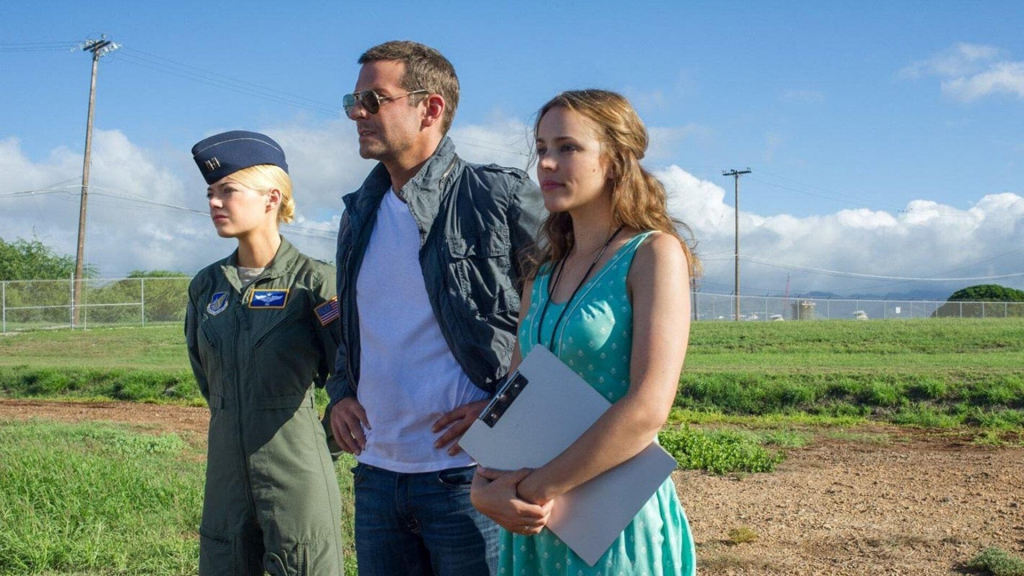
As of 2024, Aloha is the last film Crowe directed. Everything leading up led me to believe this would be his best effort in years based on the ensemble and beautiful setting. The last time I caught this was during my first semester of college since I missed it in theaters. I had to rewatch it nearly a decade later to refresh my memory, but now I remember this became such a misfire in his career. Military contractor Brian Gilcrest (Bradley Cooper) returns to Hawaii to construct a traditional blessing to the natives and launch a satellite into space, all while stuck in a love triangle between his Air Force liaison Allison Ng (Emma Stone) and ex-girlfriend Tracy (Rachel McAdams).
So much about Aloha bothers me, and the usual tropes we’ve come to expect from his films fall short. The plot goes on to complete autopilot, and we never know where each scene is helpful because there’s so much going on that doesn’t leave us emotionally invested. The laughable dialogue causes a disconnect between all the characters. As much as I love Bradley Cooper and especially Emma Stone, it’s some of the weakest chemistry I’ve ever seen in a rom-com. And it doesn’t help with Stone’s controversial casting as a one-quarter Chinese, one-quarter Hawaiian character. Even with a cast that includes McAdams, Bill Murray, John Krasinski, Danny McBride, and Alec Baldwin, they’re all fine but given nothing to lift their strength. A box office bomb and garnered lackluster reviews to declare it one of 2015’s worst, Aloha is unwatchable.
7) Elizabethtown
Release Date: October 14, 2005
Budget: $45 million
Domestic Box Office: $26.9 million/ Worldwide: $52.2 million
RT Score: 28%
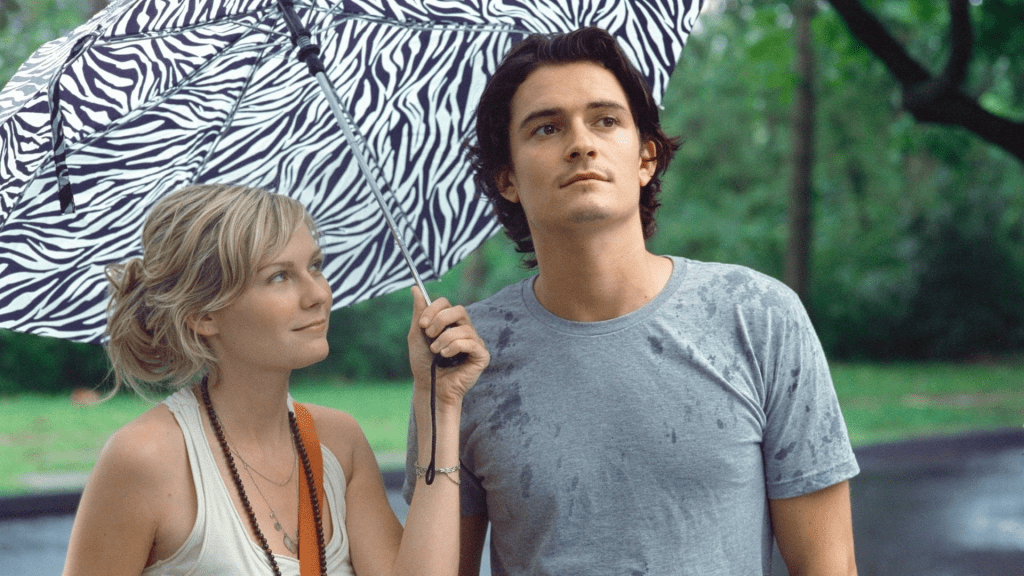
Elizabethtown should’ve been one of Crowe’s very best since he knows how to direct a memorable romantic comedy with a relatable touch. Atlas, you can sense he was trying too hard to replicate what made Garden State a hit in some circles. With Drew Baylor (Orlando Bloom) losing his shoe company close to a billion dollars after a massive flop on their latest product, his suicide attempt failed when his father passed away. His trip to Elizabethtown, Kentucky, to bring him home has Drew meet flight attendant Claire and an unexpected journey of who he is.
Except for a fantastic soundtrack, nothing drives the plot forward. Sitting through Elizabethtown the second time gives off trying to stay invested when a friend goes on a conversation that goes nowhere, and this is the equivalent. Not only was the comedy off, but the dialogue never pulled you in on an already emotionally hollow story. Even the romance has no life when Orlando Bloom’s performance is wooden, with that fake American accent and no chemistry with Dunst, whose one-dimensional character led to describing females with bubbly personalities as “Manic Pixie Dream Girl.” You want to like this one, but it could have been better when creating anything remotely deep.
Full Review—> RIGHT HERE
6) Vanilla Sky
Release Date: December 14, 2001
Budget: $68 million
Domestic Box Office: $100.6 million/ Worldwide: $203.4 million
RT Score: 43%
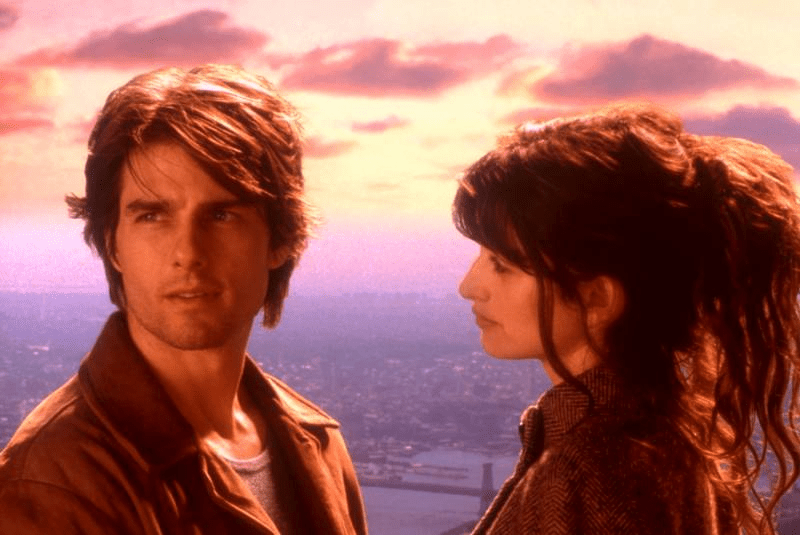
Undoubtedly the most divisive film he’s done, there’s another universe where I consider Vanilla Sky a crowning achievement. But this is reality, and with each attempt to watch this to understand it, finally, this will always be a Tom Cruise vehicle that is challenging to like. Re-teaming after Jerry Maguire, Cruise plays David Aimes, the owner of a publishing company, a key to the kingdom from his father. He has it all until he meets a girl, Sophia, who quickly falls in love. David’s life changes after a severe car crash, and he finds himself not sure what’s actual versus reality. Crowe boldly moved to remake Alejandro Amenábar’s Spanish film Abre los Ojos (Open Your Eyes) after finding it fascinating, but the results are messier and less breathtaking.
Weaving through Vanilla Sky is part drama, romance, and science fiction, with the concept of lucid dreaming sounding like an interesting affair. The problem is through various interpretations, it’s all just confusing in an already long film. What does it mean to lose what we love? Can we function with our faith? Unfortunately, we’re solving a complex puzzle that becomes too frustrating. By that, Crowe’s ambitions were too high here. Cruise’s performance will have fans watching despite his character David becoming an unlikable dick in the second act, not entirely having a connection to him. It doesn’t help when there’s not much chemistry with Cruz. Surprisingly enough, this provides one of Cameron Diaz’s best roles as Julie, whose balance of sexy and crazy proved unforgettable. I’m all in for surreal depths of our subconscious, but with the writing and feeling like I needed a van diagram of what’s happening. Vanilla Sky is a love-it/hate-it experience. For me, I never understood the fascination behind it.
5) We Bought a Zoo
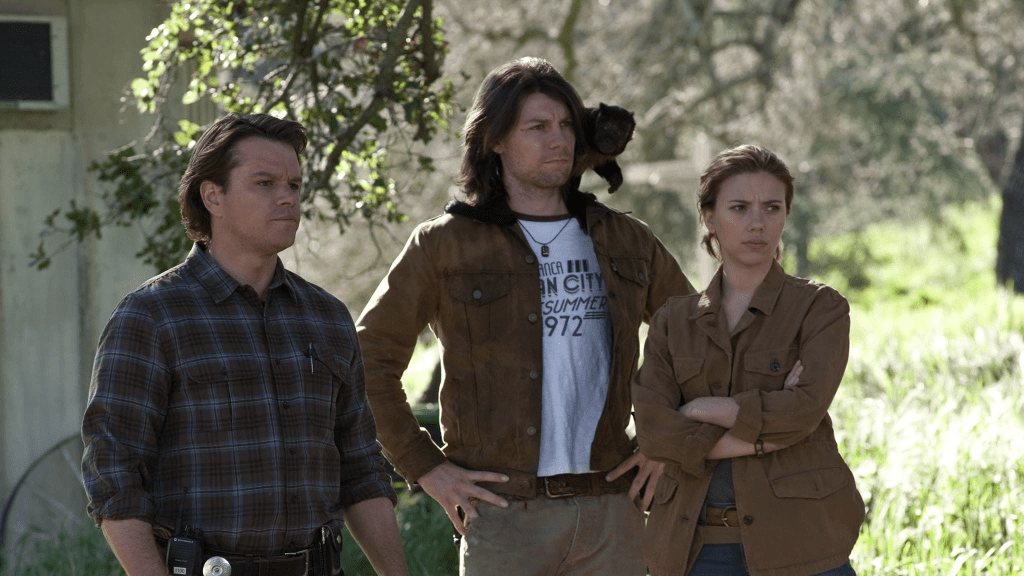
Release Date: December 23, 2011
Budget: $50 million
Domestic Box Office: $75.6 million/ Worldwide: $120.1 million
RT Score: 65%
We Bought a Zoo sees Crowe making a family-friendly film (primarily) based on a true story. But this proves he can change things up. While nobody will go as far as to call it one of his best, I still find this 2011 dramedy pretty charming as a minor step back on track for him. Benjamin Mee (Matt Damon) needs a new life after his wife dies, and he is figuring out how to raise his two children alone. That change comes when he purchases a home that’s a part of the Rosemoor Wildlife Park. Benjamin might be new to all of this, but he’s willing to do everything to renovate the zoo before opening day.
The most attention We Bought a Zoo gained in later years was when Jimmy Kimmel hilariously poked fun at it at the Oscars. Predictable? Sure. But even though it’s sappy almost throughout, which might turn some off for not feeling like Crowe’s other work, it’s practically harmless to view it with a critical eye. There’s a decent enough investment in hoping Benjamin’s risk of spending all the family money will pay off, and Damon’s performance sells his likability well. A nice supporting cast, including Scarlett Johansson, a scene-stealing Thomas Haden Church, and Elle Fanning, also aid him. And it’s carried by a great score from Iceland’s Jónsi. A movie like We Bought a Zoo didn’t aim to win any major awards, but you can look back at this as a sweet and moving addition to his filmography, especially for those who love animals.
4) Singles
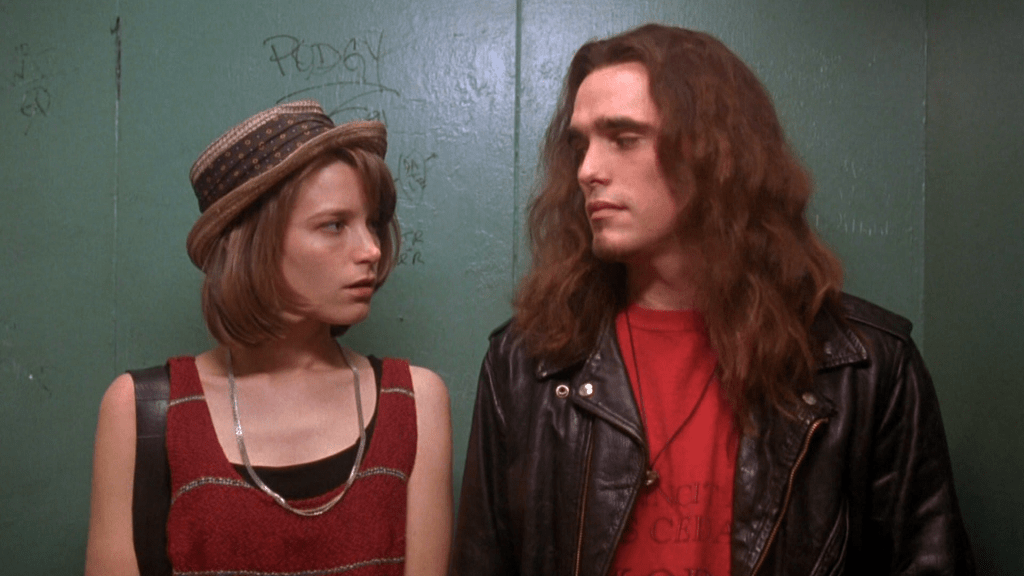
Release Date: September 18, 1992
Budget: $9 million
Domestic Box Office: $18.5 million/ Worldwide: $18.5 million
RT Score: 79%
Crowe’s sophomore effort three years after Say Anything… gives us another look at relationships but for adults with Singles, a film I only discovered in lockdown and has since been looked at as an overlooked part of his filmography. Following a group of twenty-somethings in Seattle, some live in the same apartment building, navigating the pitfalls of love. From the “will they/ won’t they” relationship between Steve (Campbell Scott) and Linda (Kyra Sedgwick) to Janet (Bridget Fonda) trying to win the affection of grudge musician Cliff (Matt Dillion).
From a millennial perspective, watching Singles made me believe there was a simpler time to experience the highs and lows of love in one’s 20s within the Seattle grunge era. Whether it’s committing part of one’s life to somebody or desperate attempts to meet the one who couldn’t be Mr. or Mrs. Right instead of Mr. Maybe, anyone who watches this will find it relatable. It plays more like a string of vignettes instead of focusing on one particular character. Still, you manage to get behind their stories based on the likable performances from nearly everybody, especially from Sedgwick, who reminded me of Julia Roberts throughout, and Fonda, who I miss seeing in movies. This also features cameos from Eddie Vedder of Pearl Jam and the late, great Chris Cornell. Singles didn’t change the game for romantic comedies during that decade, but it’s certainly funny and sweet and will appeal more to that generation. What most probably don’t realize is that this movie inspired what would become one of the most popular sitcoms of all time, Friends, after trying to turn the movie into a television series.
3) Almost Famous
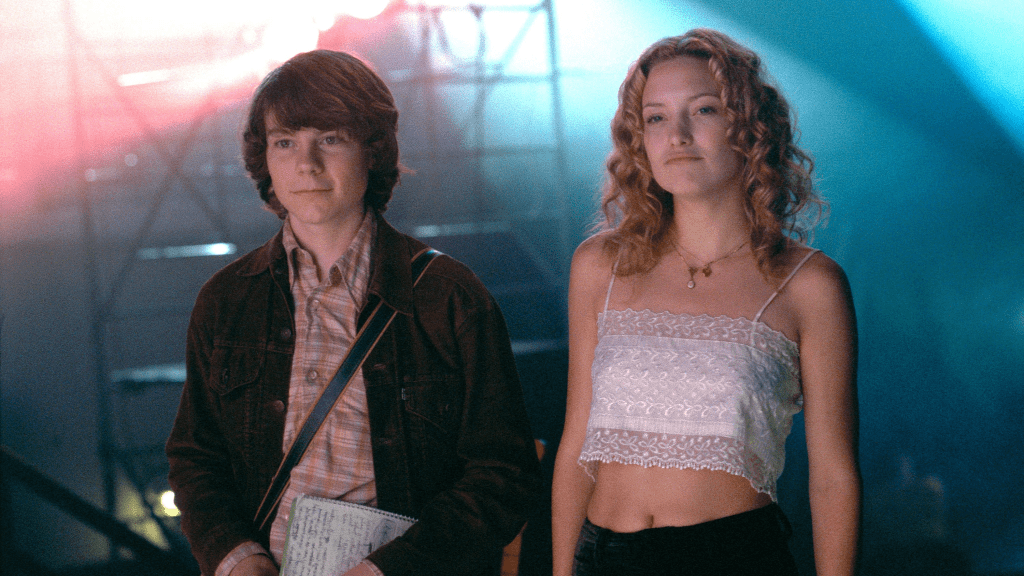
Release Date: September 15, 2000
Budget: $60 million
Domestic Box Office: $32.5 million/ Worldwide: $47.4 million
RT Score: 91%
Those who can make a movie about a real-life experience are always welcome and beloved, and Almost Famous is no exception. Based on Crowe’s time writing for Rolling Stone magazine in the ’70s, William Miller (Patrick Fugit) loves rock’ n’ roll despite his overprotecting mother’s belief that it could lead to a dark path. As an aspiring rock journalist, he gets to make his dream a reality when he’s assigned to write an article about the up-and-coming band Stillwater on their current tour. Any movie revolving around music, when done right, hooks me, and seeing Will going on this crazy journey has us thinking about how cool it would be to travel with our favorite artist. Almost Famous, in a sense, feels like his most personal film since it’s a semi-autobiographical that touches on the beauty of adolescence outside of home life and gives a peak at the good and bad times with a successful band. We see William as a teenager who takes his job seriously while trying to live a little while getting to know everyone he considers important to Stillwater, including “band-aid” Penny Lane, played by Kate Hudson in the best role of her career.
The music easily sells the early ‘70s setting, with the soundtrack winning a Grammy. Even when the film doesn’t offer the hardest of truths behind the fame of rock, it’s meant to be seen through Will’s eyes while on the road. The most iconic moment? When everyone on the bus sings Elton John’s “Tiny Dancer” after a fight the previous night. Maybe I’m the only person who doesn’t have this at #1, but Almost Famous is a classic coming-of-age love letter to the bands we grew up with and who we are today. Though it was a box office bomb in 2000, it was still a critical hit. Even Roger Ebert named it as the best movie of the year. More importantly, it earned four Academy Award nominations, with Crowe winning Best Original Screenplay.
2) Say Anything…

Release Date: April 14, 1989
Budget: $16 million
Domestic Box Office: $20.8 million/ Worldwide: $21.5 million
RT Score: 98%
If you’re going to show the world you are as a director, why not put together one of the most celebrated teen movies of the late ‘80? Say Anything… walked so films decades later like The Spectacular Now can run, if you know what I mean. Crowe’s directorial debut is all about Lloyd Dobbler (John Cusack), a recent high school underachieving graduate who doesn’t hold much admiration for his future except for becoming a kickboxer. He finally dared to ask out class valedictorian Diane Court (Ione Skye), and what follows is a romance they’ll never forget.
What makes Say Anything… stand out then and now is Crowe’s ability to believe this relationship between Lloyd and Diane is realistic and mature for teenagers with different mindsets. Without the casing of Cusack and Skye, we would’ve seen a completely different movie unfold. But the chemistry they shared on-screen is charming because, at one point in school, we all wanted to find our equivalent to Lloyd or Diane, especially me. The story, while predictable, deals with experiencing your first young love and the inventible heartbreak that’ll come with it. Of course, everybody remembers one of the most memorable in film/ pop culture history: Lloyd holding the boombox over his head outside her house, blasting Peter Gabriel’s “In Your Eyes.” Who hasn’t declared their love that way? Heartfelt with the authentic touch to how Crowe writes teenage characters, Say Anything… has all the makings of a genuine rom-com that holds up after thirty years.
1) Jerry Maguire
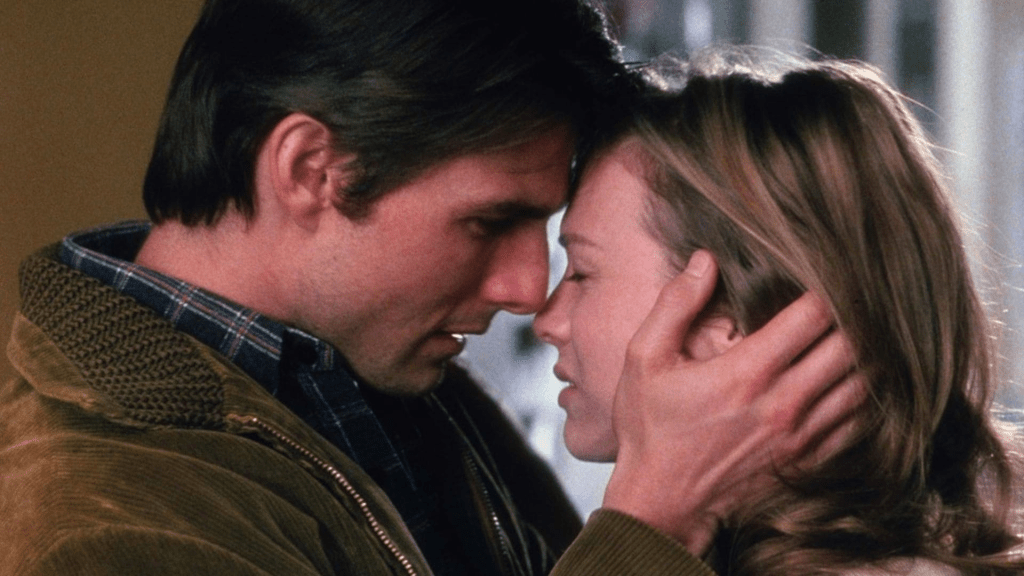
Release Date: December 13, 1996
Budget: $50 million
Domestic Box Office: $154 million/ Worldwide: $273.6 million
RT Score: 84%
If the 1990s were responsible for producing the most iconic, feel-good movies, you better believe Jerry Maguire belongs up there as one of the best out there. With its universal themes of love, ambition, and redemption, this film is a perfect blend of comedy, drama, and romance. From my perspective, it’s an instant classic, and I’m sure it will also strike a chord with you. Tom Cruise plays the titular character, based on Leigh Steinberg, a sports agent whose epiphany about handling relationships between agents and clients led to his firing, leaving him to be on his own along with accountant Dorothy Boyd (Renée Zellweger). With his own firm to rebuild his career, Jerry puts his trust in Rod Tidwell (Cuba Gooding Jr.) on the line and ultimately learns what it means to find happiness in the smallest things in life.
Outside of Crowe’s knack for writing well-rounded characters early on, Cruise’s performance might be the primary factor that made Jerry Maguire a hit. They needed to find an actor who could begin the film almost self-centered only to allow Jerry to provide this warm presence with the surrounding people, whether in his fast-paced profession or personal life. How he didn’t win the Oscar for Best Actor doesn’t make sense. Despite being his third feature film, an honest love story that’s equally charming and heartbreaking helped further Crowe’s filmmaking career and will take back those thinking it would be all sports. Between the love he finds with Zellweger’s Dorothy and Gooding Jr.’s Oscar-winning turn as Rod, it’s relatable to take the hardest risk of our everyday occurrences, sticking by him. Endlessly quotable without becoming cheesy and carrying its heart on its shoulder, Jerry Maguire completed me and had me at hello.
Full Review—> RIGHT HERE

 DC's Take