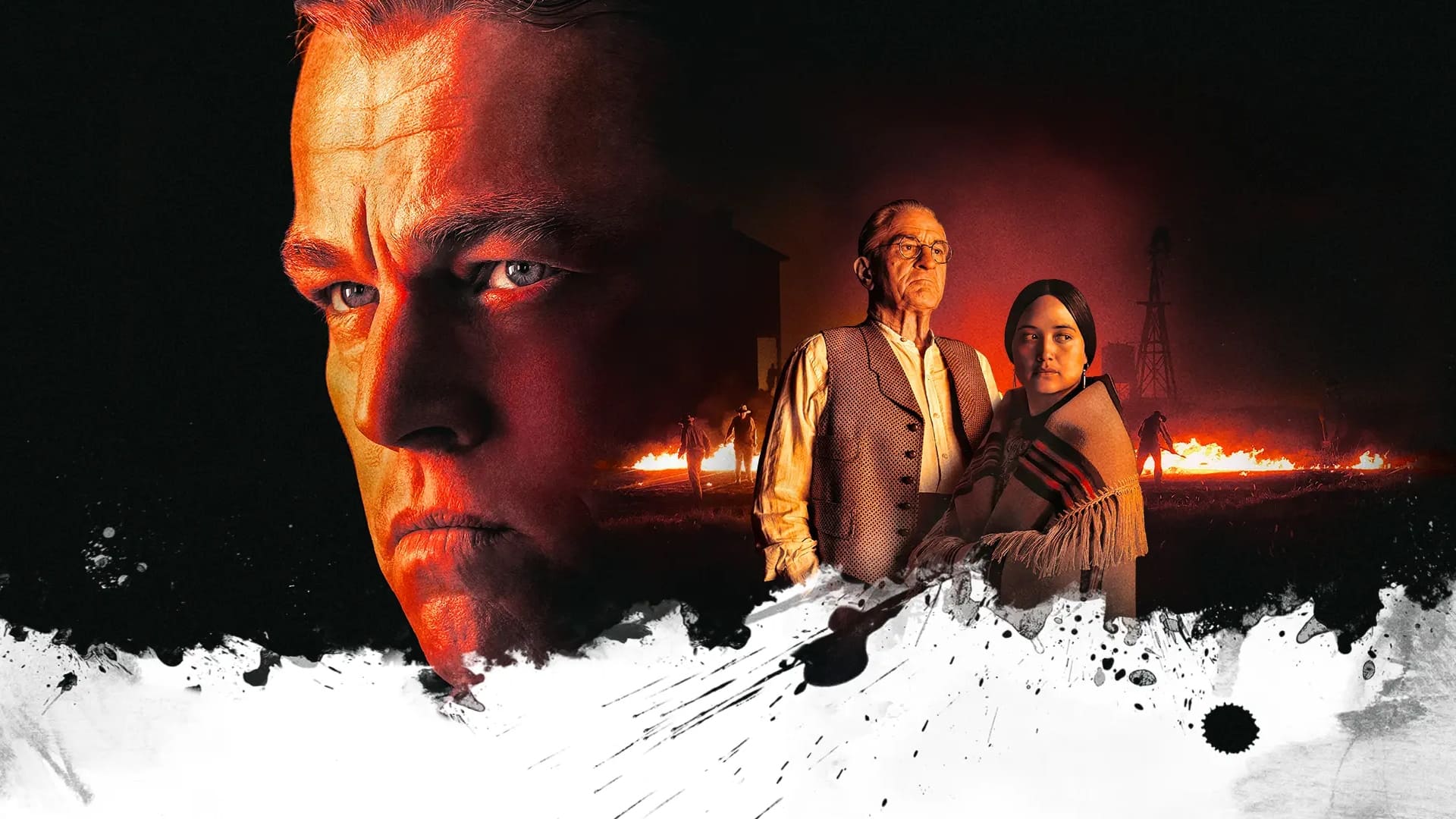
For someone in his early 80s, Martin Scorsese continues to be a filmmaker anyone will support after coming out classic after classic for the past five decades. No subject is untouched to put his style to work to deliver a memorable experience with a legacy, probably a rare miss or two in his legendary filmography. Just four years after The Irishman, he brings together his most iconic muses, Leonardo DiCaprio and Robert De Niro, for the first time in thirty years on his latest epic crime drama, Killers of the Flower Moon, a lifelong passion project he’d wanted to make for some time. The hope since its premiere at the Cannes Film Festival was too real to ignore, with these past few months made it an early indicator that Scorsese’s adaptation of David Grann’s best-selling non-fiction book of the same name could factor highly in the Oscar race. And even when you always set your mind on what to expect when walking into one of his films, the overall results might not be as perfect as imagined, but you can’t deny the display of getting under your sink with this effort.
What’s the Story: After discovering oil on their property in Oklahoma in the early 1920s, members of the Osage Nation became extremely wealthy. Soon after, Native American tribal members died under inexplicable circumstances, either covered up or unsolved, to seize their oil and land rights. Returning from serving his time in World War I, Ernest Burkhart (DiCaprio), a cook who was discharged and can’t handle the heavy lifting, returns home to live with his uncle William “King” Hale (De Niro), a powerful man in the county and the deputy sheriff in the town of Fairfax. Woking as a cab driver, Hale convinces his nephew to marry Mollie Kyle (Lily Gladstone), a wealthy Osage daughter who will inherit her family’s inheritance. With these murders increasing over the years, agent Tom White (Jesse Plemons) of the Federal Bureau of Investigation is sent to solve these killings.
Without reading the book and despite thinking this would be from the perspective of the FBI investigation, it provides details about this daunting time in America and its dirty secrets to keep hidden for so long, or at least to the general’s knowledge. Scorsese paints the first half as this string of hopelessness where nobody does anything with the investigations or those from the tribe, releasing that dark tone into motion early on. And it feels much like a mob/ true crime film with his old-fashioned way of being uneasy with the violence that’s rightfully disturbing and how we’re always led to believe the power of greed consumes us within our loyalty. With the Osage the wealthiest tribe in that specific region, these unexplained deaths keep them worried and a chance for the “White men” to steal their fortune for themselves through what’s pretty much hate crimes. How he’s keeping that investment going didn’t surprise me when we also don’t know who to trust, questioning who’s a wolf in sheep’s clothing, so to speak. Despite expectations that this would be an easy mystery, it reveals who is behind these murders, and it’s just a matter of time before someone is exposed to move the tale ahead.
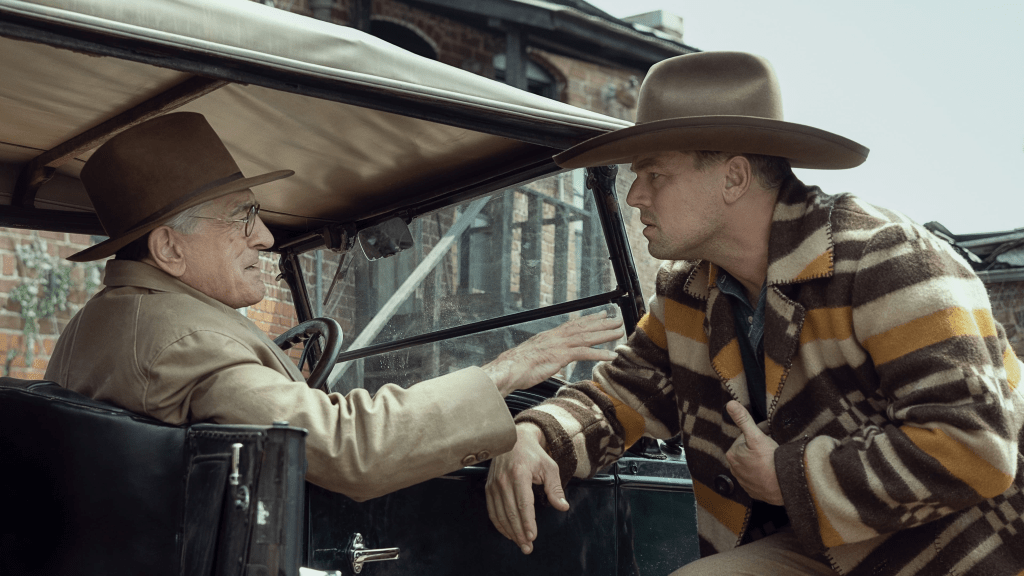
As always, you can never expect disappointing performances from any of his work, and Killers of the Flower Moon shines when it’s carried by its three central players in the forefront. Nobody will ever doubt DiCaprio will be great. In his sixth collaboration with the director, he makes his character Ernest the most complex role he must’ve had difficulty playing. We see Ernest as a man of eternal conflicting personalities where you can tell he loves his wife, but it’s almost as if he’s controlled as a puppet through shady manipulation of what everyone else tells him since he isn’t that smart. Indeed, it is his best work since The Wolf of Wall Street ten years ago. And then here come De Niro, in his tenth collaboration, who you don’t know if he’s to trust as Bill Hale, one of his best performances in years, believe it or not. This is a guy who, at first sight, is all for the Osage people with his underlying act of kindness, only to realize there’s this imposing presence that sneaks up at the back of your head when you’re not looking as he sees something blossoming between his nephew and Mollie.
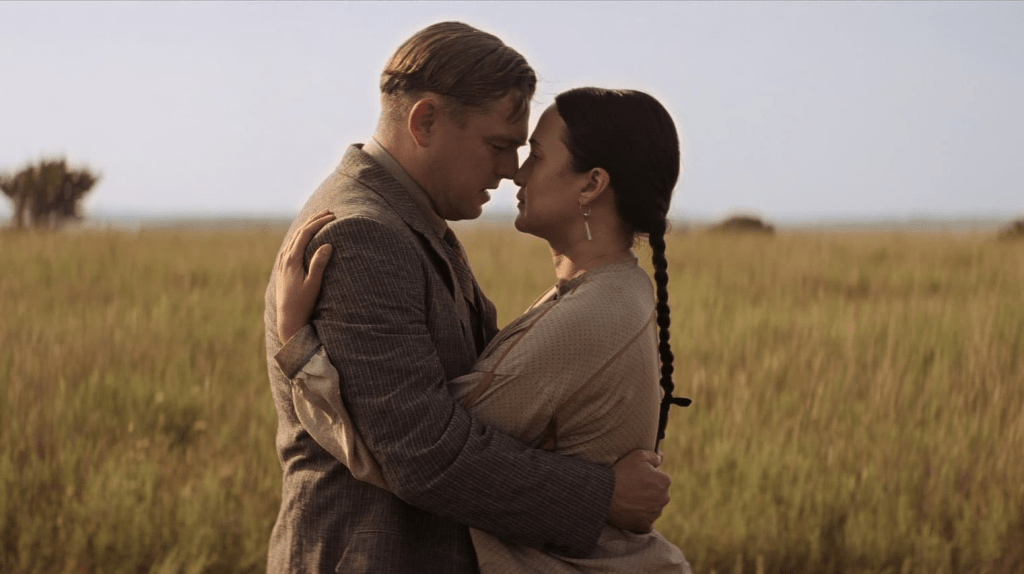
Both are great, especially when they’re sharing the screen. But what a standout turn from Lily Gladstone as Mollie, who I knew nothing about prior and becomes the emotional core throughout. It’s easy to see why Ernest is charmed by her ways and vice versa, leading to their devoted love for each other. I wanted to see her more during the second half, but the movie deals with this tragedy upon her people and, eventually, her family, which becomes even more devastating for where she turns in her grief. And it’s made worse when she falls ill, leaving us to rethink who Ernest really is on the inside when it affects her. Gladstone’s follows in line with other female performers who had the pleasure of working with Scorsese, from Lorraine Bracco (Goodfellas), Sharon Stone (Casino), and even Margot Robbie (The Wolf of Wall Street), makes for an influential role to remember her by with the subtle expressions she uses without overshadowing her co-stars. That alone is enough to see her nominated for Best Supporting Actress, if not an early frontrunner to win, possibly.
From a technical standpoint, the landscape of bringing early 20th century Oklahoma to life is nothing short of imaginative, thanks to Rodrigo Prieto’s cinematography, Thelma Schoonmaker’s editing (always the glue to his films), and a fantastic score by the late Robbie Robertson, who sadly passed away a couple months ago, that provides this blues, folk sound that definitely drives the narrative so unexpectedly.
With that three hours and twenty-six minutes runtime (206 minutes), everyone has talked about it before it came out, and it will be utterly seamless for many. Maybe that was why I left the theater thinking, “That was effective, but not as great as I wanted.” Most of that is because of how long it was. We all know Scorsese doesn’t trim his films and sometimes the lengths aren’t felt, especially in The Irishman, which I hate everyone disrespecting because of its length. This didn’t need to be that long here, probably causing me to get a little testy around the two-hour mark. It was still a slow-burn story I found intriguing from start to finish, where I can’t pinpoint what they can take out to trim it down, but it will be the main problem for some. Besides that, you can tell Scorsese wanted to tell this story with the people of the Osage coming in as consultants to tell it authentically. That said, it can leave you wanting more from their perspective or Mollie’s.
Other than those issues that could change once the time comes to watch it again, Killers of the Flower Moon luckily doesn’t beat you over the head about the complexities of American history, telling it how it should be that still reflects what we’re going through today. It also leaves with an ending I wasn’t so sure about on first viewing, but ultimately, I found it pretty creative to switch from the standard text on a black screen of what happened. Is it worth checking out? It’ll be available on Apple TV+ later this year, but I wouldn’t call it “great” right now; it’s always lovely to see one of his films on the big screen, especially one that’s very certain to receive a Best Picture nomination.
Killers of the Flower Moons doesn’t show Martin Scorsese slowing down to give us an unsettling look at how greed twists our minds in America’s darkest times tipped with three commanding performances (DiCaprio, De Niro & Gladstone), making up for its rather challenging runtime. Would I call it my favorite collaboration from its two actors? Hopefully, it’ll take a couple of viewings to reach that great status, but while it’s not a masterpiece as everyone else has called it, I can see why it’s another achievement from the Oscar-winning filmmaker.
Grade: B
Release Date: October 20, 2023
Runtime: 206 Minutes
Rated R for violence, some grisly images, and language
Distributions: Paramount Pictures/ Apple Original Films

 DC's Take