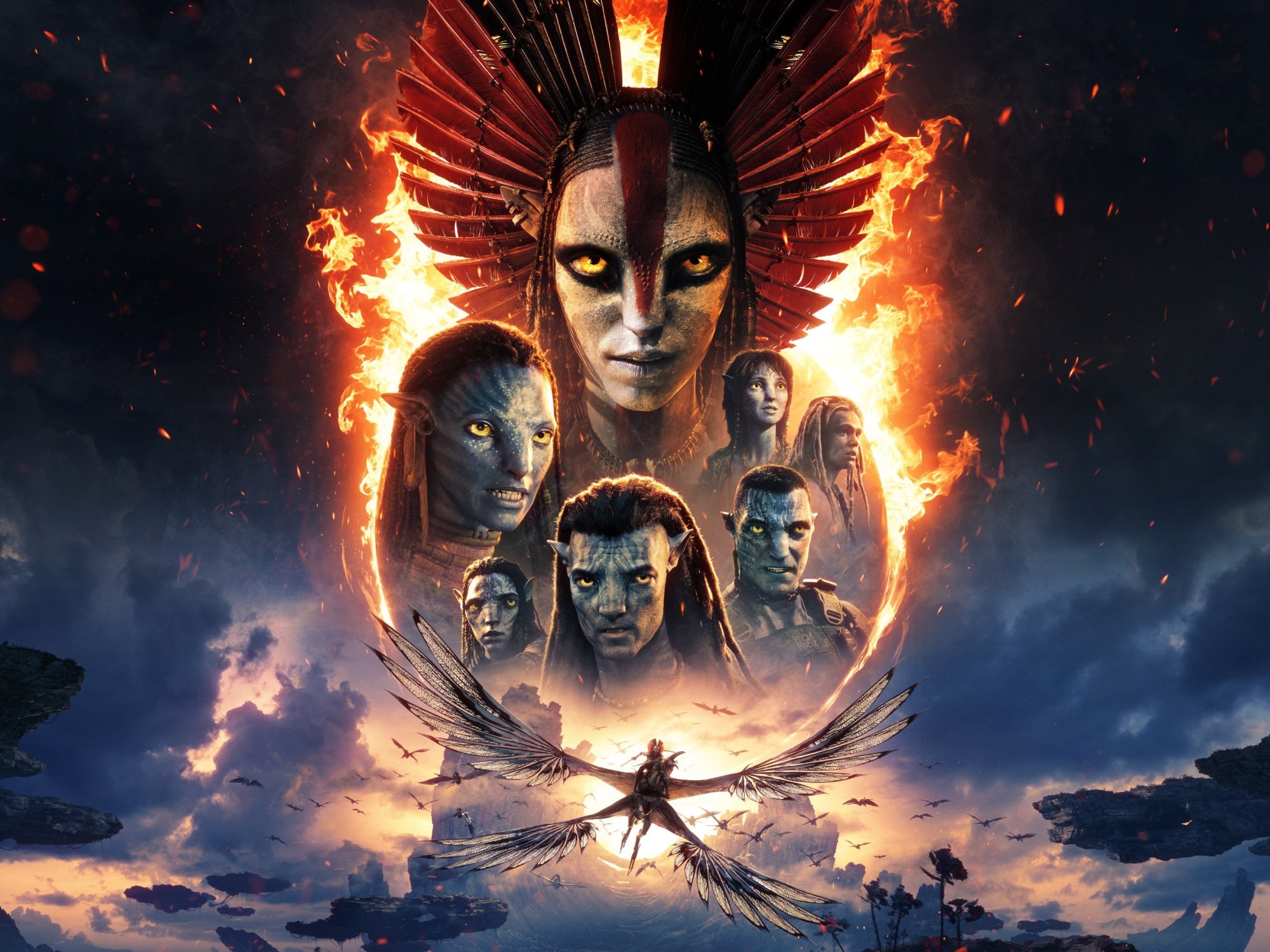
Anytime we get a new film from James Cameron, it’s going to be an event. Thankfully, audiences worldwide didn’t have to wait long to return to the cinematic world of Pandora, three years to be exact, as Avatar: Fire and Ash is here, offering hope that the blockbuster we’ve been craving all year is finally here. Though the question I had to ask myself was, did I anticipate James Cameron’s third installment of this sci-fi series? Weirdly, yes and no. There’s always a trust with Cameron as a filmmaker to see this on opening day, and I’m one of the non-haters in the film space who have always enjoyed the first two films, with The Way of Water being a far superior sequel to its predecessor. But the last few trailers had me believing it would deliver on the mind-blowing CGI, yet I couldn’t get a sense of what these characters are fighting for in this round. And it delivered on some things and didn’t on others. Avatar: Fire and Ash came across as my least favorite of the three, but it’s a solid sequel that I was still in awe of throughout, nonetheless.
What’s the Story: Still reeling from the loss of their eldest son, Neteyam, Jake Sully (Sam Worthington) and his family mourn as they try to acclimate to life with the Metkayina clan. Neytiri (Zoe Saldaña) has developed a hatred for humans, while Lo’ak (Britain Dalton) blames himself for his brother’s death. Jake and Neytiri decide to send the human teen, Spider (Jack Champion), away to live with other humans. However, during their journey on the flying Tlalim ships, they encounter an aggressive Na’vi tribe, the Mangkwan clan (the Ash people), led by Varang (Oona Chaplin). Varang, a fiery and enigmatic leader, challenges everything Jake believes about Na’vi unity and catches the attention of Colonel Miles Quaritch (Stephen Lang)/ the RNA, who wants to take Sully down and reunite with his son.

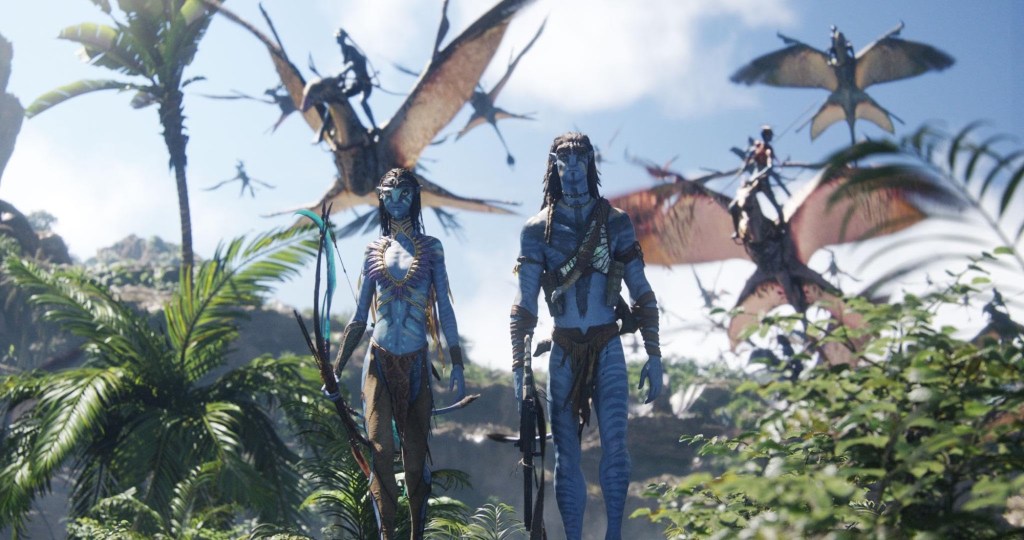
Anytime we walk into a Cameron film, let alone the Avatar series, the biggest guarantee is that we’ll be wondering how he captures the breathtaking world of Pandora with each passing movie and how he’ll flesh it out further. Given that he’s one of the few sci-fi filmmakers who understand the importance of scope and scale in visual storytelling, taking it all in, 3D and all, didn’t disappoint. From the Na’vi designs and creatures to the realistic effects of the water and trees, I kept forgetting this is all a fictional place. Obviously, it’s not real, but I want to visit these locations, as they are shaped by the VFX work and Russell Carpenter’s cinematography. This is a guaranteed win for Visual Effects at the Oscars, without question. The technology goes above and beyond to make the audience feel immersed in every action sequence, though, as last time, the high frame rate is too smooth and distracting. That said, some of the set pieces here stand out as the most memorable of the three. Granted, I still don’t know why Hollywood is trying to bring back 3D in movies, since this franchise is the only time it’s worth the money to see it on the biggest screen imaginable, especially in IMAX.
All the performances by the returning cast improve with each entry, as this story grapples with loss. Zoe Saldaña truly carries these films, delivering another stellar performance as Neytiri. Given this is her first major role since winning Best Supporting Actress earlier this year, she remains the strongest and most compelling character, a grieving mother with understandable prejudice towards humans, particularly Spider. Anyone who has experienced the sudden loss of a family member will relate to what Neytiri and the Sully family endure here. Sam Worthington, Stephen Lang, Sigourney Weaver as Kiri, and Britain Dalton all excel in their roles. The latest addition to the cast comes in Oona Chaplin, the granddaughter of Charlie Chaplin, who is memorable as the villain Varang. Interestingly, the villain is part of the Fire Na’vi tribe and isn’t dealing only with humans, though I wish we’d seen more of her; her backstory is intriguing but underutilized.
Technically, the film earns an A+ for its cinematic worldbuilding. However, the story in this sequel struggled to surpass the first two installments. While it elevates the overall quality and inspires awe at its technical achievements, it also displays a sense of familiarity that makes it challenging to connect with on an emotional level. The first film may not have the most original plot, but it succeeds due to its sci-fi setting. Shot back-to-back, this installment feels like a direct continuation of The Way of Water, which could be confusing for those unfamiliar with the previous details. It wasn’t surprising to see moments of Jake’s condescending behavior towards Lo’ak, leading to Lo’ak’s feelings of guilt, Kiri’s continued quest to understand her connection to Eywa, or a lack of clarity regarding everyone’s motivations. Even the impressive underwater and sea-based action sequences felt repetitive, mirroring the climactic battle from the previous film.
This also gave Spider more screen time, which was expected after his introduction in the previous film. His journey initially seemed promising, with the development allowing him to breathe Pandora’s air without a mask. However, a later plot point felt rushed and unrealistic, thrusting him into the core conflict of human coexistence on Pandora. Additionally, some of his dialogue fell flat, coming across as cringeworthy rather than acting tough. At three hours and fifteen minutes, the longest film in the series, this installment also suffered from pacing issues. While The Way of Water felt more fluid, this one had a few non-action sequences that weren’t particularly engaging, especially those involving the other human characters (Giovanni Ribisi, Edie Falco) seeking the planet’s resources. Ultimately, the film lacked any truly shocking moments or left me wanting more. If a fourth installment arrives in the coming years, it had better avoid an anticlimactic ending like here.
Amidst a year of mixed blockbuster results, I had high hopes that Fire and Ash would make my best-of list, even warranting a repeat viewing. However, after 24 hours of reflection, while it was still exciting to witness Cameron’s vision unfold, it ultimately left me with mixed feelings. Where would I place it in his overall filmography? I’d position it somewhere between True Lies and The Abyss towards the lower end. It seems more likely to resonate with longtime franchise fans than to convert new ones. Now, the big questions are: Will it surpass $2 billion worldwide, and does it have a shot at a Best Picture nomination? The latter seems plausible given the generally positive-to-mixed reviews. But it could cross a billion because of its strong international performance. If Cameron plans a fourth film, I’m in; but if he takes a break to explore something fresh and original, that would be commendable too.
Overall, Avatar: Fire and Ash continues to reflect James Cameron’s ambition to create a visual spectacle that leaves audiences in awe. What makes the third entry a minor step down is that it falls into the unfortunate territory of repetition, with a slightly overlong story that doesn’t always take risks to bring much new to the table. Does it live up to the legacy of the first two? Not quite. Who knows if it gets better on a repeat viewing at home, but for all its faults, it’s pure entertainment for fans to return to Pandora.

 DC's Take